TL;DR
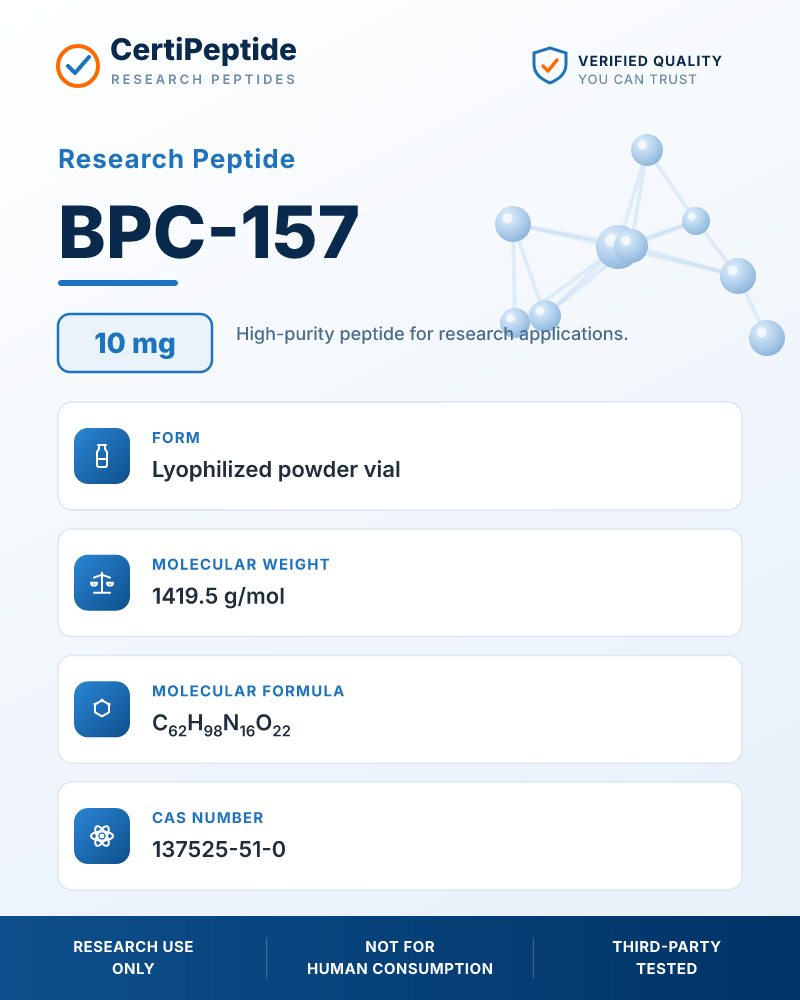
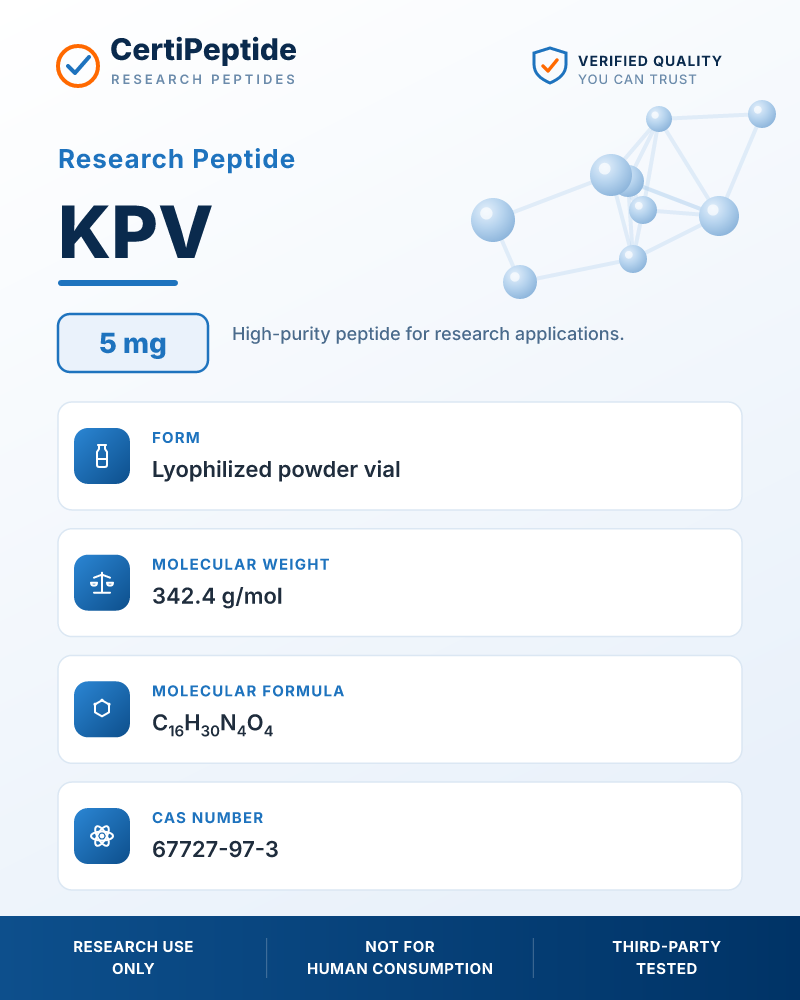
Laboratory studies of BPC-157 vs KPV reveal distinct peptide profiles. BPC-157, derived from gastric sources, and KPV, a fragment of alpha-MSH, show varying mechanisms and research uses in controlled in vitro and animal models. This BPC-157 KPV comparison focuses on structural traits, observed cellular interactions, and study designs without implying human applications.
BPC-157 vs KPV Overview
Researchers frequently examine BPC-157 vs KPV to understand peptide behavior in experimental systems. Both compounds appear in peer-reviewed protocols exploring tissue responses and signaling pathways. BPC-157 originates from a partial sequence of body protection compound, while KPV derives from the C-terminal tripeptide of alpha-melanocyte-stimulating hormone. In research contexts, investigators compare stability, solubility, and receptor affinities under standardized lab conditions.
Structural and Mechanistic Differences
BPC-157 consists of 15 amino acids arranged in a specific sequence that supports investigation of angiogenesis-related markers in cell cultures. KPV, being shorter at three amino acids, often features in assays targeting melanocortin receptor modulation. Studies highlight that BPC-157 may influence nitric oxide pathways differently than KPV in isolated tissue samples. These distinctions guide selection in BPC-157 or KPV experimental designs focused on inflammatory cytokine profiles.
Similarities in Research Applications
Both BPC-157 and KPV appear in studies of cellular migration and extracellular matrix components. Laboratory protocols sometimes pair the two to contrast effects on fibroblast activity or epithelial barrier models. Shared research themes include examination of oxidative stress indicators and wound-healing assays in rodent-derived cell lines. The BPC-157 KPV comparison underscores their common utility as tools for probing peptide-receptor interactions without overlapping completely in observed outcomes.
Use in Laboratory Studies
In controlled research environments, BPC-157 supports investigations into vascular endothelial growth factor expression. KPV finds frequent application in models of immune cell regulation via melanocortin pathways. Comparative trials often measure endpoints such as gene expression changes or protein phosphorylation states. Researchers select one or both compounds based on the specific biochemical cascade under scrutiny, ensuring all work adheres to research-use-only standards.
Considerations for Experimental Design
When planning BPC-157 vs KPV experiments, factors like peptide purity, solvent compatibility, and assay duration require attention. Published methods emphasize dose-response curves in non-human systems to map potency differences. Storage conditions and reconstitution protocols also differ slightly between the two, affecting reproducibility across labs. These elements help refine the BPC-157 KPV comparison for targeted scientific inquiry.
Future Directions in Peptide Research
Ongoing investigations continue to refine understanding of BPC-157 and KPV through advanced techniques such as mass spectrometry and transcriptomics. Cross-comparisons may reveal synergistic or antagonistic patterns in multi-peptide arrays. Such work remains confined to laboratory and preclinical frameworks, advancing knowledge of peptide biology in isolation from therapeutic contexts.
Frequently Asked Questions
What are the main structural differences between BPC-157 and KPV in research?
BPC-157 is a 15-amino-acid peptide while KPV is a tripeptide fragment; lab studies examine how these lengths affect stability and receptor binding in controlled assays.
How do BPC-157 and KPV compare in cell culture experiments?
Research protocols show BPC-157 often linked to vascular markers and KPV to melanocortin pathways, allowing direct side-by-side evaluation of signaling responses.
Can BPC-157 and KPV be used together in laboratory studies?
Some experimental designs combine both peptides to investigate potential interactions in tissue models, always under research-use-only conditions.
What endpoints are measured in BPC-157 vs KPV studies?
Common readouts include cytokine levels, cell migration rates, and gene expression changes in non-human in vitro and animal model systems.
Explore Further
Browse our research peptide catalog and review third-party lab reports & COAs for every batch.
---
Research use only. The information above is provided for educational and laboratory research purposes only. The compounds discussed are not approved for human or veterinary use, diagnosis, treatment, or the prevention of any disease. Nothing here is medical advice.