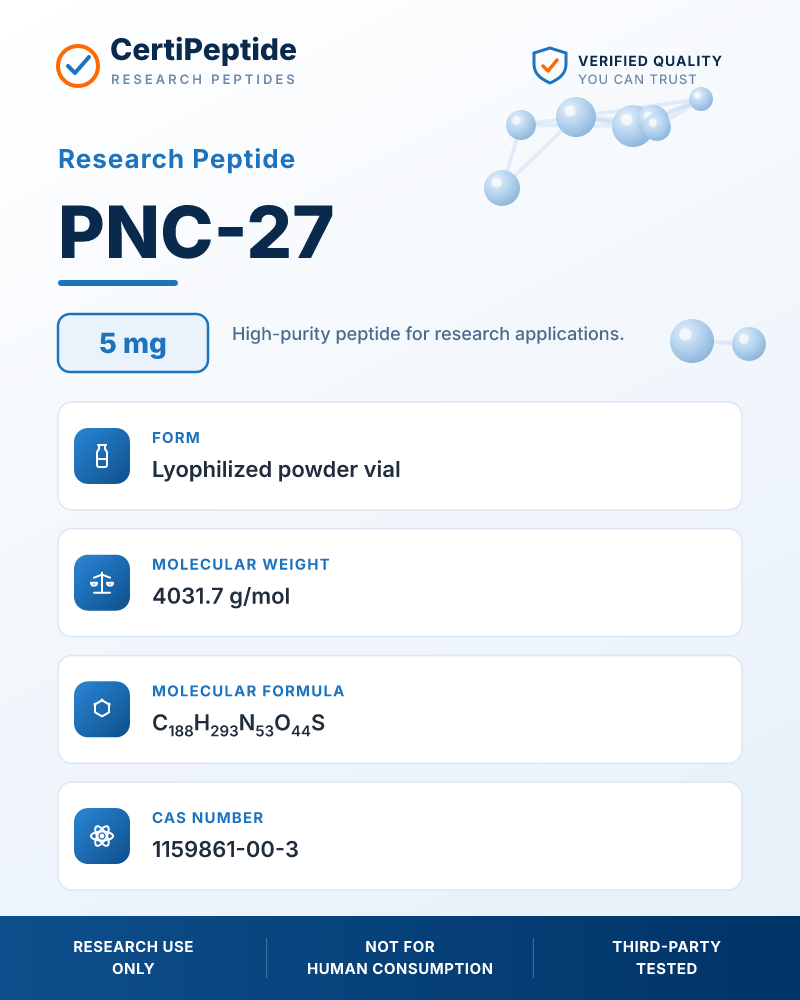
Selank
Research Peptide | Lyophilized Powder | Batch Tested
For laboratory research use only. Not for human or animal consumption. Insulated shipping · Styrofoam box available.
Product Overview
Selank is a synthetic heptapeptide analog of the immunomodulatory peptide tuftsin, developed as a stable anxiolytic research peptide. Its modifications extend its half-life well beyond that of native tuftsin.
Laboratory: Stand Science & Technology Pharmaceutical (Qingdao) Co., Ltd. (Stand Group)
Test results for batch PESJ92EKI53F →1 / 2
| Test | Result |
|---|---|
| AppearanceVisual | White loose powderPass |
| Mass spectrumMS | 751.0 DaPass |
| PurityHPLC | 99.1 %Pass |
| Peptide contentHPLC | 91.4 %Pass |
| Actual fillGravimetric | 5.99 mgPass |
| Water contentKarl Fischer | 4.5 %Pass |
| Bacterial endotoxinsLAL (gel-clot) | <3 EU/mgPass |
SKU & packaging
Nominal sizes describe the product label; measured results are listed in each batch report. Published reports do not confirm the batch allocated to a future order.
Product & documentation questions
How do I read the size and pack quantity?
The per-vial size and number of vials per pack are listed separately in the table. The displayed price is for one pack. A blend’s stated size can describe combined ingredients; check its product label and report for individual components.
How do I find the matching COA?
Match the product, SKU and batch number with the published report. Open the batch page to read the actual results, original report and laboratory verification link. Ask support to confirm the allocated batch if it is not on your order.
Does a purity result mean every test passed?
No. Identity, purity, fill and endotoxin are separate measurements. Read each reported result and unit. An absent result is not a pass, and a less-than result is not zero.
Research Information
Selank is used to study modulation of GABAergic and monoaminergic neurotransmission, regulation of BDNF and enkephalin-degrading enzymes, and immune signaling in models of anxiety and cognition. Researchers value its stability and its combined neuro-immune profile. Supplied strictly for in-vitro and laboratory research use only — not for human or animal consumption.
Learn more
Read research overviews, COA verification guides, and reconstitution notes in our Knowledge Hub.
Explore Other High-Purity Peptides
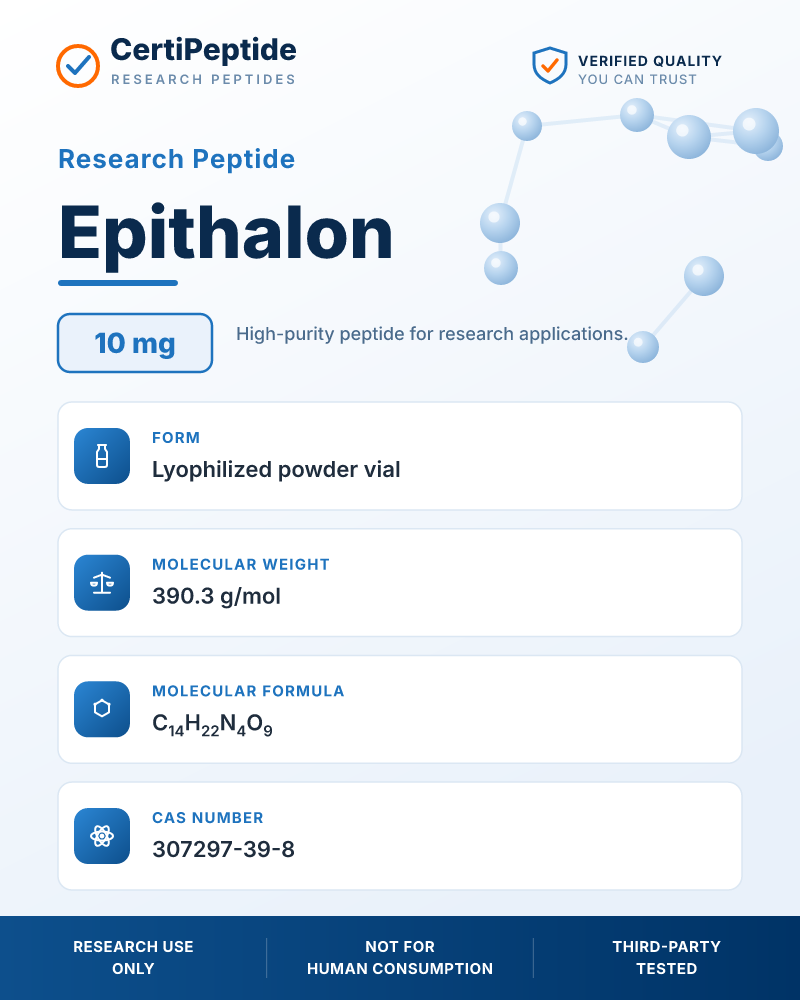
Epithalon
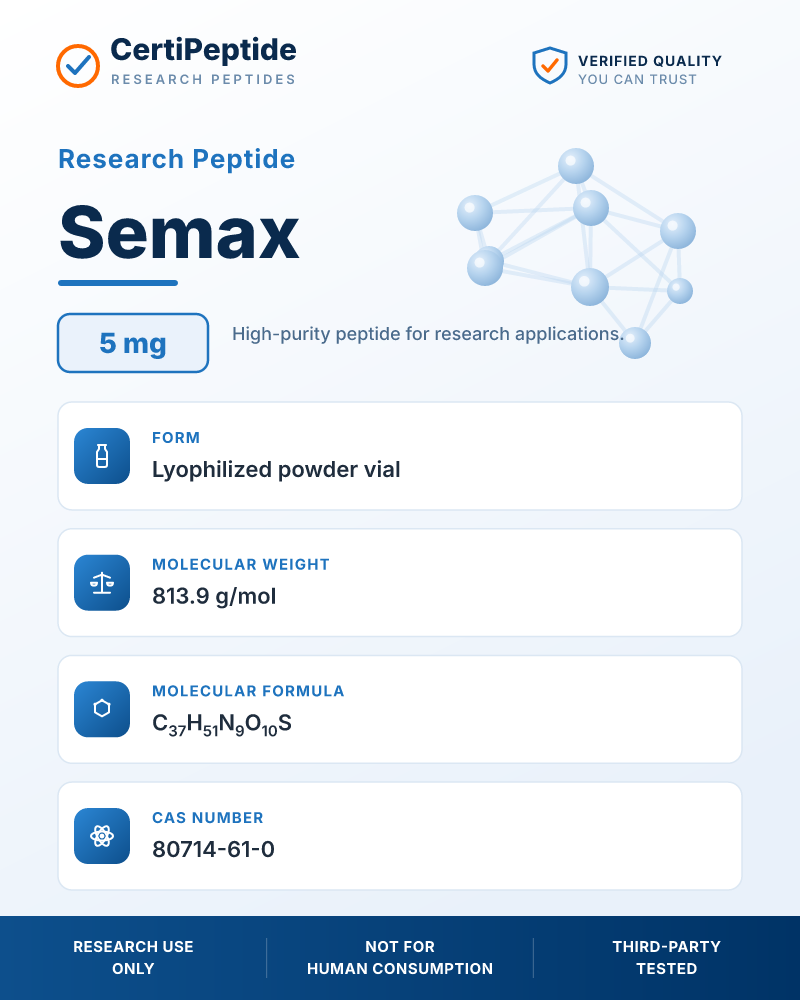
Semax
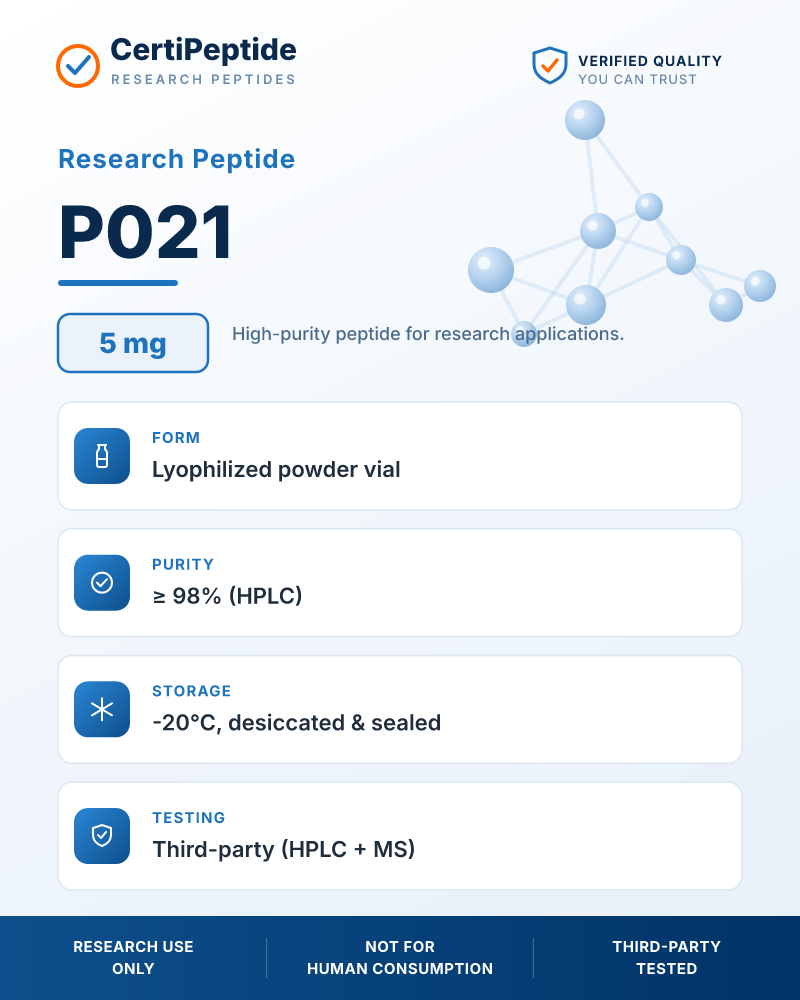
P021