TL;DR
Klow80 (TB-500 + BPC-157 + GHK + KPV) vs Tesamorelin + Ipamorelin Blend presents distinct multi-component versus dual-hormone approaches in peptide research. Both combinations are examined exclusively in controlled laboratory settings for their individual molecular properties and potential synergistic effects.
Klow80 (TB-500 + BPC-157 + GHK + KPV) vs Tesamorelin + Ipamorelin Blend Overview
Researchers frequently evaluate Klow80 (TB-500 + BPC-157 + GHK + KPV) vs Tesamorelin + Ipamorelin Blend (peptide) formulations to understand differences in peptide composition and observed in vitro behaviors. Klow80 combines four distinct peptides, while the Tesamorelin + Ipamorelin Blend focuses on two growth hormone secretagogue-related compounds. These blends are studied for their unique profiles in cellular and molecular assays.
Composition and Molecular Mechanisms
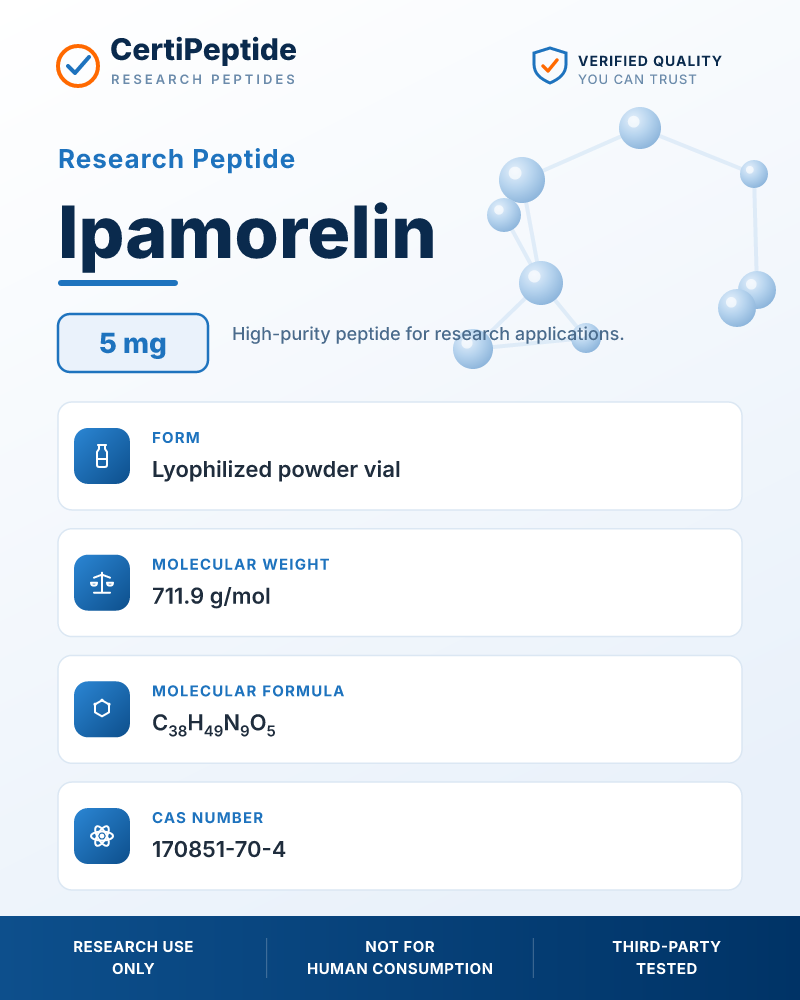
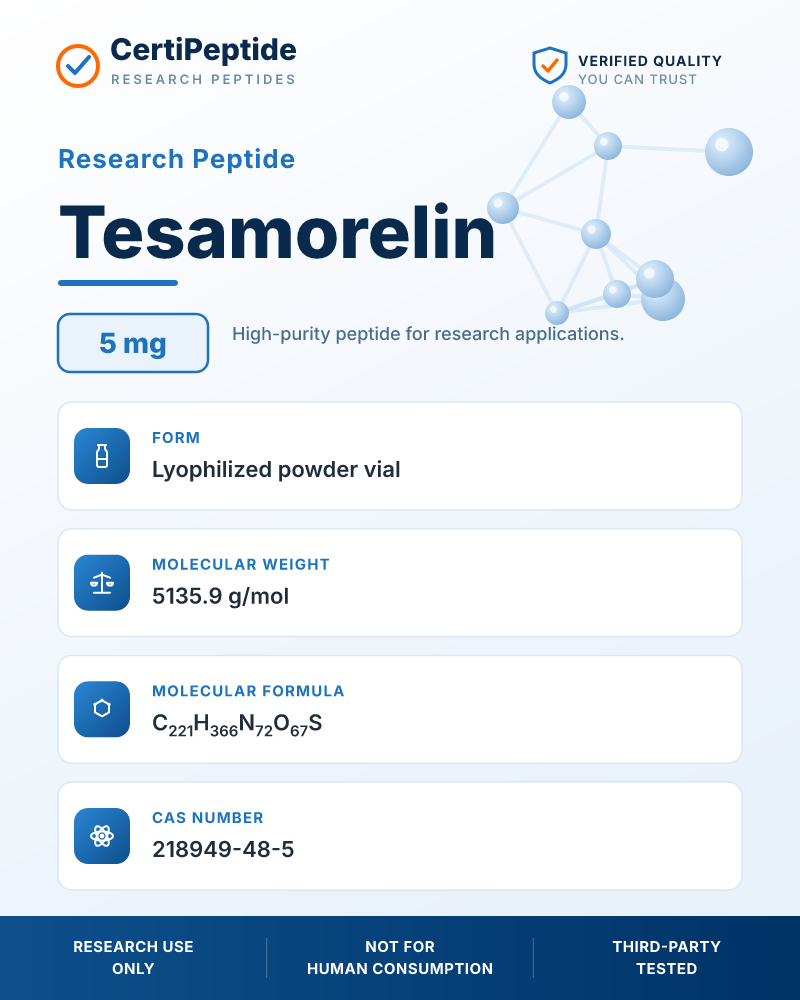
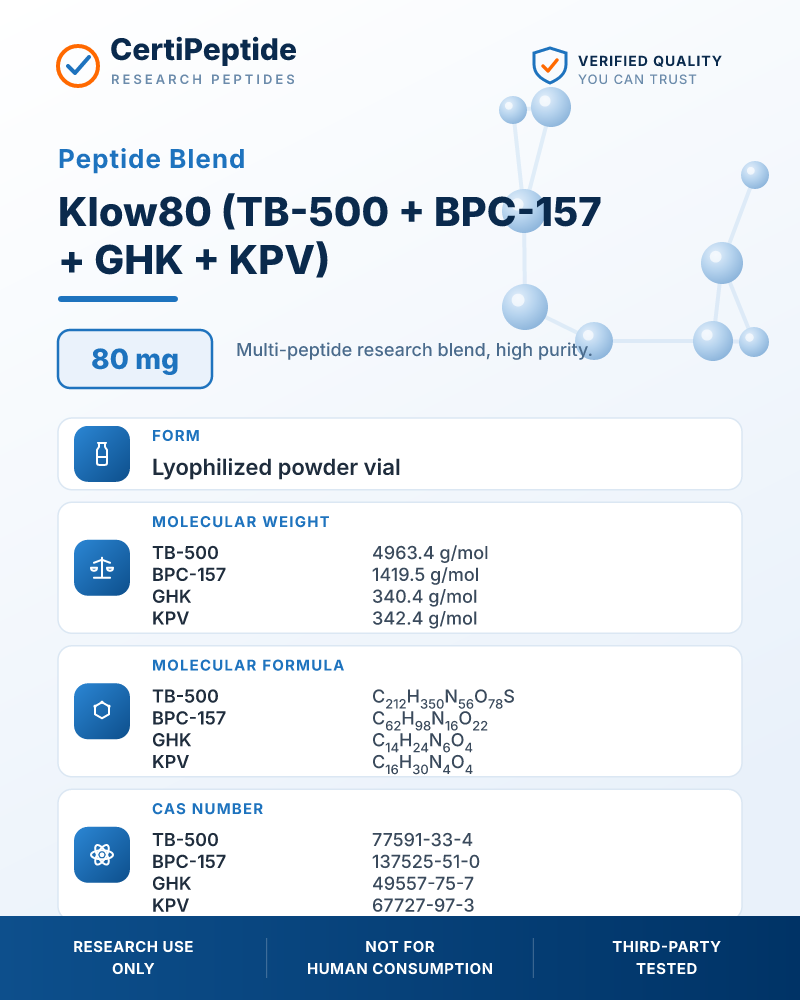
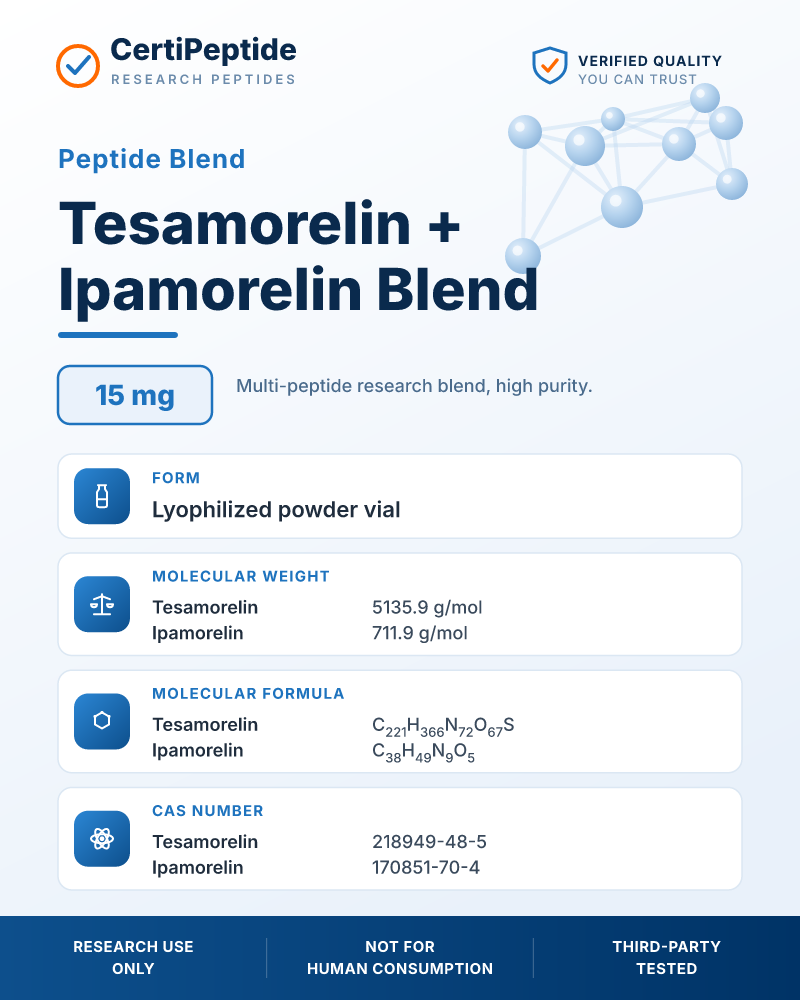
Klow80 contains TB-500, BPC-157, GHK, and KPV, each contributing separate sequences that researchers analyze for binding affinities and signaling pathways. In contrast, the Tesamorelin + Ipamorelin Blend pairs a growth hormone-releasing hormone analog with a ghrelin mimetic. Laboratory investigations often track receptor interactions and downstream cascades using both combinations.
Research Similarities
Both Klow80 (TB-500 + BPC-157 + GHK + KPV) and Tesamorelin + Ipamorelin Blend are explored in studies examining peptide stability, solubility, and degradation patterns. Investigators note overlapping interest in how multiple components may influence overall assay outcomes. Klow80 (TB-500 + BPC-157 + GHK + KPV) or Tesamorelin + Ipamorelin Blend (ClinicalTrials.gov) listings provide context for ongoing preclinical work, though direct human applications remain outside research scope.
Key Research Differences
The multi-peptide structure of Klow80 introduces broader sequence diversity compared to the focused Tesamorelin + Ipamorelin Blend. Studies highlight variations in molecular weight distribution and potential fragment interactions. Researchers utilize Klow80 (TB-500 + BPC-157 + GHK + KPV) Tesamorelin + Ipamorelin Blend comparison (PubMed) searches to locate publications detailing these distinctions in controlled environments.
Laboratory Study Applications
In experimental protocols, Klow80 is typically assessed for combined effects on extracellular matrix components and inflammatory markers, whereas the Tesamorelin + Ipamorelin Blend is often used to probe growth hormone axis modulation in cell cultures. Both remain strictly research-use compounds with no approved therapeutic indications.
Considerations for Experimental Design
When designing comparative assays, scientists account for differing pharmacokinetics observed in vitro. Stability testing and dose-response curves help differentiate the blends under standardized laboratory conditions. Continued literature review supports refined hypotheses around these research peptides.
Frequently Asked Questions
What distinguishes Klow80 from Tesamorelin Ipamorelin Blend in research?
Klow80 incorporates four peptides while the Tesamorelin + Ipamorelin Blend uses two, leading to different molecular profiles examined in lab assays.
Are these blends approved for any human use?
No, both Klow80 (TB-500 + BPC-157 + GHK + KPV) and Tesamorelin + Ipamorelin Blend are supplied exclusively for laboratory research.
Where can researchers find studies on these peptides?
Publications are indexed on PubMed and ClinicalTrials.gov for preclinical peptide research comparisons.
How are mechanisms studied for Klow80 versus the blend?
In vitro receptor binding and signaling pathway analyses are common methods applied to both research compounds.
Explore Further
Browse our research peptide catalog and review third-party lab reports & COAs for every batch.
---
Research use only. The information above is provided for educational and laboratory research purposes only. The compounds discussed are not approved for human or veterinary use, diagnosis, treatment, or the prevention of any disease. Nothing here is medical advice.