TL;DR
Dermorphin vs Dihexa offers researchers distinct peptide profiles for laboratory investigation. This article examines their chemical traits, mechanisms, and uses in controlled studies without reference to human application.
Introduction to Dermorphin vs Dihexa
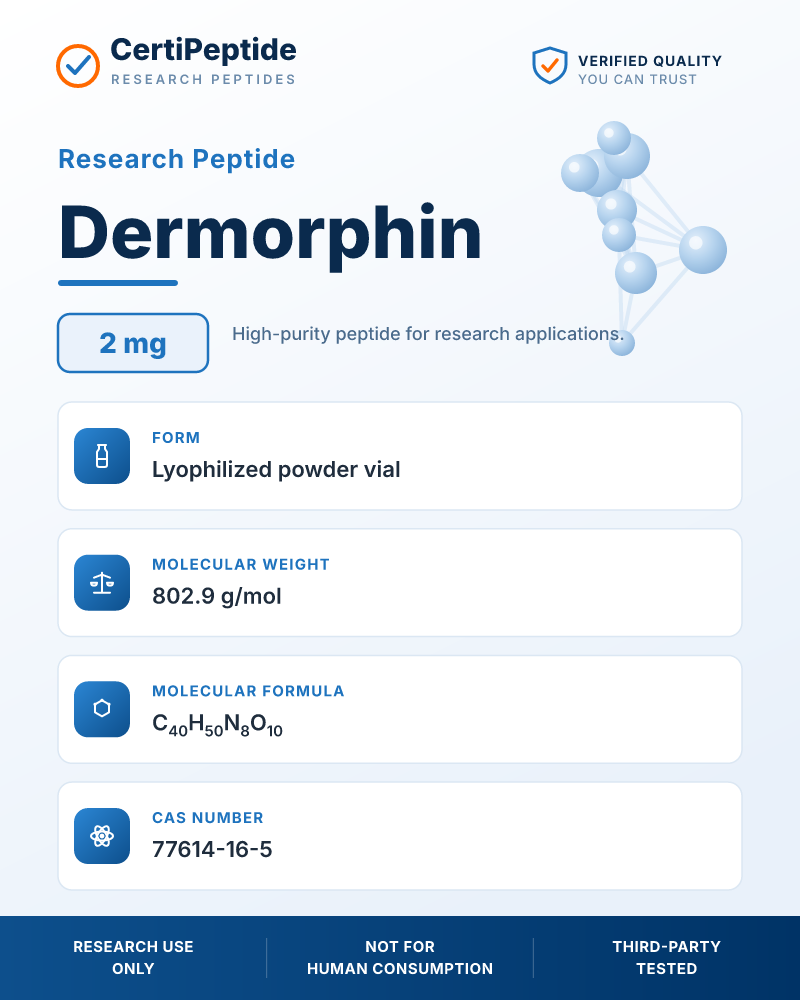
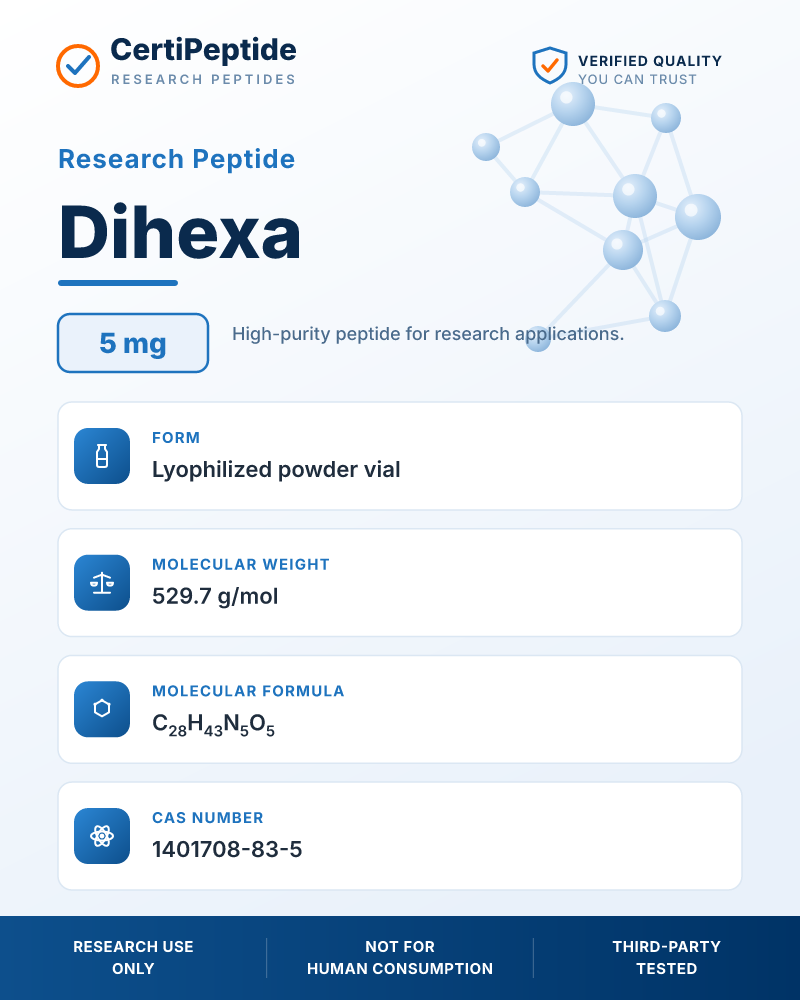
Dermorphin vs Dihexa represents a focused area of peptide research where investigators examine two unique compounds in vitro and in animal models. Dermorphin, a naturally derived peptide, and Dihexa, a synthetic small molecule, are studied separately for their potential roles in biochemical assays. Researchers often evaluate Dermorphin or Dihexa to understand receptor interactions and cellular responses under strictly controlled conditions.
Chemical Structures and Properties
Dermorphin consists of a heptapeptide sequence with potent affinity for certain opioid receptors in isolated tissue preparations. Its structure includes D-alanine and other modifications that enhance stability in research buffers. Dihexa, by contrast, is a small-molecule angiotensin IV analog designed for high potency in hepatocyte growth factor pathways during cell culture experiments. Both compounds exhibit high purity requirements typical of research-grade materials, with Dermorphin Dihexa comparison studies frequently analyzing solubility, half-life, and binding kinetics in non-clinical settings.
Mechanisms of Action in Research
In laboratory models, Dermorphin primarily engages mu-opioid receptor subtypes, allowing scientists to probe signal transduction pathways. Dihexa demonstrates activity through c-Met receptor modulation, supporting neurogenesis-related assays in neuronal cell lines. The Dermorphin vs Dihexa distinction becomes clear when comparing downstream effects: one influences analgesic-like responses in isolated systems while the other promotes synaptic plasticity markers in vitro.
Dermorphin vs Dihexa Comparison
Direct Dermorphin vs Dihexa analysis reveals limited overlap. Similarities include high research interest in receptor-mediated events and potential for analog development. Differences dominate, however, with Dermorphin showing rapid degradation profiles versus Dihexa's extended stability in experimental media. Studies using Dermorphin or Dihexa typically employ separate protocols due to these variances in potency and selectivity.
Similarities Observed in Laboratory Studies
Both peptides appear in investigations of cellular signaling and protein interactions. Researchers note that Dermorphin Dihexa comparison work sometimes explores shared themes in peptide-receptor kinetics, although applications diverge quickly. Stability enhancements and radiolabeling techniques apply equally to each compound during assay development.
Differences in Research Applications
Dermorphin finds use in opioid receptor binding assays and pain pathway modeling in rodents. Dihexa serves in cognitive function studies involving hippocampal cultures and angiogenesis models. The Dermorphin vs Dihexa gap widens in selectivity: Dermorphin targets classical opioid sites while Dihexa avoids them entirely, directing focus toward growth factor cascades instead.
Practical Considerations for Peptide Research
When sourcing Dermorphin and Dihexa for studies, investigators prioritize analytical certificates and batch consistency. Storage conditions, reconstitution solvents, and dosage calculations remain study-specific and limited to non-human systems. Ongoing literature reviews help refine experimental designs comparing these two research tools.
Frequently Asked Questions
What distinguishes Dermorphin from Dihexa in research?
Dermorphin targets opioid receptors while Dihexa modulates c-Met pathways in cell-based assays.
Can Dermorphin and Dihexa be used in the same study?
Separate protocols are standard because their receptor profiles and stability differ significantly in laboratory conditions.
How are these compounds typically studied?
Researchers examine them in binding assays, cell cultures, and animal models focused on specific biochemical pathways.
What storage practices apply to Dermorphin and Dihexa?
Both require lyophilized storage at low temperatures with reconstitution in appropriate research solvents.
Explore Further
Browse our research peptide catalog and review third-party lab reports & COAs for every batch.
---
Research use only. The information above is provided for educational and laboratory research purposes only. The compounds discussed are not approved for human or veterinary use, diagnosis, treatment, or the prevention of any disease. Nothing here is medical advice.