TL;DR
In laboratory research, the Cortagen vs Bronchogen comparison shows two distinct peptides with unique molecular profiles suited for specific in vitro and animal model studies. Researchers often evaluate Cortagen or Bronchogen based on their targeted effects in cellular signaling and tissue models. This Cortagen Bronchogen comparison highlights structural variations, observed mechanisms, and potential study designs without implying any clinical applications.
Overview of Cortagen in Research
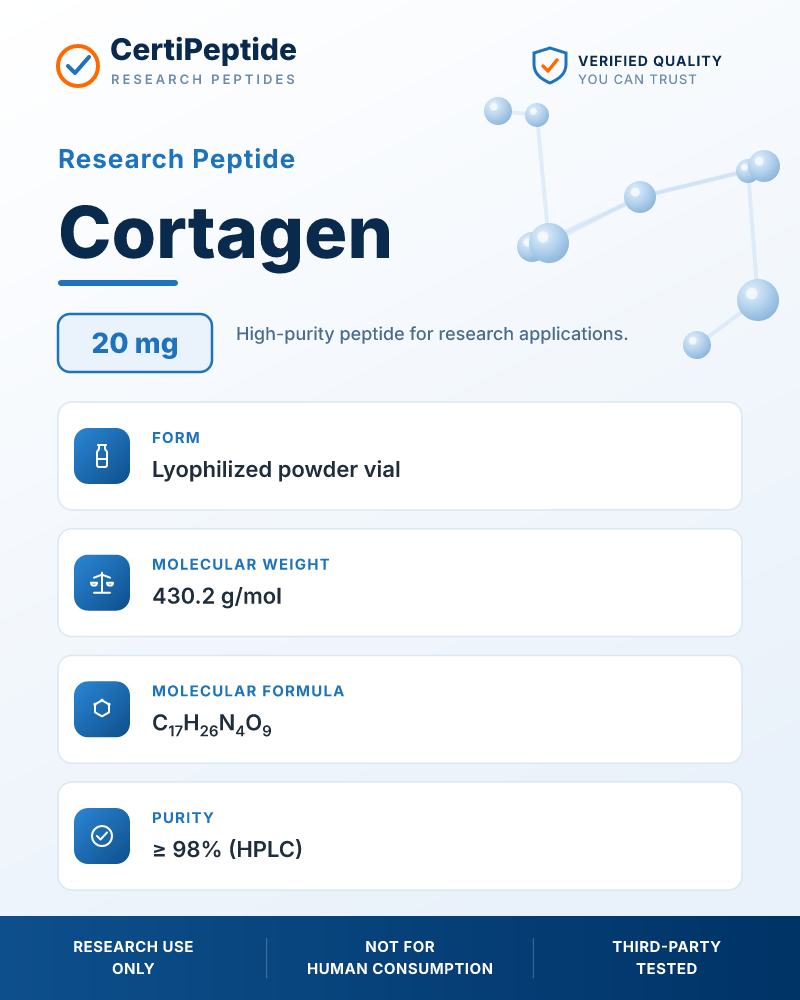
Cortagen is a synthetic tetrapeptide frequently examined in neurobiological and cellular regeneration experiments. Laboratory investigations focus on its interactions with gene expression pathways in neuronal cell lines and rodent models. Studies typically assess Cortagen for its influence on protein synthesis markers and oxidative stress indicators under controlled conditions.
Bronchogen Research Applications
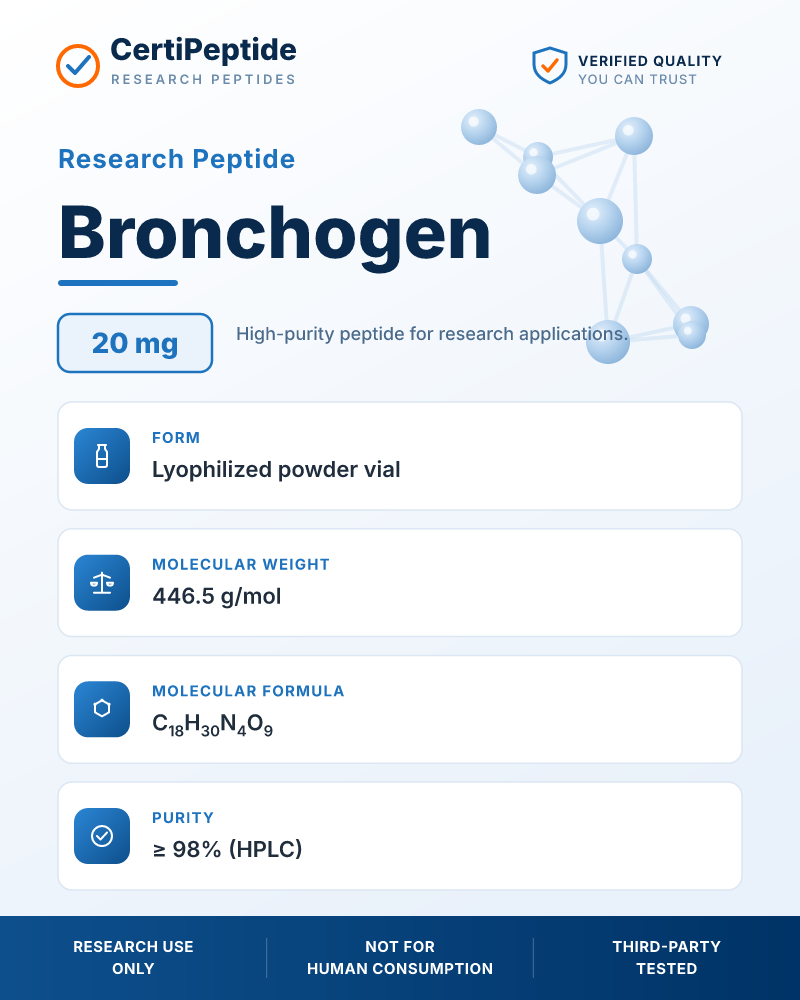
Bronchogen, another short-chain peptide, is commonly utilized in pulmonary and epithelial tissue research protocols. Experimental work explores its role in modulating inflammatory cytokine profiles within bronchial cell cultures. Researchers incorporate Bronchogen into assays measuring fibroblast activity and extracellular matrix remodeling in non-human subjects.
Cortagen vs Bronchogen: Structural and Functional Differences
Key distinctions emerge when comparing Cortagen vs Bronchogen at the molecular level. Cortagen exhibits a sequence optimized for neural tissue affinity, while Bronchogen demonstrates preferential binding in respiratory epithelial environments. In Cortagen Bronchogen comparison studies, differential impacts on mitochondrial function and apoptosis pathways have been documented across separate experimental cohorts. These variations guide selection in targeted research protocols.
Similarities in Laboratory Studies
Despite differences, Cortagen and Bronchogen share certain biochemical properties relevant to peptide research. Both compounds demonstrate stability in aqueous solutions and exhibit dose-dependent responses in cell viability assays. The Cortagen vs Bronchogen analysis often notes comparable effects on basic transcription factors in parallel in vitro models, supporting their use in comparative mechanistic investigations.
Use in Studies: Cortagen Bronchogen Comparison
When designing experiments, the Cortagen vs Bronchogen framework helps researchers select appropriate controls and endpoints. Cortagen or Bronchogen may be tested side-by-side in models of tissue repair to map divergent signaling cascades. Published protocols emphasize rigorous blinding and replication when conducting Cortagen Bronchogen comparison work to ensure reproducible outcomes in academic settings.
Considerations for Laboratory Protocols
Proper handling of Cortagen and Bronchogen requires adherence to standard research-grade storage and reconstitution guidelines. Analytical techniques such as HPLC and mass spectrometry verify purity prior to experimental deployment. Investigators maintain detailed logs of batch variations during Cortagen vs Bronchogen evaluations to support data integrity across studies.
Frequently Asked Questions
What distinguishes Cortagen from Bronchogen in cell culture experiments?
Cortagen tends to show affinity for neural-derived cell lines while Bronchogen is more frequently studied in epithelial models, according to published research protocols.
Can Cortagen and Bronchogen be used interchangeably in studies?
No, their structural differences lead researchers to select one or the other based on the specific tissue type or pathway under investigation in Cortagen vs Bronchogen trials.
How do researchers typically source Cortagen or Bronchogen for comparison studies?
Both are obtained from specialized suppliers as research-use-only materials, with purity verified through analytical testing before inclusion in experimental designs.
What endpoints are common in Cortagen Bronchogen comparison work?
Studies often measure gene expression changes, cytokine levels, and cell proliferation rates when directly comparing the two peptides in matched experimental conditions.
Explore Further
Browse our research peptide catalog and review third-party lab reports & COAs for every batch.
---
Research use only. The information above is provided for educational and laboratory research purposes only. The compounds discussed are not approved for human or veterinary use, diagnosis, treatment, or the prevention of any disease. Nothing here is medical advice.