Priorité au gros · prix direct usine · remises sur volumeRéservé à la recherche en laboratoire. Ne convient pas à la consommation humaine ou animale.
CertiPeptideRESEARCH PEPTIDES
IGF-1 LR3

IGF-1 LR3

Research Peptide | Lyophilized Powder | Batch Tested

Size
265,00 $US
26,50 $US/mg
En stockLatest batch: IG1-260601
1

For laboratory research use only. Not for human or animal consumption. Insulated shipping · Styrofoam box available.

Product Overview

IGF-1 LR3 (Long R3 IGF-1) is an 83-amino-acid analog of insulin-like growth factor 1, engineered with an extra N-terminal extension and an arginine substitution. These changes dramatically reduce its binding to IGF-binding proteins, giving it far greater potency and a longer active life than native IGF-1.

No published lab tests yet.

500+ Certificates of Analysis
6+ Years of Testing
Best $/mg
Tested for More Than Purity
Batch # on Every Vial

Research Information

IGF-1 LR3 is studied for its potent activation of the IGF-1 receptor and downstream PI3K/Akt and MAPK signaling, driving cell proliferation, differentiation and anabolic pathways. Because it evades binding-protein sequestration, it is a favored tool for studying sustained IGF-1 signaling in cell-culture and animal models. Supplied strictly for in-vitro and laboratory research use only — not for human or animal consumption.

IGF-1 LR3 Research & Studies

What is IGF-1 LR3?

IGF-1 LR3 (Long R3 IGF-1) is an 83-amino-acid analog of insulin-like growth factor 1 engineered with an extended N-terminal sequence and an arginine substitution at position 3. These structural modifications markedly reduce affinity for IGF-binding proteins relative to native IGF-1. In laboratory settings the compound is examined as a research tool for probing prolonged IGF-1 receptor engagement. It is supplied strictly for in-vitro and controlled laboratory research use only.

Mechanism of Action

IGF-1 LR3 is studied for its high-affinity interaction with the IGF-1 receptor, triggering receptor autophosphorylation and recruitment of adaptor proteins. Downstream cascades under investigation include the PI3K/Akt pathway, linked to metabolic and survival signaling, and the MAPK/ERK pathway, associated with proliferative responses. Because the analog largely escapes sequestration by IGF-binding proteins, experimental systems can maintain elevated free ligand levels for extended observation of these cascades.

Primary Areas of Research

Investigators employ IGF-1 LR3 to examine cell proliferation, differentiation, and anabolic signaling networks in cultured mammalian cells and selected animal models. Research focuses on how sustained IGF-1 receptor activation influences protein synthesis machinery, cell-cycle progression, and tissue-specific growth pathways. The compound is also used to dissect differences between transient versus prolonged ligand exposure in receptor trafficking and desensitization studies.

Key Research Findings

Published laboratory work indicates that IGF-1 LR3 produces more durable IGF-1 receptor stimulation than equimolar native IGF-1 under identical culture conditions, attributable to reduced IGFBP binding. Model systems consistently show robust activation of Akt and MAPK phosphorylation when the analog is present. These observations have made IGF-1 LR3 a preferred reagent for experiments requiring continuous pathway drive without frequent media replenishment.

Structural Features and Stability

The N-terminal extension and Arg3 substitution of IGF-1 LR3 alter surface contacts that normally mediate high-affinity IGFBP interaction. In buffered aqueous solutions the peptide retains receptor-binding competence longer than native IGF-1, facilitating multi-day cell-culture protocols. Researchers document these properties when designing time-course and dose-response experiments that compare analog versus wild-type ligand behavior.

Research Handling and Considerations

IGF-1 LR3 is handled under standard peptide laboratory practices, including cold-chain storage and reconstitution in appropriate sterile buffers for cell-culture or in-vitro assays. Investigators verify lot-specific purity and concentration by analytical methods before experimental use. All work remains confined to controlled research environments; the material is not intended for human or animal administration.

Frequently Asked Questions

The N-terminal extension and Arg3 substitution greatly reduce IGFBP binding, allowing longer free-ligand exposure and more sustained receptor activation in cell-culture and animal-model studies.

Learn more

Read research overviews, COA verification guides, and reconstitution notes in our Knowledge Hub.

Explore Other High-Purity Peptides
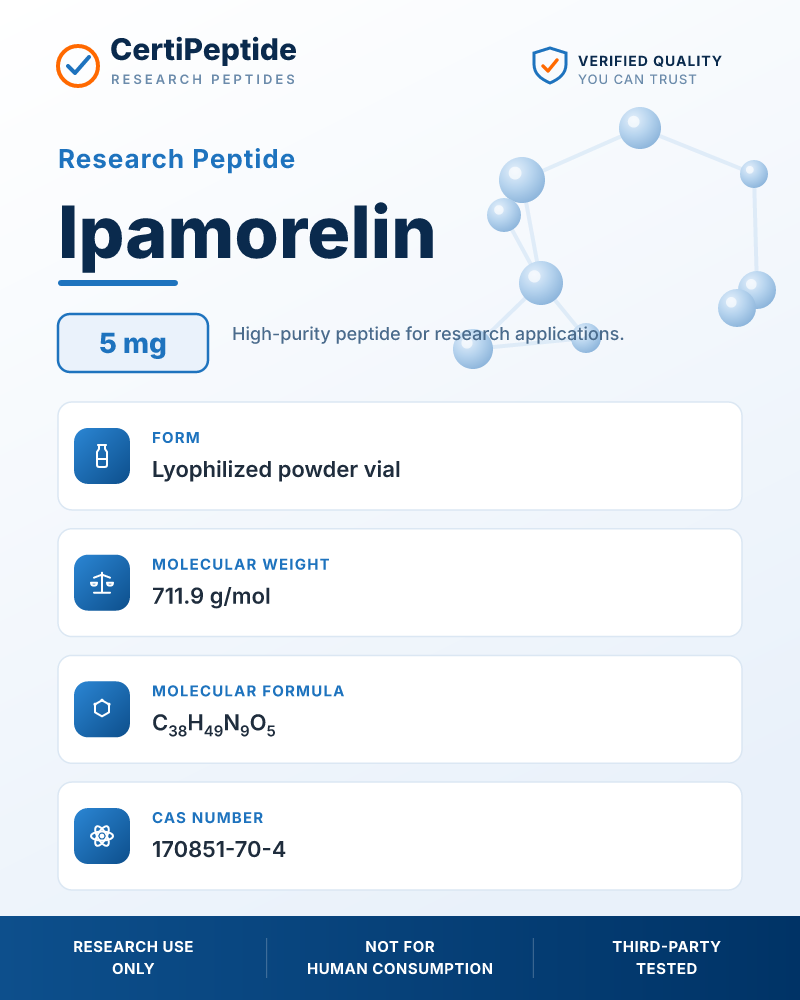
Ipamorelin
Growth Hormone Axis Research99.791% pur

Ipamorelin

Dès40,00 $US(0,80 $US/mg)
10 vials × 5 mg · 50 mg total
Gros · remises sur volumeEn stock
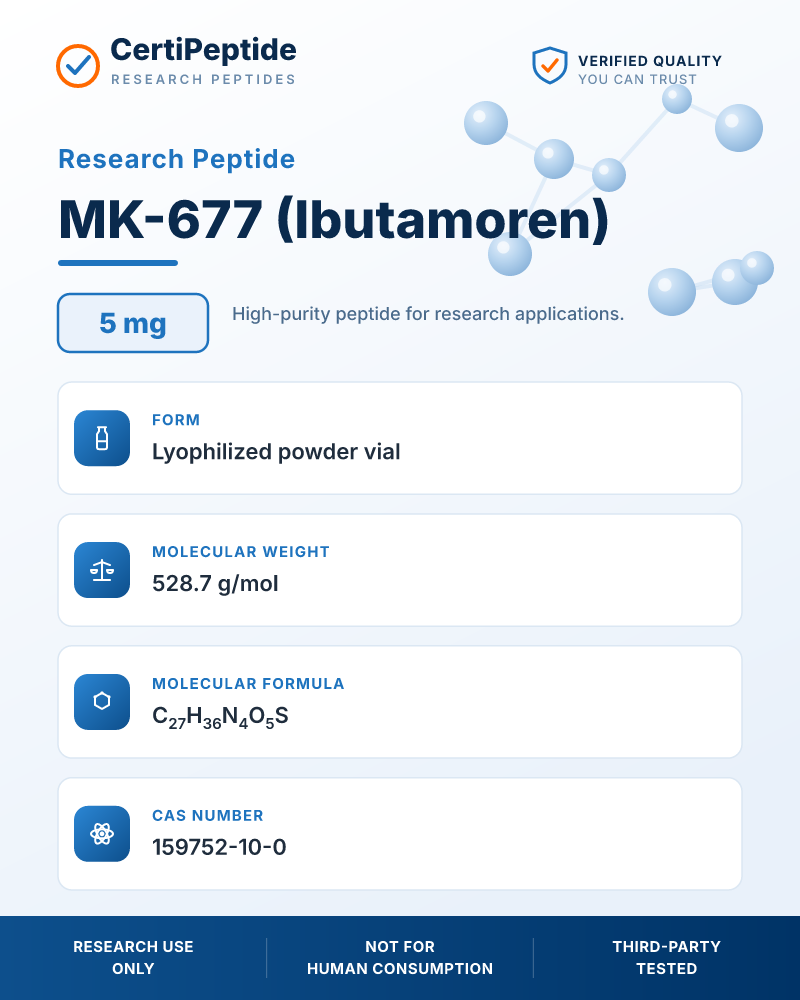
MK-677 (Ibutamoren)
Growth Hormone Axis Research

MK-677 (Ibutamoren)

56,00 $US(1,12 $US/mg)
10 vials × 5 mg · 50 mg total
Gros · remises sur volumeEn stock
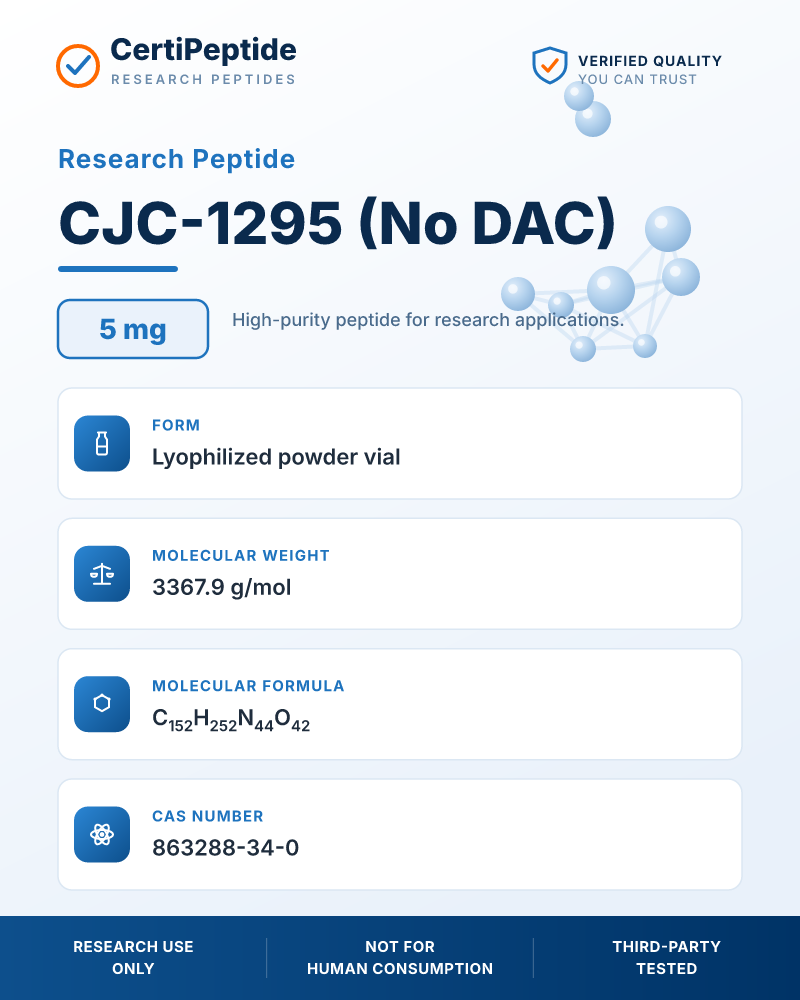
CJC-1295 (No DAC)
Growth Hormone Axis Research99.493% pur

CJC-1295 (No DAC)

Dès45,00 $US(2,25 $US/mg)
10 vials × 2 mg · 20 mg total
Gros · remises sur volumeEn stock
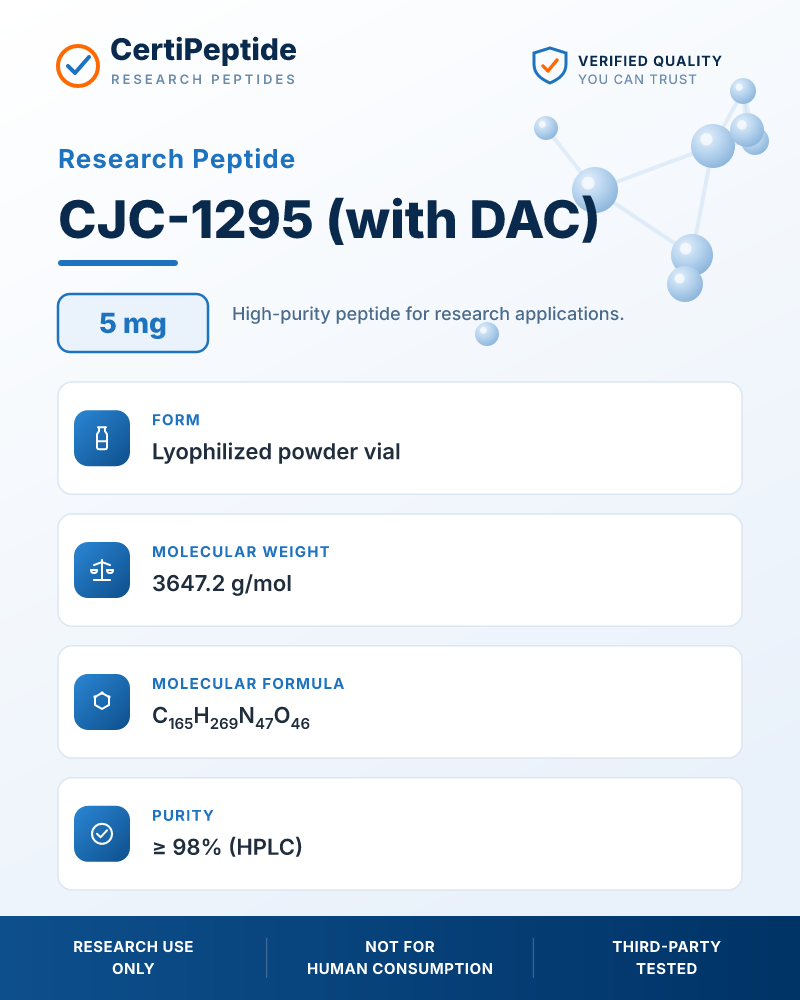
CJC-1295 (with DAC)
Growth Hormone Axis Research

CJC-1295 (with DAC)

Dès75,00 $US(3,75 $US/mg)
10 vials × 2 mg · 20 mg total
Gros · remises sur volumeEn stock