TL;DR PTD-DBM vs Melanotan II highlights two distinct research peptides: PTD-DBM targets Wnt/β-catenin signaling in hair follicle studies, while Melanotan II acts on melanocortin receptors for pigmentation research. This PTD-DBM Melanotan II comparison examines structural variances, in vitro/in vivo models, and laboratory use cases without overlapping applications.
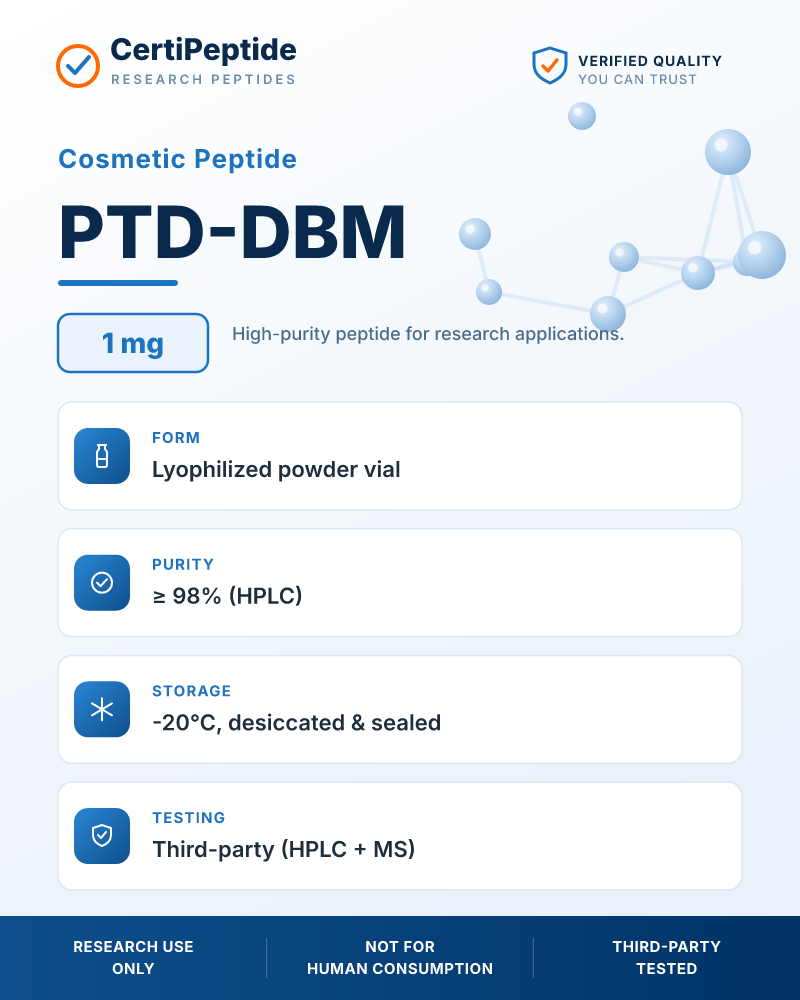
Overview of PTD-DBM in Research PTD-DBM is a synthetic peptide investigated in laboratory settings for its role in modulating the Wnt signaling pathway. Researchers utilize PTD-DBM to examine β-catenin stabilization and its effects on cellular proliferation in dermal papilla cells. Studies often focus on in vitro models of hair follicle regeneration and gene expression changes related to follicular development.
In controlled experiments, PTD-DBM demonstrates selectivity for pathway activation without broad systemic effects observed in other compounds. Its research profile centers on topical or localized application in explant cultures and cell lines.
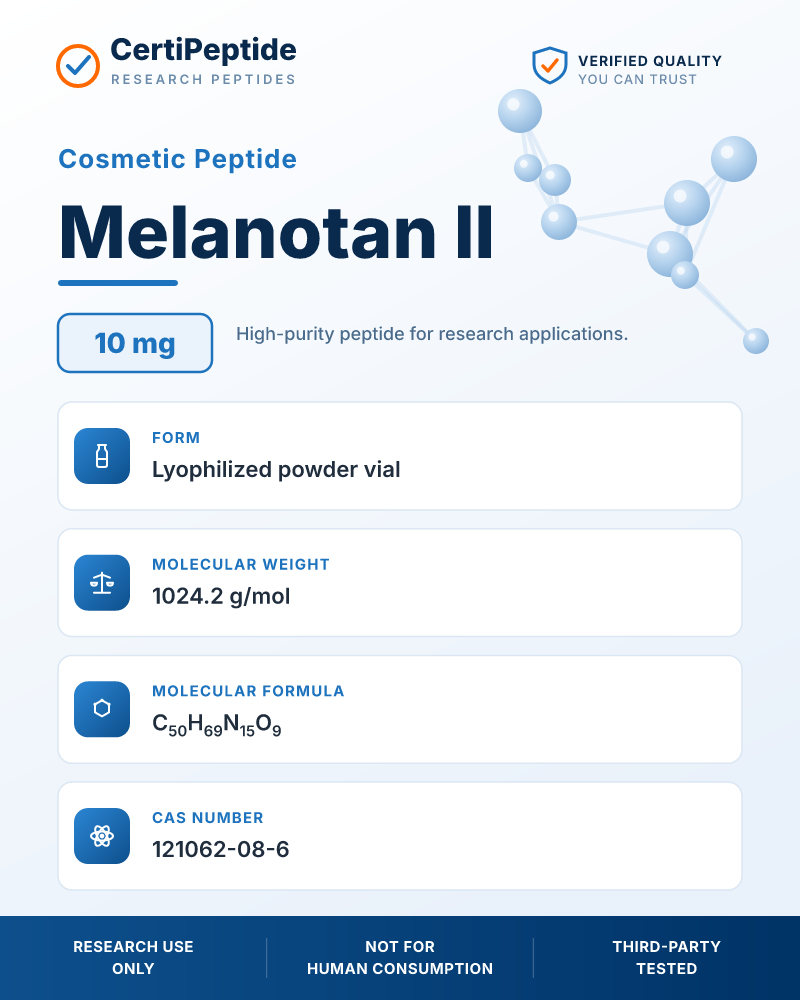
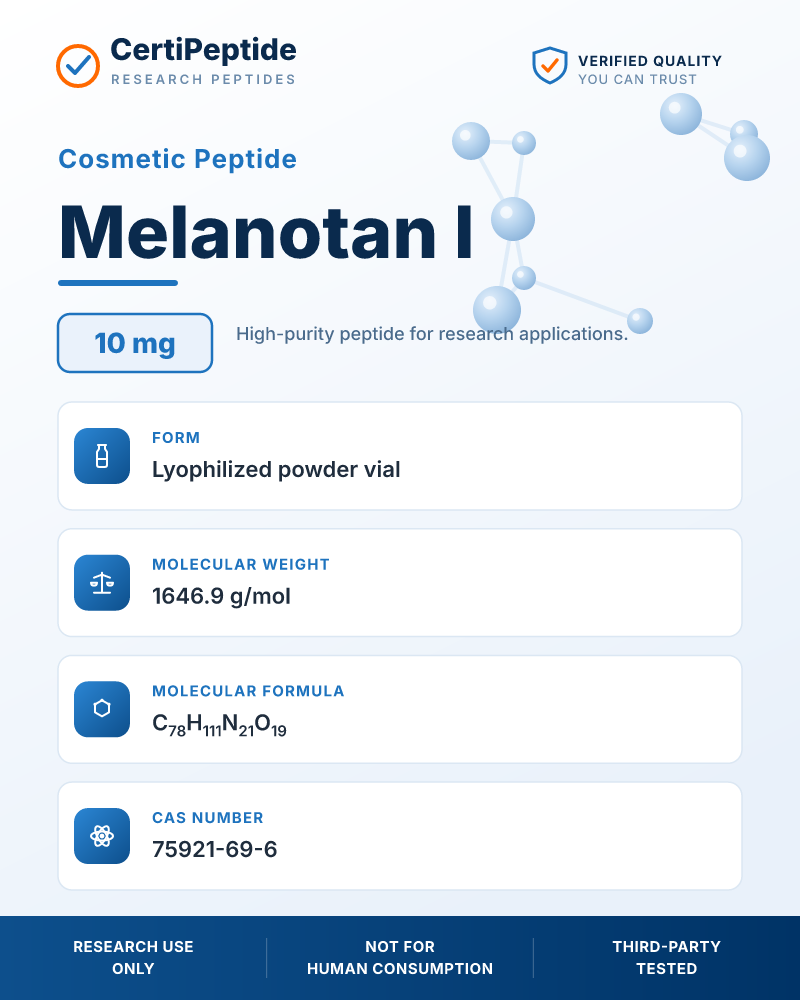
Overview of Melanotan II in Research Melanotan II serves as a cyclic melanocortin analog in scientific investigations of pigmentation and energy balance pathways. Laboratory protocols employ Melanotan II to probe MC1R and MC4R receptor interactions, measuring melanin synthesis in melanocyte cultures and appetite-related signaling in rodent models.
Research with Melanotan II typically involves subcutaneous administration in animal studies to quantify dose-dependent responses in skin pigmentation assays and hypothalamic activity markers.
PTD-DBM vs Melanotan II: Structural and Mechanistic Differences The PTD-DBM vs Melanotan II analysis reveals clear distinctions. PTD-DBM incorporates a protein transduction domain fused to a β-catenin-binding motif, enabling direct intracellular pathway engagement. Melanotan II, by contrast, features a lactam-bridged structure mimicking α-MSH for receptor agonism.
Mechanistically, PTD-DBM influences transcriptional regulation via Wnt targets, whereas Melanotan II modulates cAMP production through G-protein coupled receptors. These differences guide separate experimental designs: PTD-DBM suits dermal organoid research, Melanotan II fits pigmentation and neuroendocrine assays.
Similarities in Laboratory Applications Both PTD-DBM and Melanotan II function as tools for peptide-based signaling studies. Researchers value their stability in buffered solutions and compatibility with common cell culture media. In comparative peptide research, both compounds allow investigation of receptor-independent versus receptor-dependent effects in isolated systems.
Shared attributes include synthetic origin, high purity requirements for assays, and utility in dose-response curves across multiple cell types.
PTD-DBM Melanotan II Comparison in Study Designs When conducting a PTD-DBM Melanotan II comparison, protocols emphasize non-overlapping endpoints. PTD-DBM experiments track alkaline phosphatase activity and hair shaft elongation in follicle cultures. Melanotan II studies quantify tyrosinase upregulation and eumelanin levels in skin equivalents.
Cross-validation rarely occurs due to divergent pathways, yet both peptides support high-throughput screening for analog development in academic and industrial labs.
Use in Research Studies Laboratory investigations of PTD-DBM focus on Wnt modulation in tissue engineering contexts. Melanotan II research explores melanocortin effects on photoprotection models and metabolic parameters in vitro. Selection between PTD-DBM or Melanotan II depends on the targeted biological question rather than interchangeable use.
Frequently Asked Questions
What distinguishes PTD-DBM from Melanotan II in research models?
PTD-DBM engages Wnt/β-catenin pathways for follicle-related assays, while Melanotan II targets melanocortin receptors in pigmentation studies.
Can PTD-DBM and Melanotan II be used interchangeably in lab experiments?
No, their distinct mechanisms limit interchangeability; PTD-DBM suits Wnt research and Melanotan II suits melanocortin pathway investigations.
What research applications suit PTD-DBM studies?
PTD-DBM is applied in dermal cell cultures and organoid models examining β-catenin stabilization and follicular gene expression.
How is Melanotan II typically studied in laboratory settings?
Melanotan II is examined in melanocyte cultures and rodent models for MC1R/MC4R activation and melanin production metrics.
Explore Further
Browse our [research peptide catalog](/shop) and review third-party [lab reports & COAs](/lab-reports) for every batch.
---
**Research use only.** The information above is provided for educational and laboratory research purposes only. The compounds discussed are not approved for human or veterinary use, diagnosis, treatment, or the prevention of any disease. Nothing here is medical advice.