TL;DR
When researchers evaluate **Glow70 (TB-500 + BPC-157 + GHK) vs BPC-157 + TB-500 Blend**, the core question is how adding GHK expands or shifts measurable endpoints relative to the dual peptide pair alone. Both preparations combine sequences widely used in preclinical models of tissue remodeling, cell migration, and angiogenesis. Glow70 (TB-500 + BPC-157 + GHK) layers GHK onto that foundation; the BPC-157 + TB-500 Blend keeps the design simpler for isolation of two-pathway effects. This guide summarizes composition, overlapping literature signals, and practical differences for laboratory study design only.
What Is Glow70 (TB-500 + BPC-157 + GHK)?
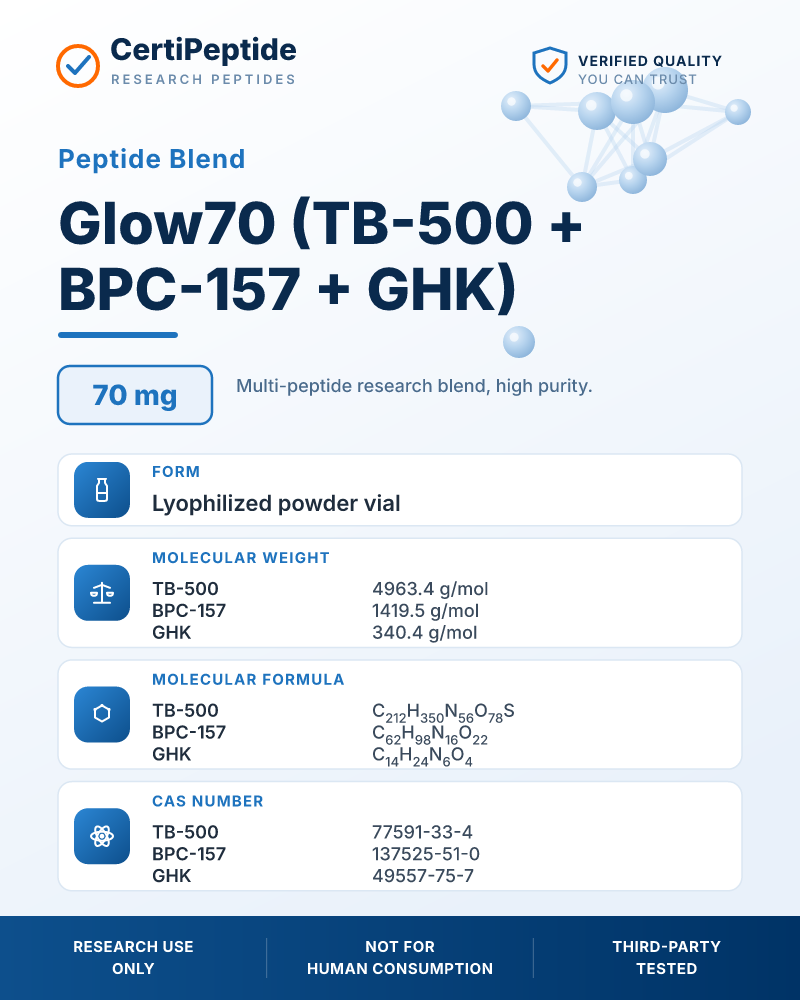
Glow70 (TB-500 + BPC-157 + GHK) is a multi-peptide research material that co-formulates three sequences frequently cited in experimental literature:
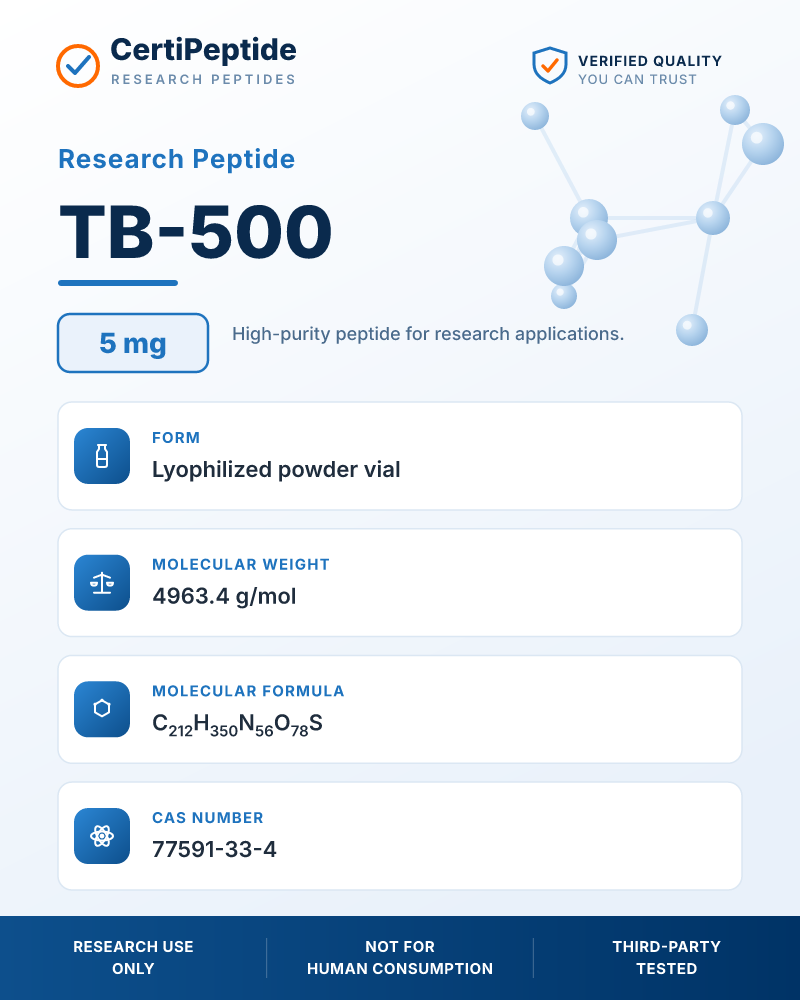
- **TB-500** — a synthetic fragment related to thymosin β4, studied for actin-binding dynamics, cell motility, and wound-matrix remodeling in vitro and in animal models.
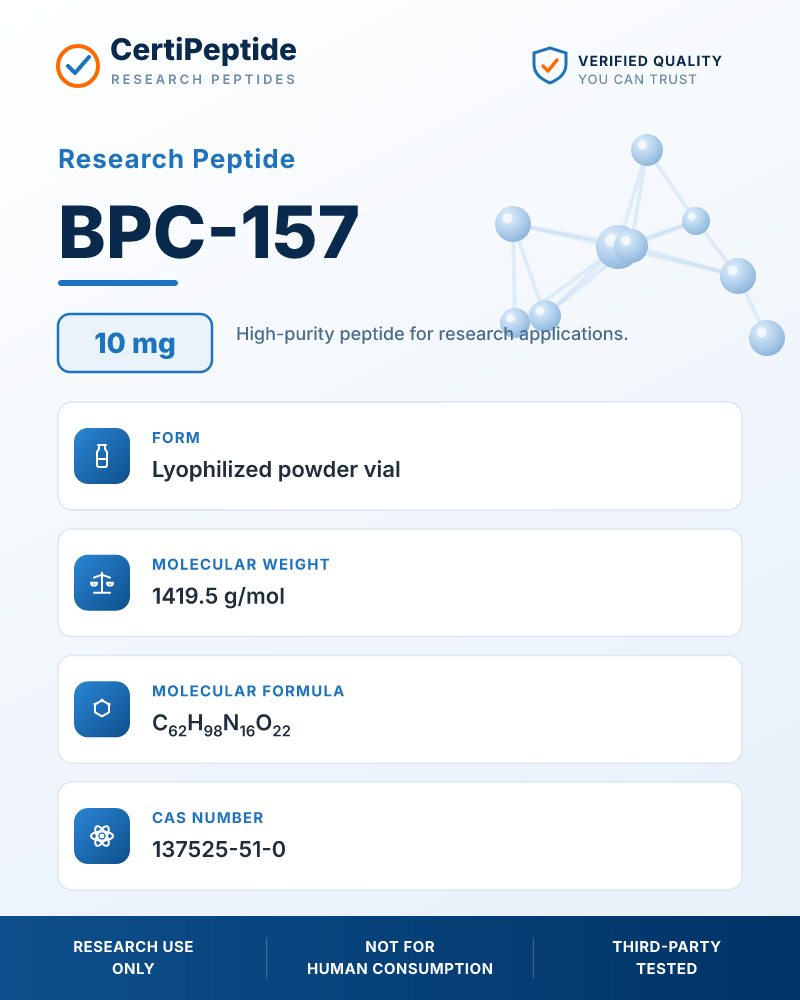
- **BPC-157** — a pentadecapeptide originally characterized in gastrointestinal protection models and later examined for angiogenesis-related gene expression, tendon/ligament healing assays, and nitric-oxide pathway interactions in laboratory systems.
- **GHK** — a tripeptide (glycyl-L-histidyl-L-lysine) investigated for extracellular-matrix gene modulation, copper-binding behavior (often discussed alongside GHK-Cu), antioxidant-related markers, and fibroblast responses in cell-culture and skin-equivalent models.
In a research catalog context, Glow70 is positioned as a single-vial triple combination so investigators can probe multi-pathway crosstalk without preparing three separate stocks for every arm—useful in screening designs, co-treatment matrices, or resource-limited pilot work. Exact molar ratios, salt forms, and purity specifications should always be confirmed on the certificate of analysis (CoA) for the lot under study.
What Is the BPC-157 + TB-500 Blend?
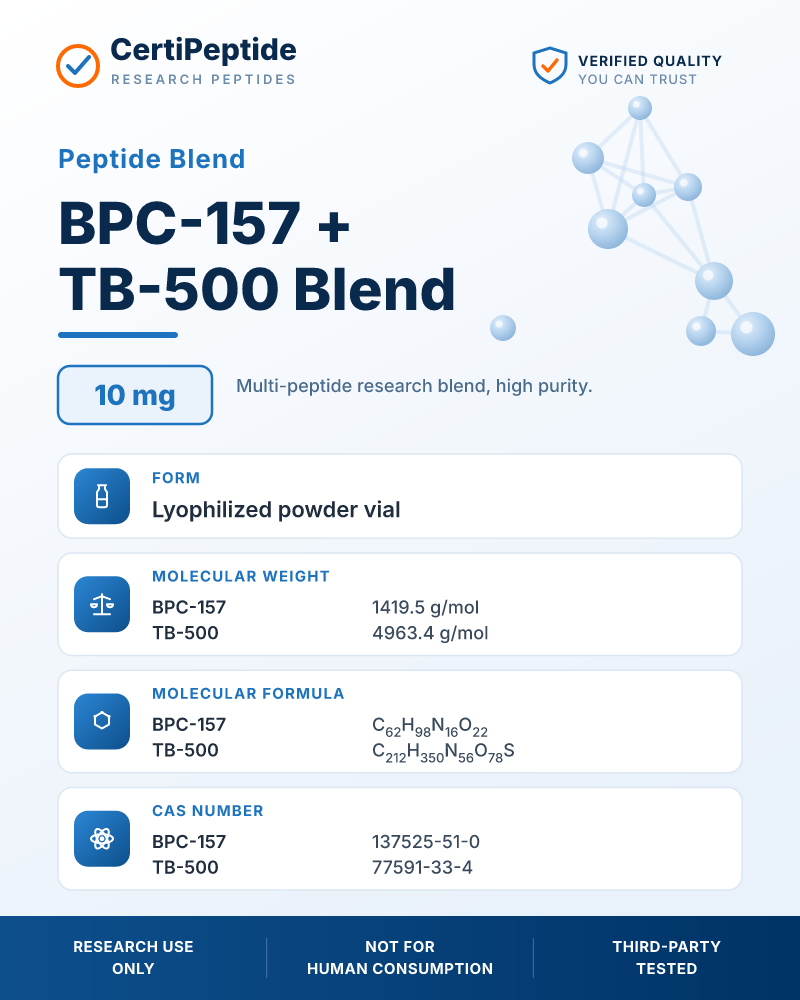
The BPC-157 + TB-500 Blend is a dual-peptide research preparation limited to the two sequences above. It is commonly selected when the experimental hypothesis centers on:
- Cytoskeletal reorganization and migration (TB-500–linked readouts)
- Local tissue-repair signaling and angiogenic markers (BPC-157–linked readouts)
- Interaction or additivity between those two axes without a third variable
Because GHK is absent, variance attributable to matrix-remodeling or copper-chelation pathways associated with GHK can be excluded or introduced later as a separate factor. That makes the dual blend attractive for factorial designs, dose-ranging of two agents, and clearer attribution in mechanistic papers.
Glow70 (TB-500 + BPC-157 + GHK) vs BPC-157 + TB-500 Blend: Core Comparison
| Dimension | Glow70 (TB-500 + BPC-157 + GHK) | BPC-157 + TB-500 Blend |
| --- | --- | --- |
| Peptide count | Three (TB-500, BPC-157, GHK) | Two (BPC-157, TB-500) |
| Extra axis | GHK-related ECM / redox / fibroblast signaling | None beyond dual pair |
| Hypothesis fit | Multi-pathway screening; tissue + matrix co-endpoints | Focused dual-pathway isolation |
| Design complexity | Higher (three-way interactions) | Lower (two-way interactions) |
| Control needs | Vehicle + optional single-peptide arms recommended | Vehicle + single-peptide arms still advised |
| Typical lab use | Broad remodeling panels, combo screens | Mechanistic additivity / synergy of two agents |
**Similarities.** Both materials share BPC-157 and TB-500, so overlapping literature themes apply: cell migration assays, angiogenesis-related markers (e.g., VEGF pathway readouts in appropriate models), cytoskeletal proteins, and soft-tissue healing endpoints in controlled animal or explant systems. Handling themes are also shared—peptide stability, light/temperature sensitivity, reconstitution solvent choice, and aliquot strategy to limit freeze–thaw cycles.
**Differences.** The decisive distinction is GHK. Including GHK can recruit additional measurable dimensions (collagen-related gene expression, metalloproteinase balance, copper-dependent enzyme context, and certain anti-inflammatory or antioxidant markers reported in GHK literature). That can enrich phenotype coverage but also confounds clean attribution unless the study includes GHK-only and dual-only comparator arms. Glow70 therefore suits exploratory multi-endpoint work; the BPC-157 + TB-500 Blend suits tighter mechanistic questions about those two sequences alone.
Mechanistic Themes Reported in Preclinical Literature
The following themes are drawn from separate bodies of work on each peptide. They are **not** clinical claims and do not establish that any blend “works” in humans. They indicate why laboratories co-study these sequences.
TB-500–associated research themes Thymosin β4 and related fragments have been examined for sequestration of G-actin, promotion of cell motility in scratch-wound assays, and modulation of inflammatory cell infiltration in injury models. Downstream proteins tied to repair cascades appear in multiple preclinical reports, making TB-500 a frequent component when migration and early matrix organization are primary readouts.
BPC-157–associated research themes BPC-157 has been profiled in rodent gastrointestinal lesion models, tendon and ligament transection or crush models, and vascular-response assays. Proposed laboratory mechanisms discussed in the literature include interactions with growth-factor signaling, nitric-oxide pathways, and cytoprotective responses under stress conditions in vitro. Researchers often pair it with histological scoring, biomechanical testing of healed tissue, and molecular markers of angiogenesis.
GHK–associated research themes GHK (and GHK-Cu where copper is present) appears in dermatology-oriented and matrix-biology literature: upregulation or modulation of collagen and extracellular-matrix genes, effects on MMP/TIMP balance in culture systems, and markers linked to oxidative stress. In a triple blend, GHK is the component most likely to shift transcriptomic or proteomic signatures toward matrix quality and remodeling depth rather than motility alone.
Why combine them in one research material? Laboratories sometimes prefer fixed blends to reduce pipetting error, standardize relative exposure across animals or wells, and mimic multi-signal environments that single peptides cannot. Conversely, blends sacrifice independent titration. Choosing Glow70 (TB-500 + BPC-157 + GHK) or BPC-157 + TB-500 Blend therefore depends on whether the protocol prioritizes breadth (triple) or interpretability of a two-agent interaction (dual).
Study-Design Considerations for Comparative Work
1. **Define the primary endpoint family first.** Migration/angiogenesis-heavy designs may not need GHK; ECM-gene or dermal-equivalent designs may benefit from the triple set.
2. **Include disaggregated controls.** Even when using Glow70, plan single-peptide and dual-peptide arms if the goal is to publish interaction statistics. The dual blend alone still benefits from BPC-157-only and TB-500-only groups.
3. **Match vehicles and osmolarity.** Multi-peptide solutions can differ in residual salts and counter-ions; normalize vehicles across arms.
4. **Document lot-level analytics.** HPLC purity, identity (MS), endotoxin where relevant, and peptide content assays should be archived for both Glow70 and the BPC-157 + TB-500 Blend lots.
5. **Stability and storage.** Follow supplier guidance for lyophilized storage (typically cold, desiccated, protected from light). After reconstitution, use validated hold times; do not assume identical degradation kinetics for every sequence in a blend.
6. **Analytical interference.** If quantifying one peptide in a matrix that contains the others, validate chromatographic separation or orthogonal assays so GHK does not confound BPC-157/TB-500 measurements (and vice versa).
7. **Model selection.** In vitro fibroblast or endothelial systems highlight different facets than in vivo soft-tissue injury models. Align the blend choice with the model’s dominant biology.
Practical Selection Guide for Laboratories
**Prefer Glow70 (TB-500 + BPC-157 + GHK) when:**
- The screen spans motility **and** matrix-remodeling endpoints.
- Sample throughput or vial count is constrained and a fixed triple ratio is acceptable.
- Pilot multi-omics work will later dissect contribution with single peptides.
**Prefer BPC-157 + TB-500 Blend when:**
- The hypothesis is strictly about BPC-157 × TB-500 interaction.
- Regulatory or internal review boards require minimal compositional complexity.
- Independent titration of a third agent (GHK or another probe) will be introduced as a separate experimental factor.
**Either product** should be treated as a research chemical for controlled laboratory investigation only. Study protocols, institutional approvals, and analytical validation remain the investigator’s responsibility.
Summary
A structured **Glow70 (TB-500 + BPC-157 + GHK) BPC-157 + TB-500 Blend comparison** reduces to one scientific fork: keep the classic dual pair for clean two-pathway inference, or add GHK to recruit ECM- and redox-linked dimensions under a single multi-peptide treatment. Similarities rest on shared BPC-157 and TB-500 literature; differences rest on GHK’s distinct experimental footprint and the statistical cost of three-way interactions. Matching blend complexity to endpoint strategy—and backing every arm with appropriate single-peptide controls—yields clearer, more publishable research outcomes.
FAQ
Explore Further
Browse our [research peptide catalog](/shop) and review third-party [lab reports & COAs](/lab-reports) for every batch.
---
**Research use only.** The information above is provided for educational and laboratory research purposes only. The compounds discussed are not approved for human or veterinary use, diagnosis, treatment, or the prevention of any disease. Nothing here is medical advice.