PTD-DBM
Research Peptide | Lyophilized Powder | Batch Tested
For laboratory research use only. Not for human or animal consumption. Insulated shipping · Styrofoam box available.
Product Overview
PTD-DBM is a cell-penetrating research peptide designed to disrupt the interaction between CXXC5 and Dishevelled — a negative-feedback brake on the Wnt/β-catenin signaling pathway. Releasing this brake is studied as a strategy to reactivate regenerative signaling.
Laboratorio: Stand Science & Technology Pharmaceutical (Qingdao) Co., Ltd. (Stand Group)
Resultados de los análisis del lote 88N5O2ZCIR1W →| Análisis | Resultado |
|---|---|
| AppearanceVisual | White loose powderPass |
| Mass spectrumMS | ConformsPass |
| PurityHPLC | 99.6 %Pass |
| Peptide contentHPLC | 91.2 %Pass |
| Actual fillGravimetric | 1.18 mgPass |
| Water contentKarl Fischer | 4.9 %Pass |
| Bacterial endotoxinsLAL (gel-clot) | <3 EU/mgPass |
SKU y presentación
| SKU | Por vial | Viales por caja | Precio de la caja |
|---|---|---|---|
| PTDDBM1 | 1 mg | 10 | 73,00 US$ |
Las cantidades nominales describen la etiqueta; los resultados medidos figuran en cada informe. Un informe publicado no confirma el lote asignado a un pedido futuro.
Preguntas sobre el producto y la documentación
¿Cómo interpreto el tamaño y la cantidad?
La cantidad por vial y los viales por caja aparecen por separado. El precio corresponde a una caja. En mezclas, el tamaño puede ser combinado; consulte la etiqueta y el informe para cada componente.
¿Cómo encuentro el COA correspondiente?
Compare producto, SKU y número de lote. La página del lote muestra resultados, informe original y enlace de verificación. Consulte al soporte si su pedido no indica el lote asignado.
¿Un resultado de pureza significa que se aprobaron todas las pruebas?
No. Identidad, pureza, llenado y endotoxinas son mediciones distintas. Revise cada resultado y unidad. Un resultado ausente no equivale a aprobado, y un valor inferior a un límite no es cero.
Research Information
PTD-DBM is used to study activation of Wnt/β-catenin signaling in hair-follicle neogenesis and wound-healing models. It is frequently examined together with valproic acid (another Wnt activator) to study follicle regeneration in cosmetic and dermal research. Supplied strictly for in-vitro and laboratory research use only — not for human or animal consumption.
Learn more
Read research overviews, COA verification guides, and reconstitution notes in our Knowledge Hub.
Explore Other High-Purity Peptides
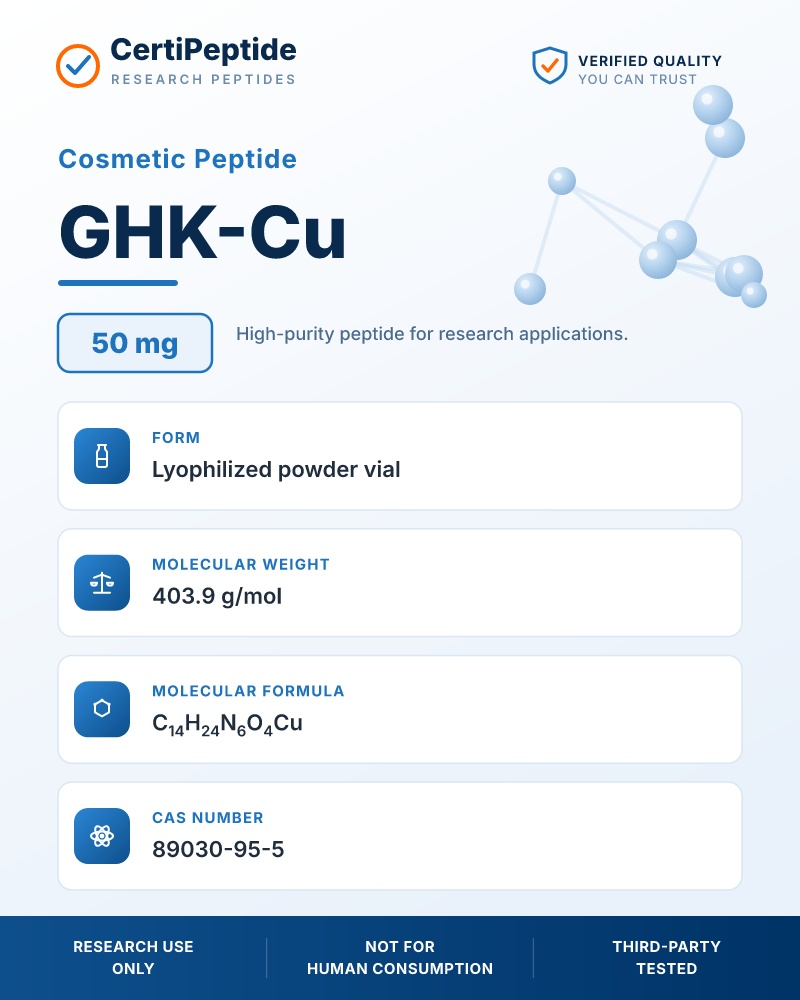
GHK-Cu
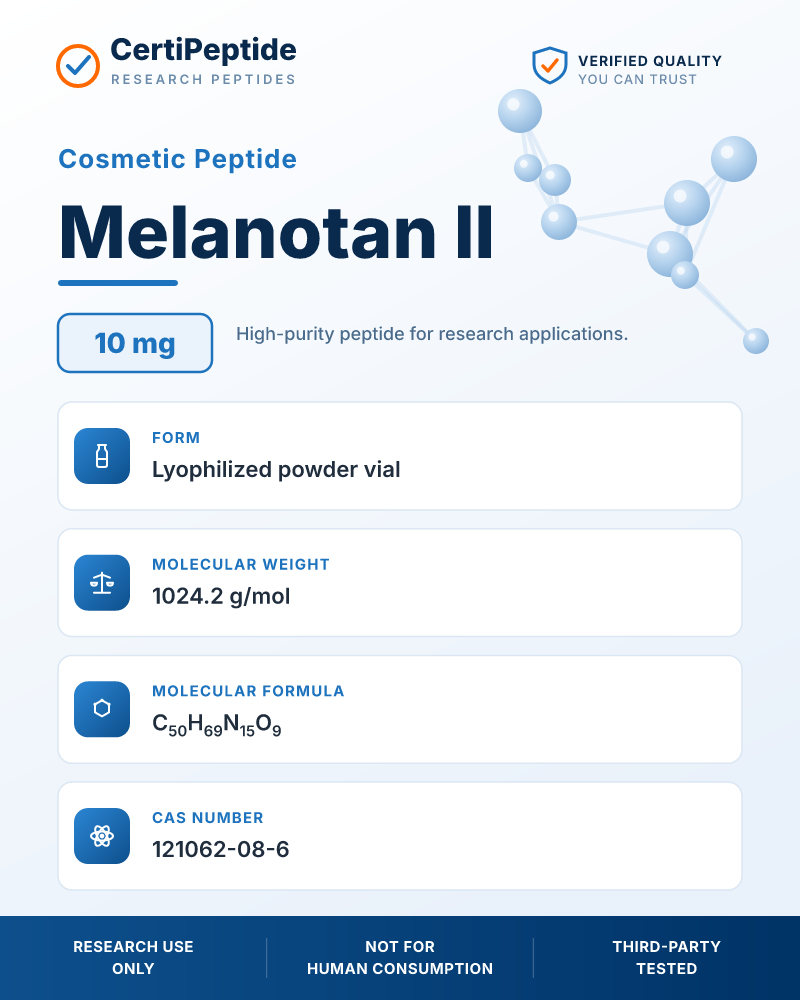
Melanotan II
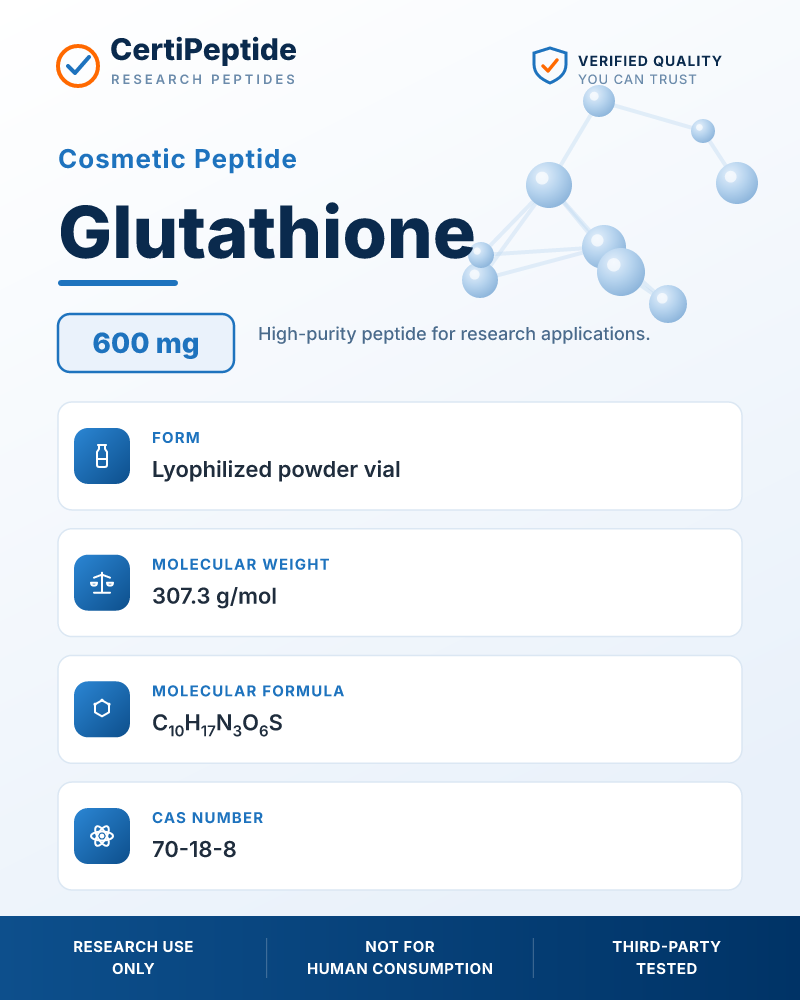
Glutathione