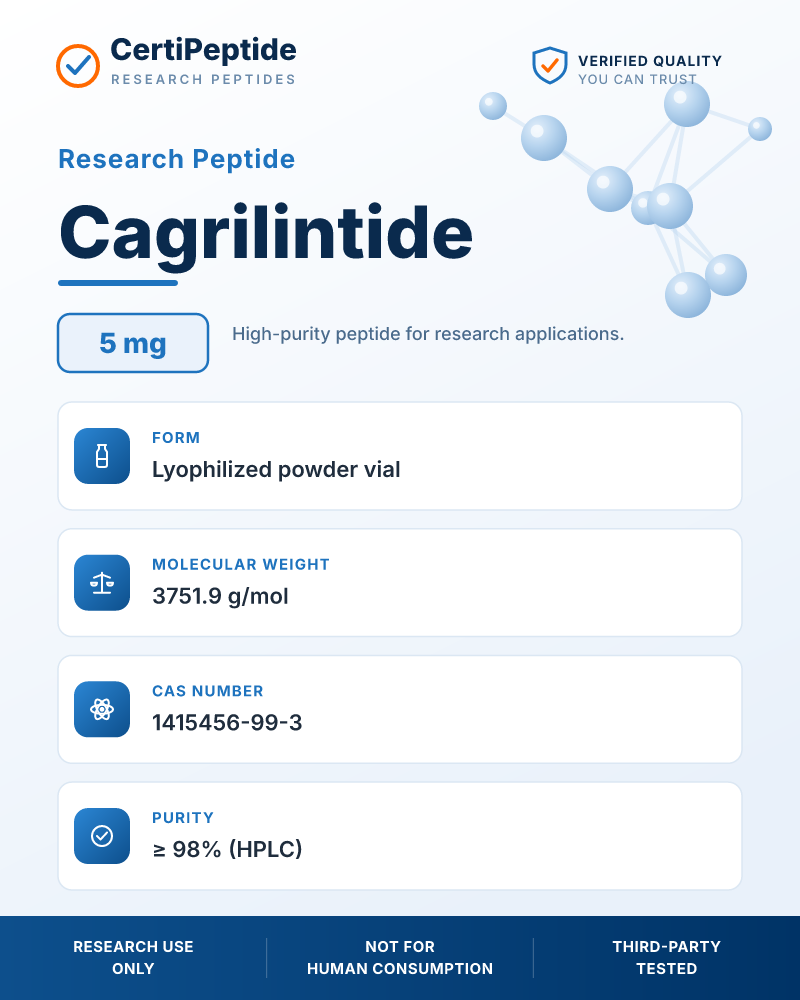
Mazdutide
Research Peptide | Lyophilized Powder | Batch Tested
For laboratory research use only. Not for human or animal consumption. Insulated shipping · Styrofoam box available.
Product Overview
Mazdutide is an investigational dual GLP-1 and glucagon receptor agonist peptide studied in metabolic and energy-balance research. By combining GLP-1-driven satiety with glucagon-driven energy expenditure in a single molecule, it is used to explore a different receptor balance than GIP/GLP-1 agonists.
Laboratorio: Stand Science & Technology Pharmaceutical (Qingdao) Co., Ltd. (Stand Group)
Resultados de los análisis del lote PBZTMK42NNU6 →1 / 2
| Análisis | Resultado |
|---|---|
| AppearanceVisual | White loose powderPass |
| Mass spectrumMS | ConformsPass |
| PurityHPLC | 99.0 %Pass |
| Peptide contentHPLC | 92.9 %Pass |
| Actual fillGravimetric | 5.93 mgPass |
| Water contentKarl Fischer | 4.8 %Pass |
| Bacterial endotoxinsLAL (gel-clot) | <3 EU/mgPass |
SKU y presentación
Las cantidades nominales describen la etiqueta; los resultados medidos figuran en cada informe. Un informe publicado no confirma el lote asignado a un pedido futuro.
Preguntas sobre el producto y la documentación
¿Cómo interpreto el tamaño y la cantidad?
La cantidad por vial y los viales por caja aparecen por separado. El precio corresponde a una caja. En mezclas, el tamaño puede ser combinado; consulte la etiqueta y el informe para cada componente.
¿Cómo encuentro el COA correspondiente?
Compare producto, SKU y número de lote. La página del lote muestra resultados, informe original y enlace de verificación. Consulte al soporte si su pedido no indica el lote asignado.
¿Un resultado de pureza significa que se aprobaron todas las pruebas?
No. Identidad, pureza, llenado y endotoxinas son mediciones distintas. Revise cada resultado y unidad. Un resultado ausente no equivale a aprobado, y un valor inferior a un límite no es cero.
Research Information
Mazdutide is used to examine how simultaneous GLP-1 and glucagon receptor activation influences energy expenditure, appetite, glucose control and hepatic lipid metabolism in preclinical models. Research contrasts glucagon-associated thermogenesis with GLP-1-associated satiety, helping to characterize the trade-offs of dual agonism in metabolic tool compounds. Supplied strictly for in-vitro and laboratory research use only — not for human or animal consumption.
Learn more
Read research overviews, COA verification guides, and reconstitution notes in our Knowledge Hub.
Explore Other High-Purity Peptides
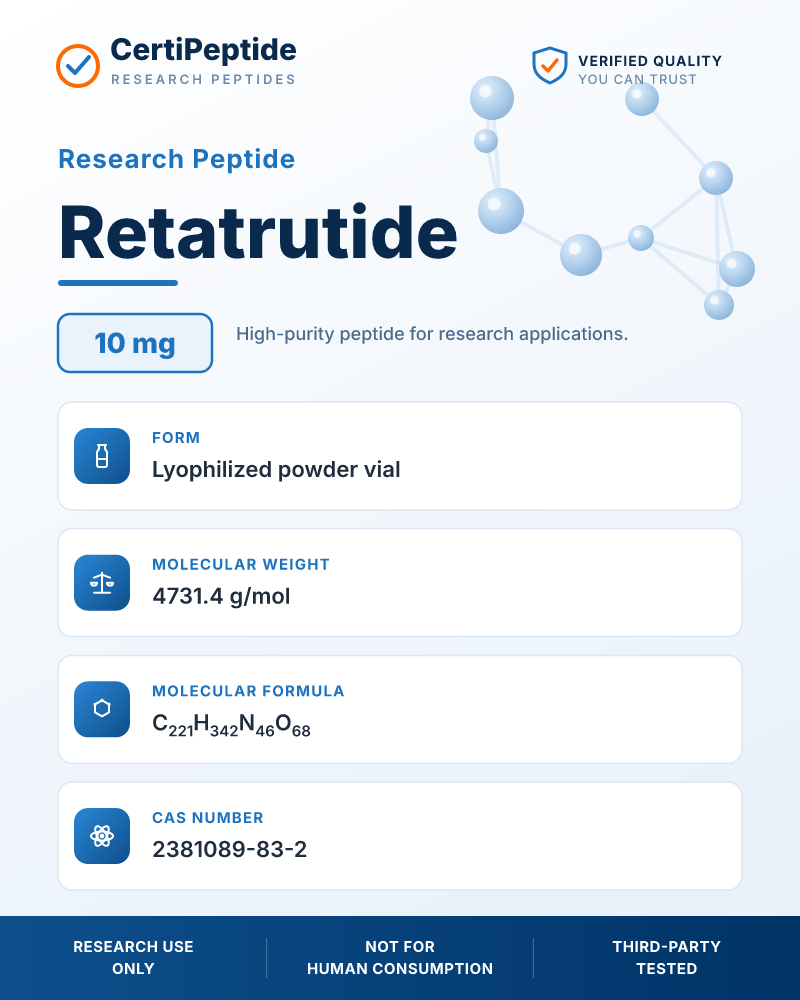
Retatrutide
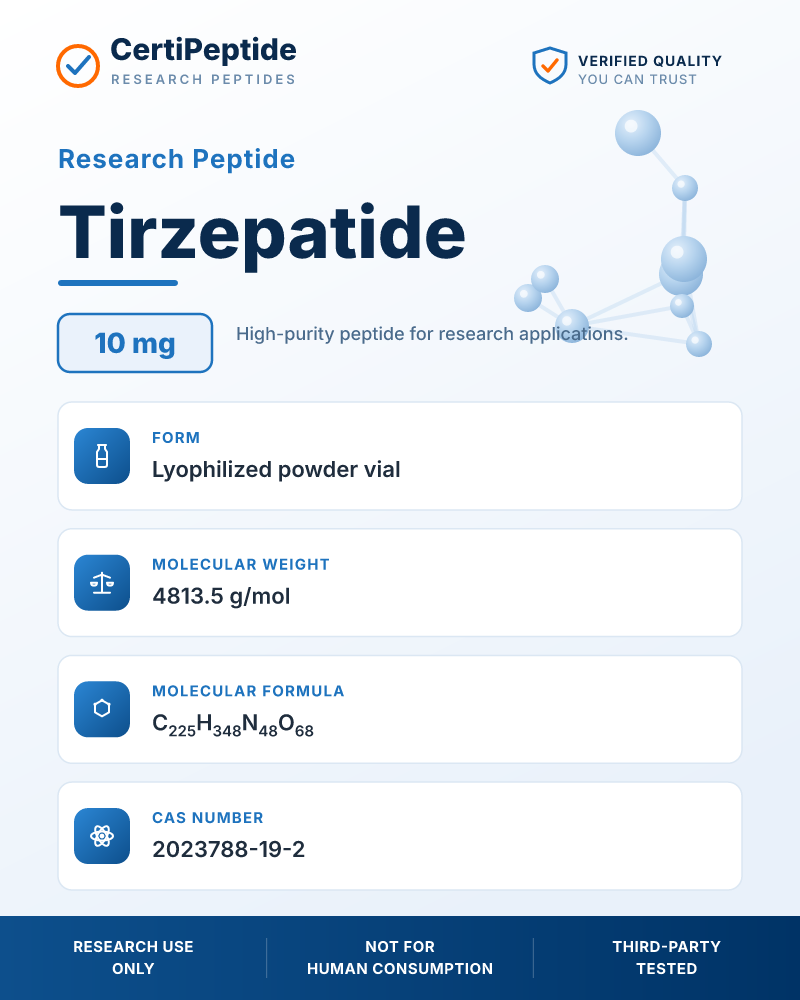
Tirzepatide
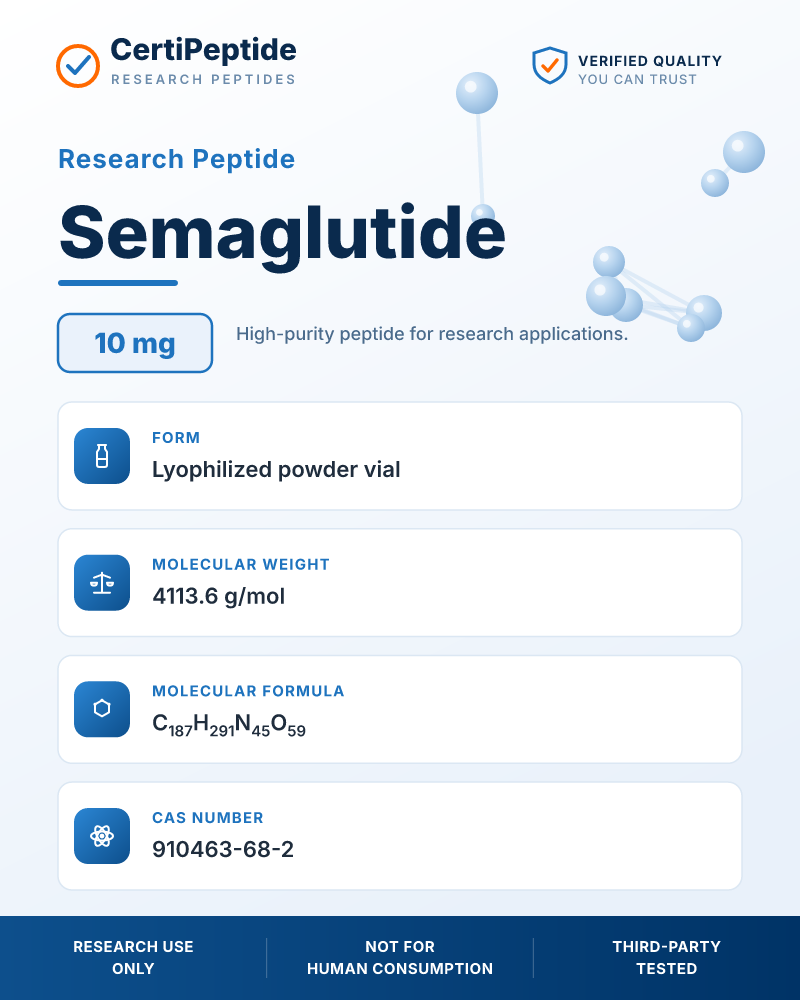
Semaglutide