TL;DR
In laboratory research settings, Crystagen and Thymosin Alpha-1 are both thymic peptides studied for immune modulation properties. This Crystagen vs Thymosin Alpha-1 comparison highlights shared origins in thymic function alongside distinct molecular profiles and observed effects in vitro and in animal models.
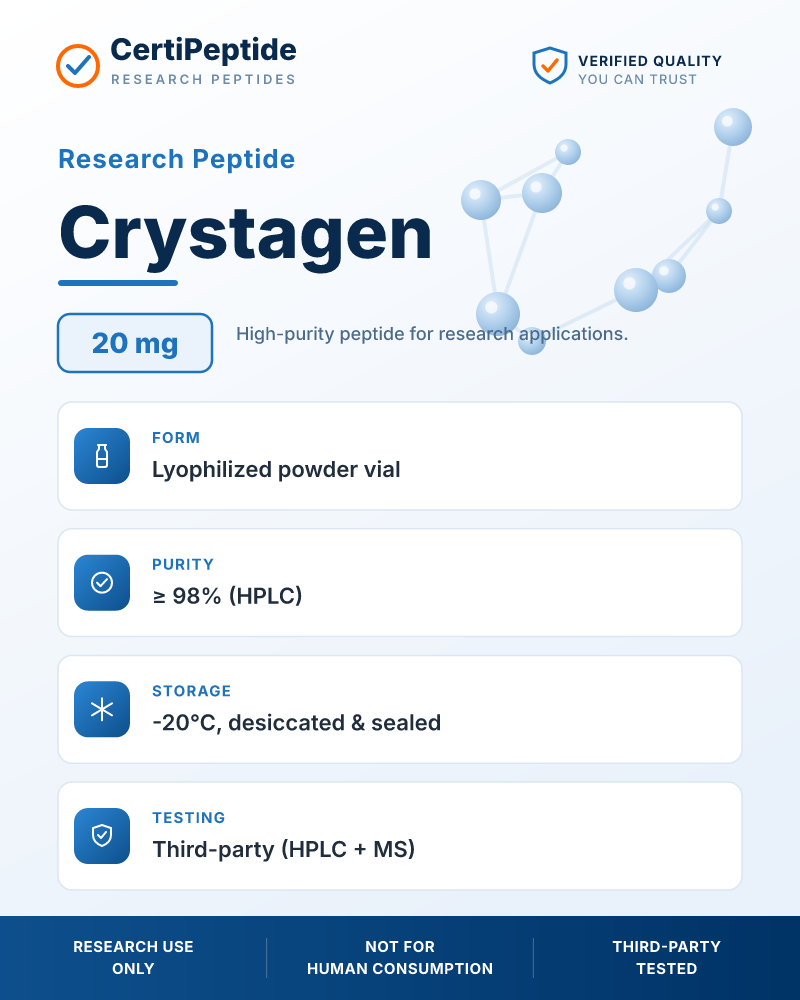
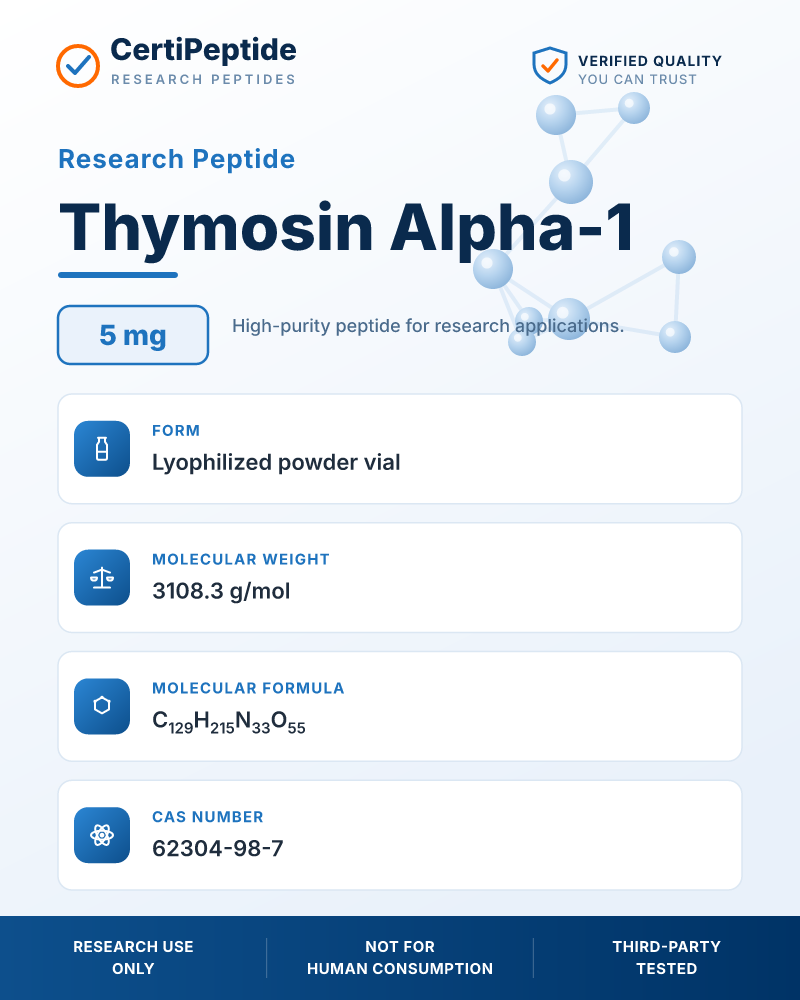
Crystagen vs Thymosin Alpha-1 in Laboratory Settings Researchers frequently examine Crystagen vs Thymosin Alpha-1 when investigating synthetic peptide analogs derived from thymic sources. Both compounds appear in studies focused on T-cell activity and cytokine signaling, yet their sequences and stability profiles differ. Early publications note that Thymosin Alpha-1 consists of 28 amino acids, while Crystagen represents a shorter synthetic construct often explored for enhanced bioavailability in controlled experiments.
Structural Similarities Between the Peptides Crystagen and Thymosin Alpha-1 share sequence motifs linked to immune peptide families. Both contain regions associated with binding to cellular receptors involved in lymphocyte maturation. In comparative assays, researchers have documented overlapping effects on interferon-gamma production in cell cultures. These parallels make the two compounds useful controls for one another when mapping thymic peptide pathways.
Key Differences Observed in Research Despite similarities, Crystagen exhibits a modified N-terminal region that may influence proteolytic resistance compared with native Thymosin Alpha-1. Studies report variations in half-life under enzymatic conditions, with Crystagen sometimes demonstrating prolonged activity in serum stability tests. Additionally, binding affinity data from surface plasmon resonance experiments suggest subtle differences in receptor interaction kinetics between Crystagen and Thymosin Alpha-1.
Use in Immune Modulation Studies In vitro models of antigen presentation frequently employ both peptides to assess enhancement of MHC class I expression. Animal models of viral challenge have incorporated Crystagen or Thymosin Alpha-1 to evaluate changes in natural killer cell cytotoxicity. Researchers note that selection between the two often depends on desired duration of exposure and specific readout endpoints such as IL-2 secretion or CD4+ proliferation rates.
Analytical Methods for Comparison Mass spectrometry and HPLC protocols are standard for quantifying purity and confirming identity when sourcing Crystagen or Thymosin Alpha-1 for experiments. Researchers also apply ELISA-based immunoassays to measure downstream biomarkers after peptide exposure. These techniques support reproducible Crystagen Thymosin Alpha-1 comparison across independent laboratories.
Future Directions in Peptide Research Ongoing work explores hybrid constructs that combine elements of Crystagen and Thymosin Alpha-1 to optimize stability while retaining bioactivity. High-throughput screening platforms now include both peptides as reference standards when evaluating novel thymic analogs. Such comparative frameworks continue to refine understanding of structure-activity relationships in immune peptide research.
Frequently Asked Questions
What is the main structural difference between Crystagen and Thymosin Alpha-1?
Crystagen is a shorter synthetic peptide with a modified N-terminus that may confer greater proteolytic resistance compared with the 28-amino-acid sequence of Thymosin Alpha-1.
Are Crystagen and Thymosin Alpha-1 interchangeable in cell culture studies?
While both influence T-cell markers and cytokine output, researchers select one or the other based on stability requirements and specific assay endpoints rather than treating them as direct substitutes.
How do researchers typically quantify these peptides?
Standard methods include HPLC for purity assessment and mass spectrometry for sequence confirmation when preparing Crystagen or Thymosin Alpha-1 for laboratory use.
What research models commonly feature Crystagen vs Thymosin Alpha-1 comparisons?
In vitro immune cell assays and rodent models of viral challenge are frequent platforms for evaluating functional differences between the two peptides.
Explore Further
Browse our [research peptide catalog](/shop) and review third-party [lab reports & COAs](/lab-reports) for every batch.
---
**Research use only.** The information above is provided for educational and laboratory research purposes only. The compounds discussed are not approved for human or veterinary use, diagnosis, treatment, or the prevention of any disease. Nothing here is medical advice.