TL;DR
In laboratory research, the Tesamorelin + Ipamorelin Blend vs Klow80 (TB-500 + BPC-157 + GHK + KPV) comparison highlights distinct peptide pathways: the blend targets growth hormone axis modulation while Klow80 centers on tissue repair and inflammation markers. Researchers examine both for potential synergistic effects in controlled in vitro and animal models without extending findings to human applications.
Overview of Tesamorelin + Ipamorelin Blend in Research
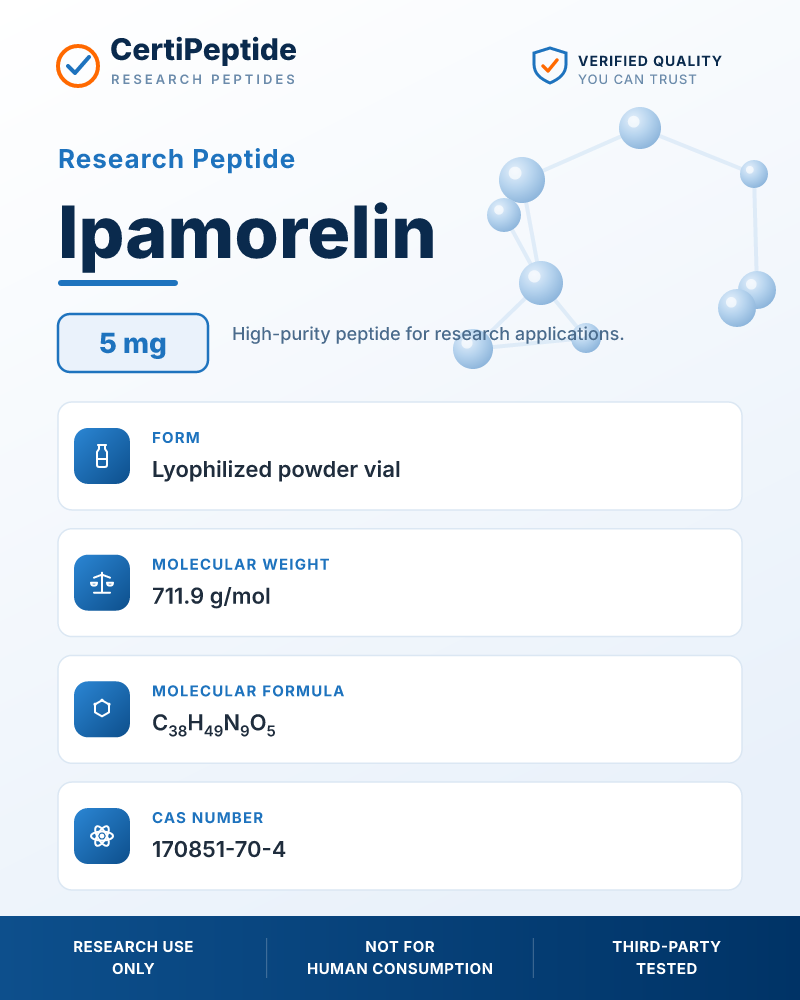
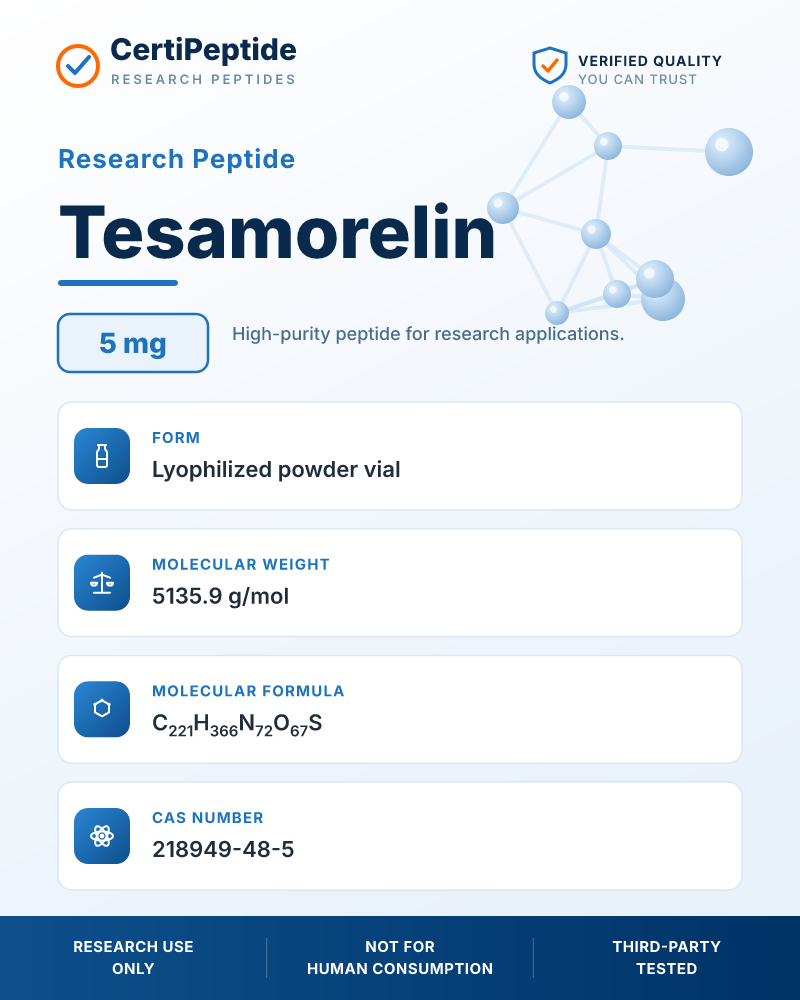
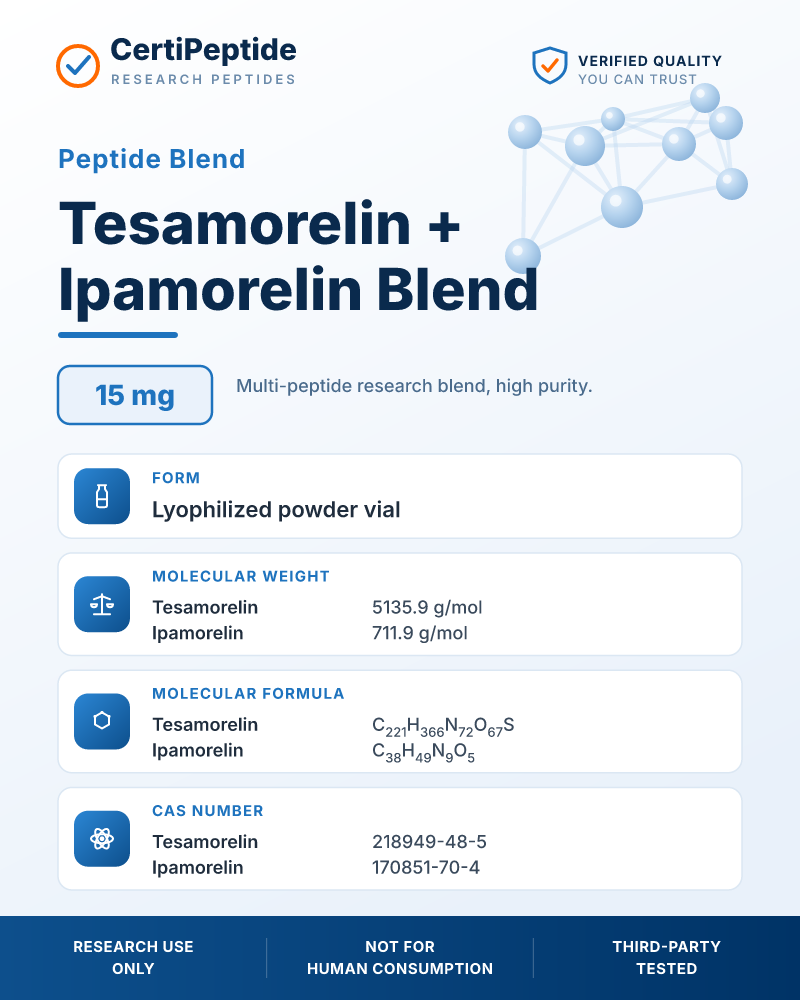
The Tesamorelin + Ipamorelin Blend is studied for its combined influence on growth hormone releasing pathways. Tesamorelin acts as a growth hormone releasing hormone analog, while Ipamorelin functions as a selective ghrelin receptor agonist. In research settings, this combination allows investigation of pulsatile hormone secretion patterns in cell cultures and rodent models.
Understanding Klow80 (TB-500 + BPC-157 + GHK + KPV) in Laboratory Studies
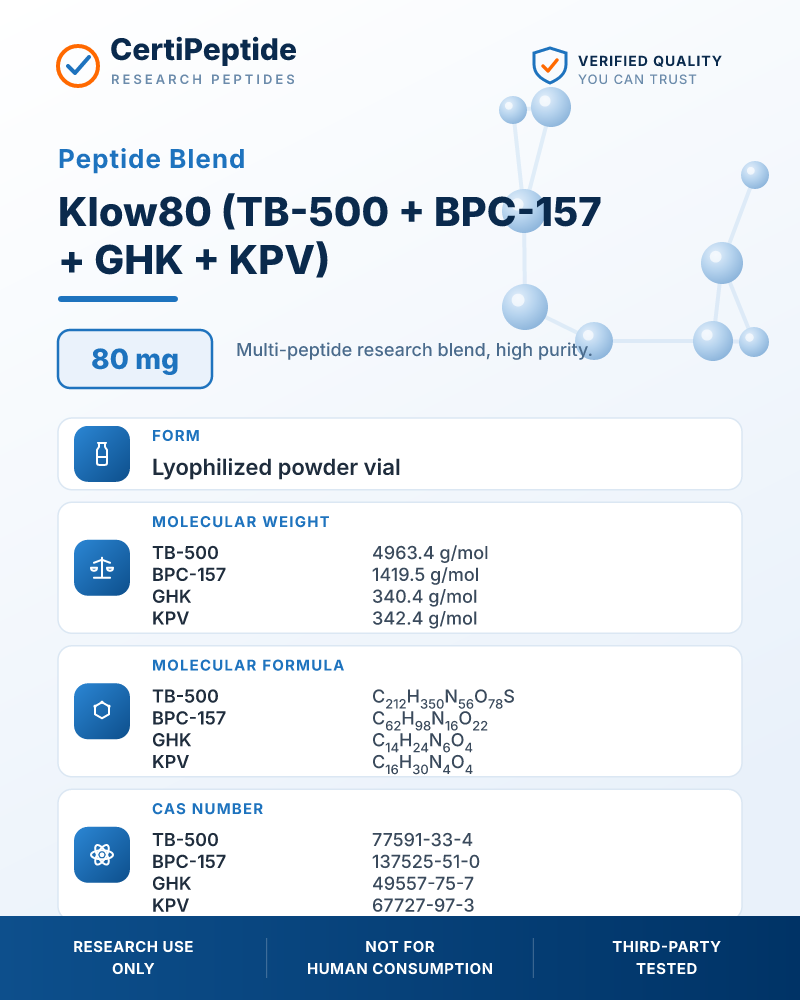
Klow80 (TB-500 + BPC-157 + GHK + KPV) represents a multi-component formulation explored for extracellular matrix remodeling, actin sequestration, and cytokine modulation. TB-500 fragments are examined for migration effects, BPC-157 for angiogenic signaling, GHK for copper-dependent gene expression, and KPV for melanocortin-mediated anti-inflammatory responses in isolated tissue assays.
Tesamorelin + Ipamorelin Blend vs Klow80 (TB-500 + BPC-157 + GHK + KPV) Comparison
Direct side-by-side evaluation in research protocols reveals that the Tesamorelin + Ipamorelin Blend primarily engages endocrine signaling cascades, whereas Klow80 (TB-500 + BPC-157 + GHK + KPV) emphasizes localized repair mechanisms. Studies often measure distinct biomarkers: IGF-1 levels for the blend versus collagen deposition and wound closure rates for the Klow80 formulation.
Similarities in Research Applications
Both formulations appear in healing and recovery-oriented laboratory investigations. Researchers note overlapping interest in cellular proliferation and extracellular signaling, though through non-overlapping molecular routes. In vitro models sometimes assess combined exposure to evaluate additive marker changes without implying therapeutic translation.
Key Differences in Mechanisms
Mechanistic divergence is pronounced. The Tesamorelin + Ipamorelin Blend modulates hypothalamic-pituitary axes in animal models, leading to downstream growth factor expression. In contrast, Klow80 (TB-500 + BPC-157 + GHK + KPV) influences integrin and actin dynamics plus anti-inflammatory peptide fragments. These differences guide separate experimental designs in peptide research.
Use in Studies: Experimental Considerations
When designing assays, investigators select the Tesamorelin + Ipamorelin Blend for endocrine endpoint quantification or Klow80 for matrix metalloproteinase activity tracking. Stability, solubility, and purity testing remain standard across both to ensure reproducible results in research environments.
Future Directions in Peptide Research
Ongoing laboratory work continues to refine analytical methods for quantifying each component within these blends. Comparative proteomics and transcriptomics offer avenues to map unique versus shared gene expression profiles induced by Tesamorelin + Ipamorelin Blend versus Klow80 (TB-500 + BPC-157 + GHK + KPV) in controlled settings.
Frequently Asked Questions
What distinguishes the research focus of Tesamorelin + Ipamorelin Blend from Klow80?
The blend is examined for growth hormone pathway modulation, while Klow80 is studied for repair and inflammatory marker responses in lab models.
Can Tesamorelin + Ipamorelin Blend and Klow80 be combined in the same study?
Researchers sometimes evaluate sequential or concurrent exposure in separate assays to observe biomarker interactions under controlled conditions.
Which markers are commonly measured when comparing these formulations?
Studies track IGF-1 for the blend and collagen synthesis or actin dynamics for Klow80 components.
Are these products intended for human research?
All materials are supplied strictly for laboratory and in vitro research use only.
Explore Further
Browse our [research peptide catalog](/shop) and review third-party [lab reports & COAs](/lab-reports) for every batch.
---
**Research use only.** The information above is provided for educational and laboratory research purposes only. The compounds discussed are not approved for human or veterinary use, diagnosis, treatment, or the prevention of any disease. Nothing here is medical advice.