TL;DR
In laboratory settings, **Semax + Selank Blend vs Cagrilintide + Semaglutide Blend** reflects two distinct research domains. Semax + Selank Blend is typically examined in neurobehavioral, stress-response, and cognitive-pathway models. Cagrilintide + Semaglutide Blend is studied mainly in metabolic, energy-balance, and gut–brain axis assays. Overlap is limited: both can appear in multi-system designs that track CNS and peripheral readouts, but primary targets, endpoints, and model systems differ. Choice depends on hypothesis, assay type, and whether the lab prioritizes neuropeptide or incretin/amylin pathway work.
Why Compare Semax + Selank Blend and Cagrilintide + Semaglutide Blend
Researchers often search for **Semax + Selank Blend or Cagrilintide + Semaglutide Blend** when planning multi-compound protocols or when cataloging peptide tools by pathway. A structured **Semax + Selank Blend Cagrilintide + Semaglutide Blend comparison** helps teams avoid mismatched models, clarify what each pair is designed to probe, and document rationale for IACUC, grant, or internal review materials.
Semax + Selank Blend combines two synthetic peptides with extensive literature in CNS-oriented research. Cagrilintide + Semaglutide Blend pairs an amylin-pathway analog with a GLP-1 receptor agonist analog used heavily in metabolic and body-composition research. Side-by-side evaluation is therefore less about “which is better” and more about alignment with the scientific question.
Peptide Identities and Research Context
Semax + Selank Blend in laboratory work
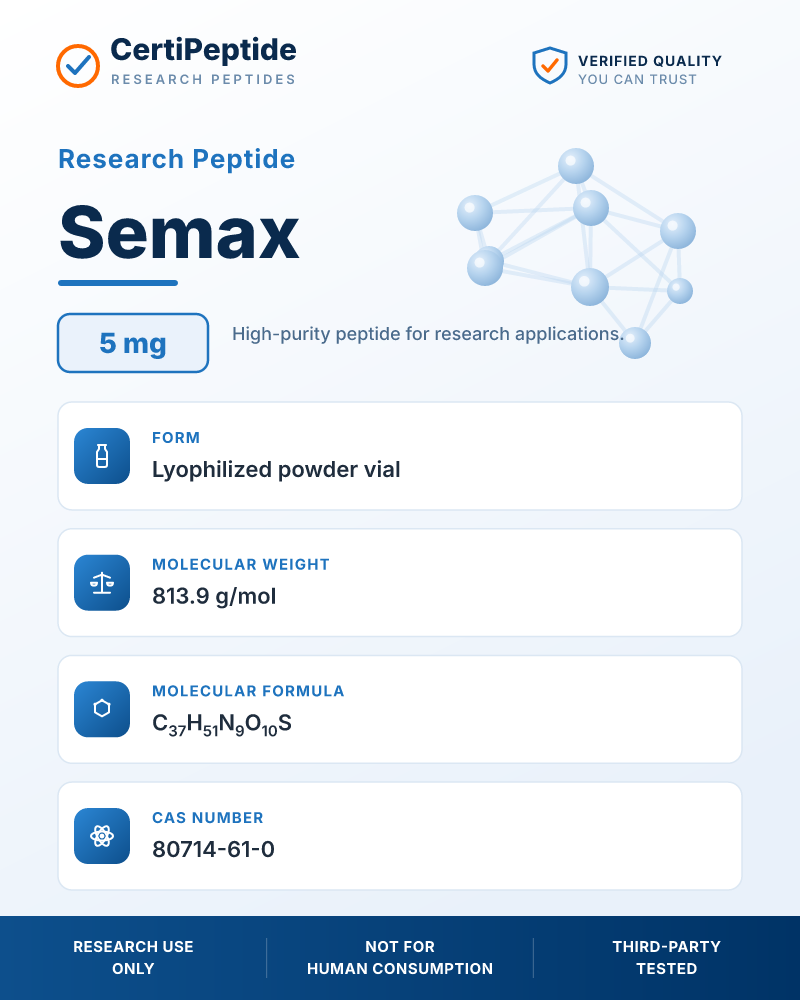
Semax is a synthetic heptapeptide analog related to an ACTH fragment; Selank is a synthetic tuftsin-derived hexapeptide. In published research, each has been examined for effects on gene expression, monoaminergic and neurotrophic markers, stress paradigms, and learning/memory tasks in animal and cellular systems. Blending them in a single research preparation allows concurrent evaluation of complementary neuropeptide signals under controlled laboratory conditions—e.g., open-field, elevated plus maze, Morris water maze, or molecular readouts (BDNF-related transcripts, cytokine panels, HPA-axis markers) depending on study design.
Typical research framing for Semax + Selank Blend includes:
- Neuroplasticity and cognitive-task performance in rodents
- Anxiety- and stress-related behavioral batteries
- Neuroimmune and inflammatory marker panels in CNS tissue or cell culture
- Comparative pharmacokinetics/stability work for short peptides in vitro
Cagrilintide + Semaglutide Blend in laboratory work
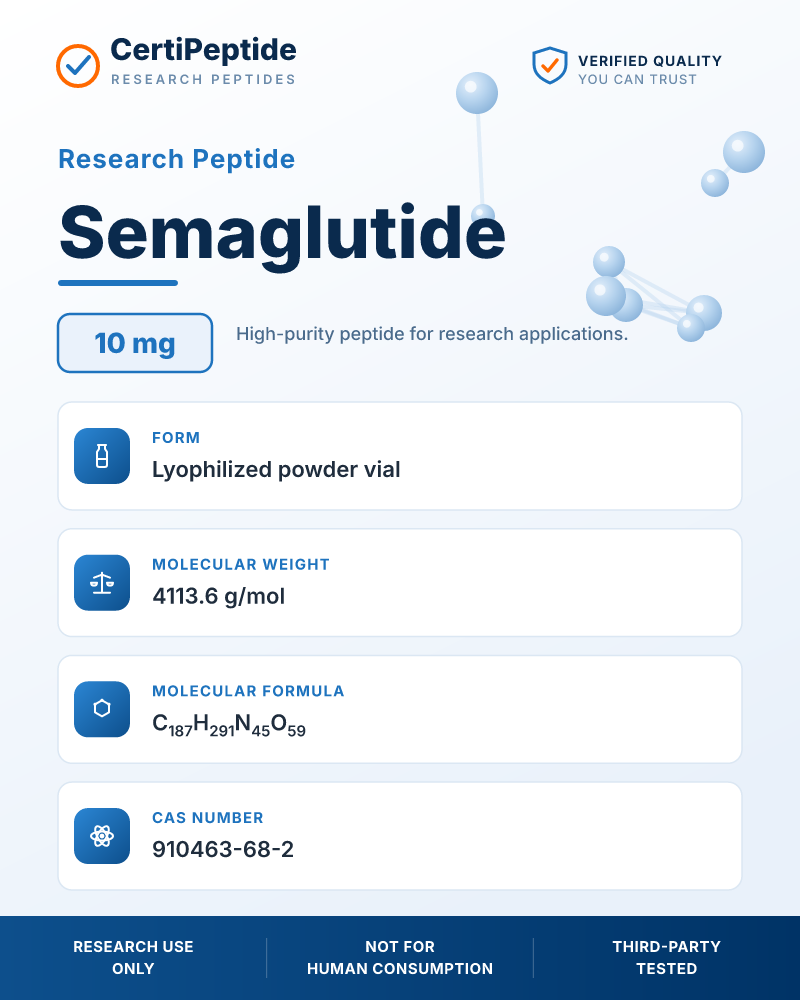
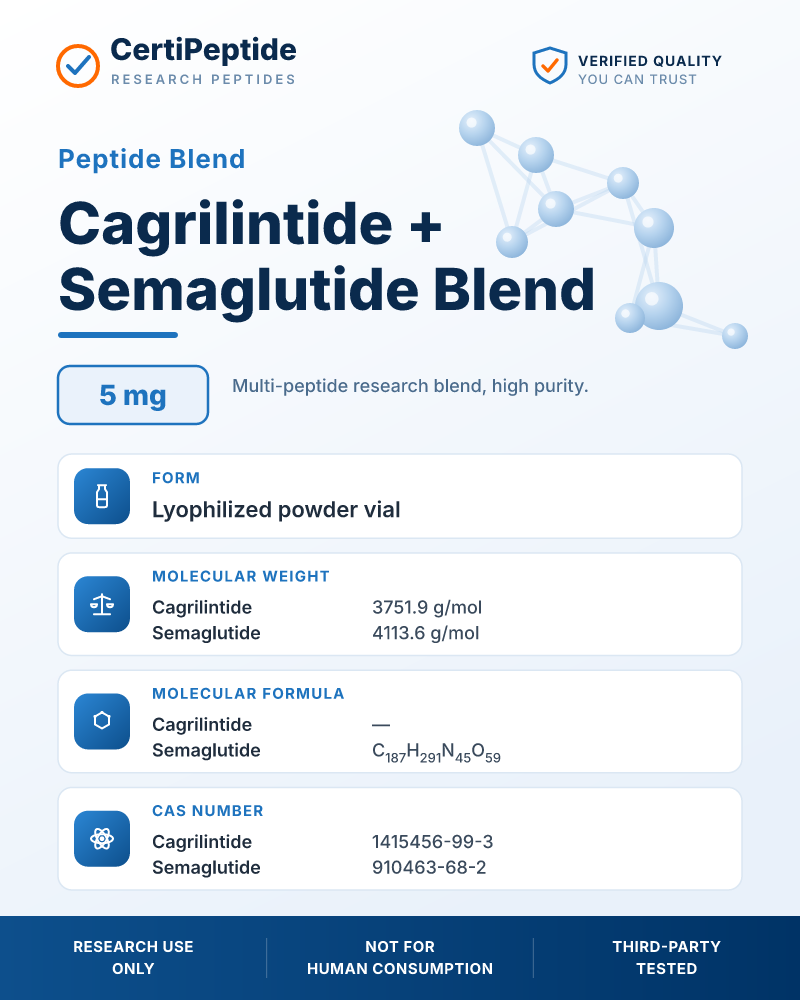
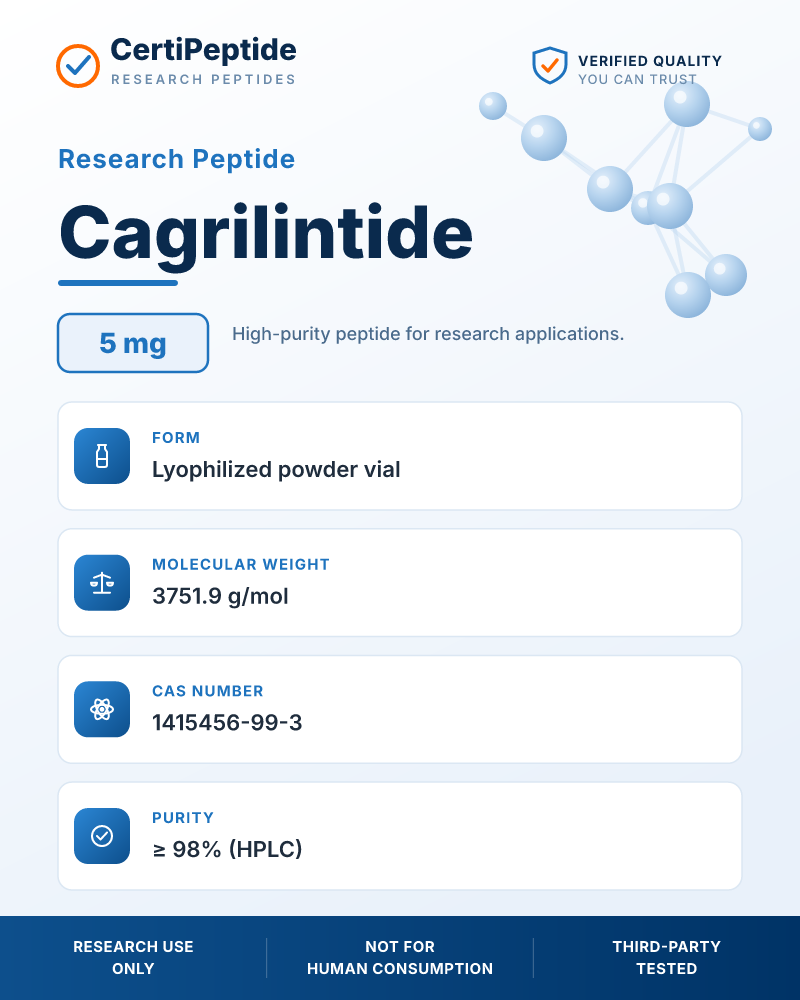
Semaglutide is a long-acting GLP-1 receptor agonist analog widely used in metabolic research. Cagrilintide is an amylin-receptor pathway analog studied for complementary effects on satiety signaling, gastric emptying–related endpoints, and energy intake in preclinical models. Combined, they are used to probe dual-agonist or dual-pathway strategies in obesity, glucose-handling, and cardiometabolic research models.
Typical research framing for Cagrilintide + Semaglutide Blend includes:
- Diet-induced obesity and pair-feeding designs
- Glucose tolerance, insulin sensitivity, and related metabolic clamps (as applicable to the model)
- Food-intake microstructure and preference assays
- Body composition (lean/fat mass) via EchoMRI or similar
- Gut–brain axis and receptor expression studies
Mechanisms: Where the Pathways Diverge
A core part of any **Semax + Selank Blend vs Cagrilintide + Semaglutide Blend** analysis is receptor and pathway logic.
**Semax + Selank Blend (CNS-focused tools)**
Research literature associates Semax-related work with modulation of neurotrophic and monoamine-related pathways and with changes in expression of genes linked to plasticity and stress adaptation. Selank-related work often intersects GABAergic and immune-modulatory research themes and anxiety-model readouts. Neither is a classical metabolic incretin tool; their value in the lab is primarily neurobehavioral and molecular CNS profiling.
**Cagrilintide + Semaglutide Blend (metabolic dual-pathway tools)**
Semaglutide engages GLP-1 receptors, influencing insulinotropic and satiety-related signaling in appropriate models. Cagrilintide engages amylin receptor complexes, adding a second satiety and energy-balance axis. Together they support hypotheses about additive or synergistic effects on intake, weight trajectory, and glycemic markers in controlled animal studies—not as interchangeable substitutes for neuropeptide blends aimed at cognition or anxiety batteries.
**Limited mechanistic overlap**
Indirect overlap can appear when metabolic state alters behavior or when CNS stress alters feeding. Labs sometimes measure both behavioral and metabolic endpoints in the same cohort. That does not make the blends pathway-equivalent; it means experimental design must keep primary and secondary endpoints clearly labeled.
Study Design Differences
Models and species
- **Semax + Selank Blend:** Commonly rodent behavioral suites, sometimes cell culture (neuronal or immune lines), occasional ex vivo hippocampal or cortical preparations. Endpoints are often latency, exploration time, error rates, or transcript/protein levels.
- **Cagrilintide + Semaglutide Blend:** Commonly DIO mice/rats, genetic obesity models, or lean controls for mechanism work; sometimes in vitro islet or enteroendocrine cell assays for component-level questions. Endpoints include grams of chow, calorimetry, OGTT/IPGTT curves, and carcass composition.
Duration and sampling
Neurobehavioral peptide work may use acute or subchronic schedules with dense behavioral time points. Metabolic dual-agonist work often runs weeks to capture body-weight trajectories and adaptive changes in intake. Blood chemistry, tissue harvest timing, and washout logic therefore differ and should not be copied between blend types without justification.
Controls and comparators
For Semax + Selank Blend, vehicle, single-peptide arms, and positive behavioral controls (where ethical and approved) strengthen interpretation. For Cagrilintide + Semaglutide Blend, single-agent arms (cagrilintide alone, semaglutide alone), pair-feeding, and sometimes other incretin or amylin tools help separate additive intake suppression from independent metabolic effects.
Similarities Relevant to Lab Operations
Despite divergent biology, operational similarities matter for procurement and method SOPs:
1. **Research-use peptide handling** — Both blends require documented identity, purity, storage (typically cold, desiccated or per COA), and reconstitution practices suitable for peptides.
2. **Combination logic** — Each blend is used because co-administration may reveal interactions not visible with monotherapy arms.
3. **Need for orthogonal readouts** — Behavior alone or weight alone is rarely sufficient; molecular, hormonal, or histological panels improve causal inference.
4. **Blinded scoring and pre-registration** — High-variability behavioral and intake data benefit from blinding, randomization, and pre-specified analysis plans.
5. **Analytical chemistry** — Stability, adsorption to plastics, and solvent choice affect both short neuropeptides and larger incretin/amylin analogs; method validation remains essential.
Semax + Selank Blend Cagrilintide + Semaglutide Blend Comparison Table (Research Lens)
| Dimension | Semax + Selank Blend | Cagrilintide + Semaglutide Blend |
| --- | --- | --- |
| Primary research domain | CNS, stress, cognition-related models | Metabolic, energy balance, glycemic models |
| Pathway focus | Neuropeptide / neurotrophic / stress-axis themes | GLP-1R + amylin receptor pathways |
| Common endpoints | Behavioral batteries, CNS markers | Intake, weight, composition, GTTs |
| Typical study length | Acute to subchronic | Often multi-week |
| Best-fit hypothesis | Neurobehavioral or neuroimmune questions | Dual satiety/metabolic pathway questions |
| Cross-use caution | Not a substitute for incretin/amylin tools | Not a substitute for nootropic/anxiolytic-model tools |
Choosing Semax + Selank Blend or Cagrilintide + Semaglutide Blend
Select **Semax + Selank Blend** when the primary question concerns CNS signaling, stress paradigms, learning/memory tasks, or related molecular panels. Select **Cagrilintide + Semaglutide Blend** when the primary question concerns dual-pathway metabolic control, intake regulation, or body-composition trajectories in approved animal protocols.
Hybrid programs exist: for example, testing whether metabolic interventions alter anxiety-like behavior, or whether stress peptides change feeding microstructure. In those cases, labs may run parallel arms or sequential studies rather than treating the two blends as interchangeable reagents. Document which blend addresses which aim; avoid conflating product names in methods sections.
Methodological Pitfalls to Avoid
- **Endpoint mismatch:** Running only metabolic assays on a CNS-oriented blend (or only open-field tests on a metabolic blend) weakens interpretability.
- **Unjustified dose translation across peptide classes:** Potency, half-life, and receptor biology differ; literature for one class does not transfer to the other.
- **Ignoring vehicle and osmolality:** Behavioral assays are sensitive to injection stress and vehicle effects; metabolic assays are sensitive to dosing frequency and food access schedules.
- **Over-pooling literature:** Human clinical narratives are outside research-reagent scope; stick to preclinical and in vitro evidence appropriate to laboratory use.
- **Blend attribution errors:** Always include single-agent controls before attributing effects to synergy.
Practical Notes for Research Procurement
When comparing suppliers or internal lots of Semax + Selank Blend and Cagrilintide + Semaglutide Blend, prioritize certificates of analysis (identity, purity, net peptide content), recommended storage, and lot consistency. For multi-site collaborations, align reconstitution solvents, aliquot sizes, and freeze–thaw limits so behavioral or metabolic variance is not confounded by handling differences. Label secondary containers clearly so CNS-focused and metabolic-focused reagents are never swapped mid-protocol.
Summary
**Semax + Selank Blend vs Cagrilintide + Semaglutide Blend** is a comparison of research toolkits, not interchangeable products. Semax + Selank Blend fits neurobehavioral and related molecular studies; Cagrilintide + Semaglutide Blend fits dual-pathway metabolic research. Similarities lie in combination-study logic and peptide-handling discipline. Differences dominate at the level of receptors, models, duration, and endpoints. Labs should map the scientific question first, then select the blend—and the control structure—that answers it cleanly.
FAQ
Explore Further
Browse our [research peptide catalog](/shop) and review third-party [lab reports & COAs](/lab-reports) for every batch.
---
**Research use only.** The information above is provided for educational and laboratory research purposes only. The compounds discussed are not approved for human or veterinary use, diagnosis, treatment, or the prevention of any disease. Nothing here is medical advice.