Wholesale-first · factory-direct pricing · Bulk & custom-volume discounts|For laboratory research use only. Not for human or animal consumption.
CertiPeptideRESEARCH PEPTIDES
Sign in
VIP (Vasoactive Intestinal Peptide)

VIP (Vasoactive Intestinal Peptide)

Research Peptide | Lyophilized Powder | Batch Tested

Tested for
Purity
Size
$99.00
$1.98/mg
In StockLatest batch: VP5-260601
1

For laboratory research use only. Not for human or animal consumption. Insulated shipping · Styrofoam box available.

Product Overview

VIP (Vasoactive Intestinal Peptide) is a 28-amino-acid neuropeptide distributed throughout the nervous, digestive and immune systems, with broad roles in vasodilation, secretion, circadian timing and immune regulation. It signals through the VPAC1 and VPAC2 G-protein-coupled receptors.

Batch VP5-260601Tested Jun 1, 2026
TestResultStatus
Purity98.4%Passed ✓
Batch VP10-260601Tested Jun 1, 2026
TestResultStatus
Purity98.8%Passed ✓
500+ Certificates of Analysis
6+ Years of Testing
Best $/mg
Tested for More Than Purity
Batch # on Every Vial

Research Information

VIP is studied for its activation of VPAC receptors and its influence on smooth-muscle relaxation, circadian signaling in the suprachiasmatic nucleus, and the modulation of inflammatory and autoimmune responses. It is a common tool in neuro-immune, respiratory and inflammation research. Supplied strictly for in-vitro and laboratory research use only — not for human or animal consumption.

VIP (Vasoactive Intestinal Peptide) Research & Studies

What is VIP (Vasoactive Intestinal Peptide)?

VIP is a 28-amino-acid neuropeptide originally isolated from intestinal tissue and later identified throughout the central and peripheral nervous systems as well as immune and endocrine tissues. It belongs to the secretin-glucagon peptide family and is encoded by the VIP gene. Laboratory investigations examine VIP as a signaling molecule that participates in vasodilation, secretory control, circadian coordination, and immune modulation within defined experimental systems. Research-grade VIP is supplied strictly for in-vitro and laboratory studies.

Mechanism of Action

VIP exerts its effects by binding the G-protein-coupled receptors VPAC1 and VPAC2, which couple primarily to Gs proteins and elevate intracellular cyclic AMP. Downstream pathways include protein kinase A activation, ion-channel modulation, and altered gene transcription in responsive cell types. In isolated smooth-muscle preparations and cultured cells, receptor engagement produces relaxation and changes in secretory activity. Differential tissue distribution of VPAC1 versus VPAC2 allows researchers to dissect receptor-selective signaling cascades.

Primary Areas of Research

VIP is widely employed in neuro-immune, respiratory, and inflammation research models. Investigators study its influence on circadian clock circuitry within the suprachiasmatic nucleus, its capacity to modulate cytokine profiles in cultured immune cells, and its effects on airway and vascular smooth-muscle tone in organ-bath and cell-culture systems. Additional work explores VIP-mediated regulation of epithelial barrier function and secretory responses in gastrointestinal tissue preparations.

Key Research Findings

Peer-reviewed laboratory studies have established that VIP potently elevates cAMP and relaxes smooth-muscle preparations via VPAC receptors. In circadian research, VIP signaling synchronizes neuronal networks of the suprachiasmatic nucleus and stabilizes molecular clock oscillations in explant and slice models. Immune-cell assays demonstrate that VIP can shift cytokine output toward anti-inflammatory profiles under controlled in-vitro conditions. These observations form the foundation for ongoing mechanistic investigations across multiple model systems.

Research Handling & Considerations

Research-grade VIP is typically supplied as a lyophilized peptide and should be reconstituted in sterile water or appropriate aqueous buffers under aseptic laboratory conditions. Solutions are sensitive to repeated freeze-thaw cycles; aliquoting and storage at low temperature are recommended to preserve activity. Standard peptide-handling practices, including protection from light and avoidance of strong oxidants, help maintain integrity for in-vitro assays. All materials are intended solely for controlled laboratory research.

Frequently Asked Questions

VIP binds and activates the G-protein-coupled receptors VPAC1 and VPAC2, both of which couple to Gs and raise intracellular cAMP in responsive cells and tissues.

Explore Other High-Purity Peptides

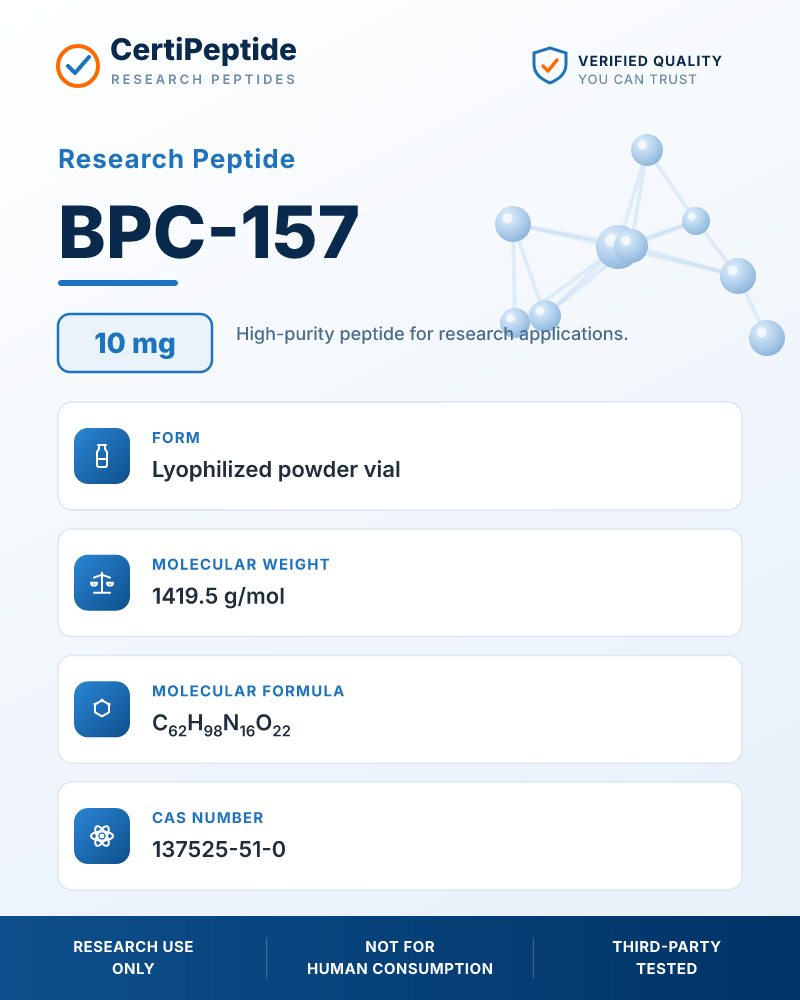
BPC-157
Repair & Recovery Research99.73% pure

BPC-157

From$48.00($0.96/mg)
10 vials × 5 mg · 50 mg total
Wholesale · bulk discountsIn Stock
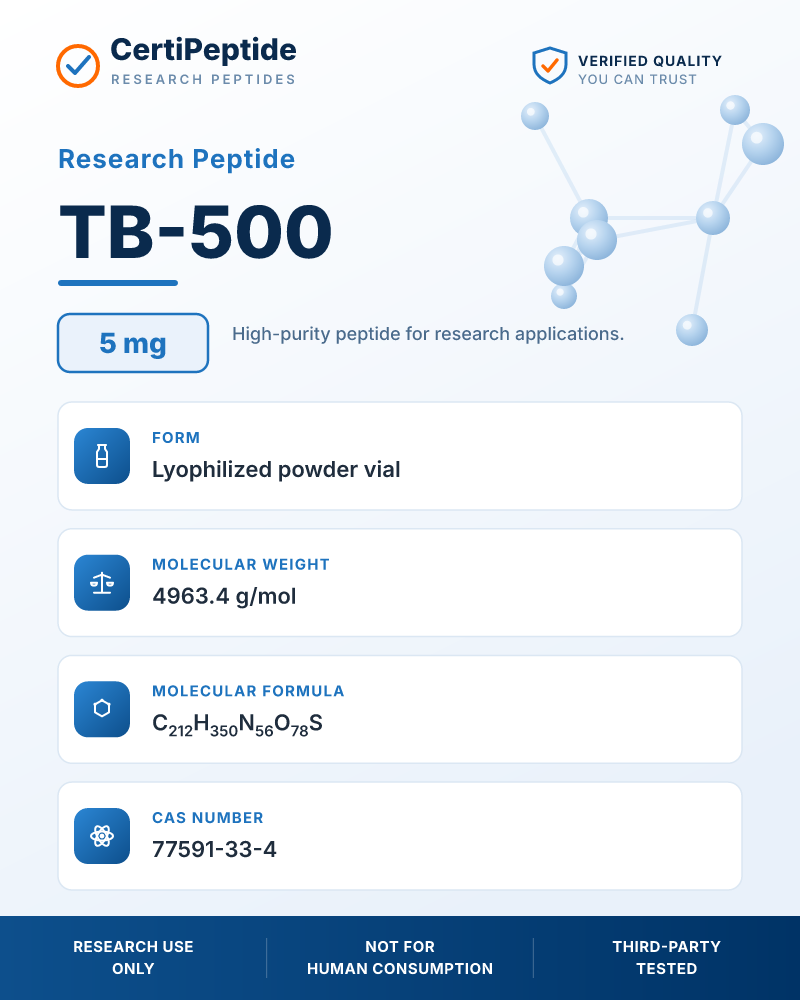
TB-500
Repair & Recovery Research99.41% pure

TB-500

From$94.00($1.88/mg)
10 vials × 5 mg · 50 mg total
Wholesale · bulk discountsIn Stock
LL-37
Repair & Recovery Research98.4% pure

LL-37

$95.00($1.90/mg)
10 vials × 5 mg · 50 mg total
Wholesale · bulk discountsIn Stock
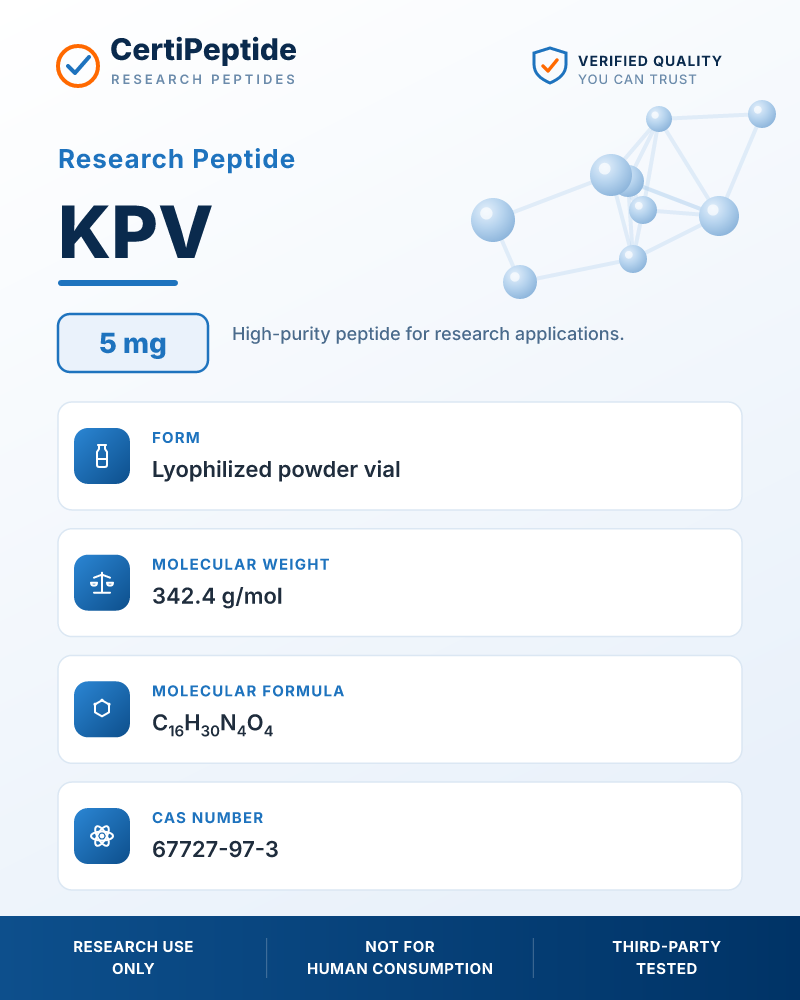
KPV
Repair & Recovery Research98.7% pure

KPV

From$60.00($1.20/mg)
10 vials × 5 mg · 50 mg total
Wholesale · bulk discountsIn Stock