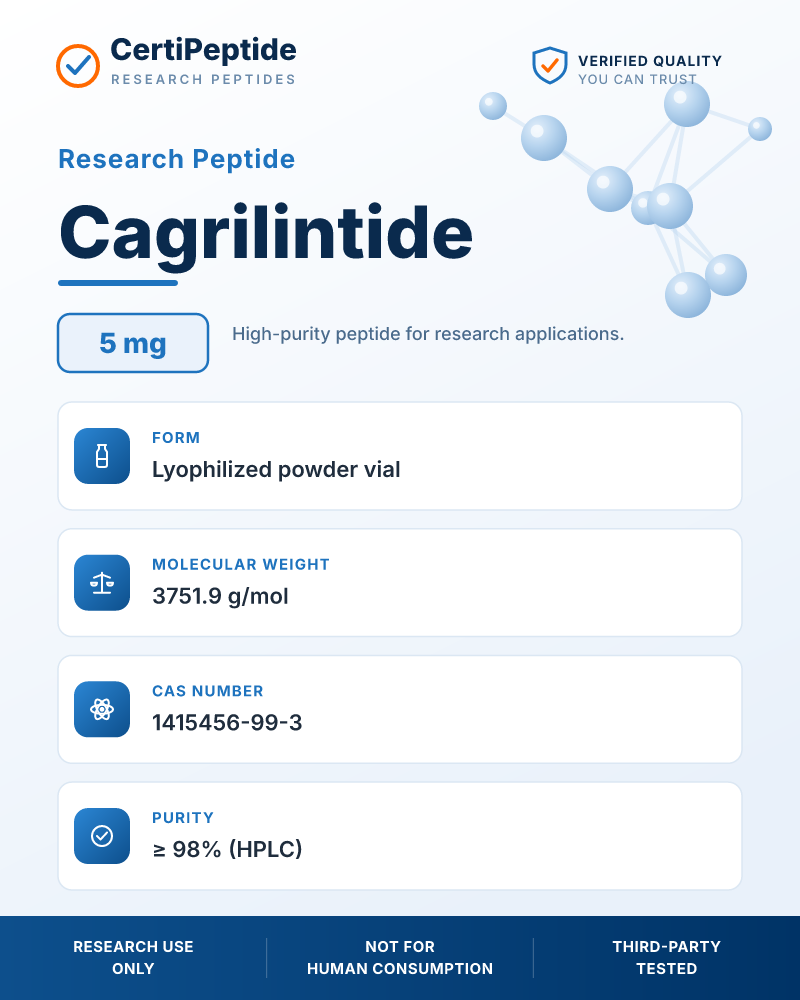
Mazdutide
Research Peptide | Lyophilized Powder | Batch Tested
For laboratory research use only. Not for human or animal consumption. Insulated shipping · Styrofoam box available.
Product Overview
Mazdutide ist ein in der Untersuchung befindliches duales GLP-1- und Glucagon-Rezeptor-Agonist-Peptid, das in der metabolischen und Energiebilanz-Forschung untersucht wird. Durch die Kombination von GLP-1-induzierter Sättigung mit Glucagon-induziertem Energieverbrauch in einem einzelnen Molekül wird es eingesetzt, um ein anderes Rezeptorgleichgewicht als GIP/GLP-1-Agonisten zu erforschen.
Labor: Stand Science & Technology Pharmaceutical (Qingdao) Co., Ltd. (Stand Group)
Prüfergebnisse für Charge PBZTMK42NNU6 →1 / 2
| Prüfung | Ergebnis |
|---|---|
| AppearanceVisual | White loose powderPass |
| Mass spectrumMS | ConformsPass |
| PurityHPLC | 99.0 %Pass |
| Peptide contentHPLC | 92.9 %Pass |
| Actual fillGravimetric | 5.93 mgPass |
| Water contentKarl Fischer | 4.8 %Pass |
| Bacterial endotoxinsLAL (gel-clot) | <3 EU/mgPass |
SKU & Verpackung
Nennmengen entsprechen dem Produktetikett; Messwerte stehen im jeweiligen Chargenbericht. Veröffentlichte Berichte bestätigen nicht die Charge einer künftigen Bestellung.
Fragen zu Produkt und Dokumentation
Wie lese ich Größe und Packungsmenge?
Menge pro Fläschchen und Fläschchen pro Packung stehen getrennt in der Tabelle. Der Preis gilt für eine Packung. Bei Mischungen kann die Menge alle Bestandteile zusammen bezeichnen; Einzelangaben stehen auf Etikett und Bericht.
Wie finde ich das passende COA?
Gleichen Sie Produkt, SKU und Chargennummer ab. Die Chargenseite zeigt Messwerte, Originalbericht und Verifizierungslink. Falls Ihre Bestellung keine Charge nennt, fragen Sie den Support.
Bedeutet ein Reinheitswert, dass alle Tests bestanden wurden?
Nein. Identität, Reinheit, Füllmenge und Endotoxin sind getrennte Messungen. Beachten Sie Ergebnis und Einheit. Ein fehlender Wert ist kein bestandenes Ergebnis; ein Kleiner-als-Wert ist nicht null.
Research Information
Mazdutide wird verwendet, um zu untersuchen, wie die gleichzeitige GLP-1- und Glucagon-Rezeptor-Aktivierung den Energieverbrauch, den Appetit, die Glukosekontrolle und den hepatischen Lipidstoffwechsel in präklinischen Modellen beeinflusst. Die Forschung stellt die Glucagon-assoziierte Thermogenese der GLP-1-assoziierten Sättigung gegenüber und hilft, die Kompromisse des dualen Agonismus in metabolischen Tool-Verbindungen zu charakterisieren. Wird streng nur für In-vitro- und Laborforschungszwecke geliefert – nicht für den Verzehr durch Menschen oder Tiere.
Learn more
Read research overviews, COA verification guides, and reconstitution notes in our Knowledge Hub.
Explore Other High-Purity Peptides
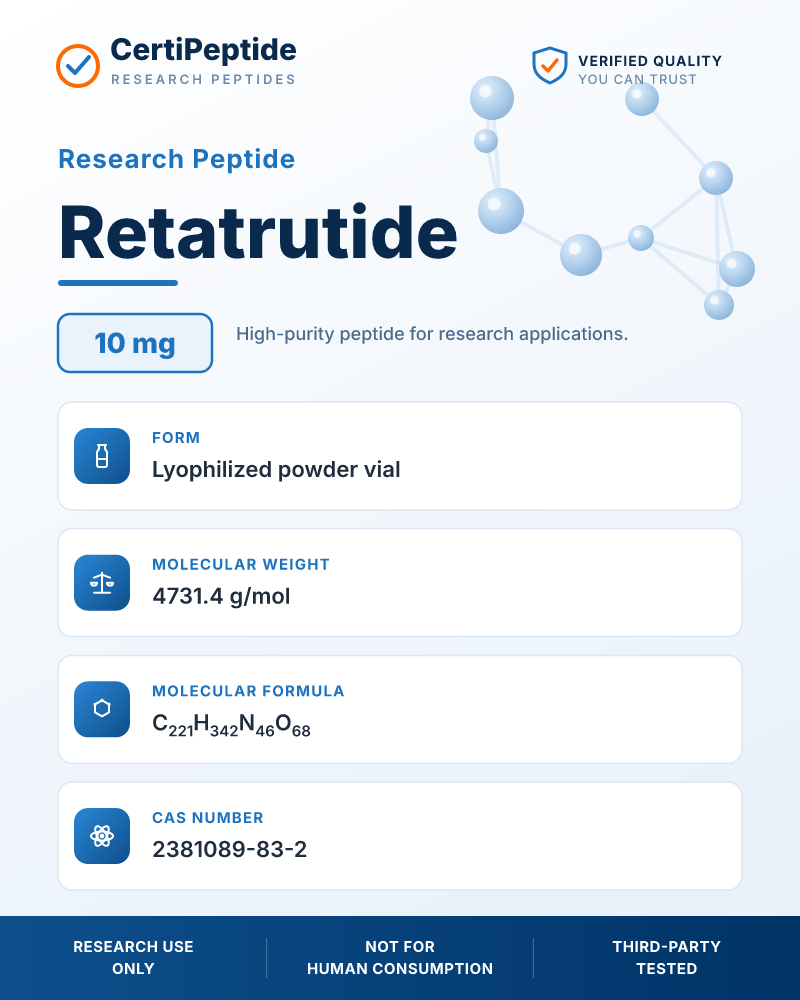
Retatrutide
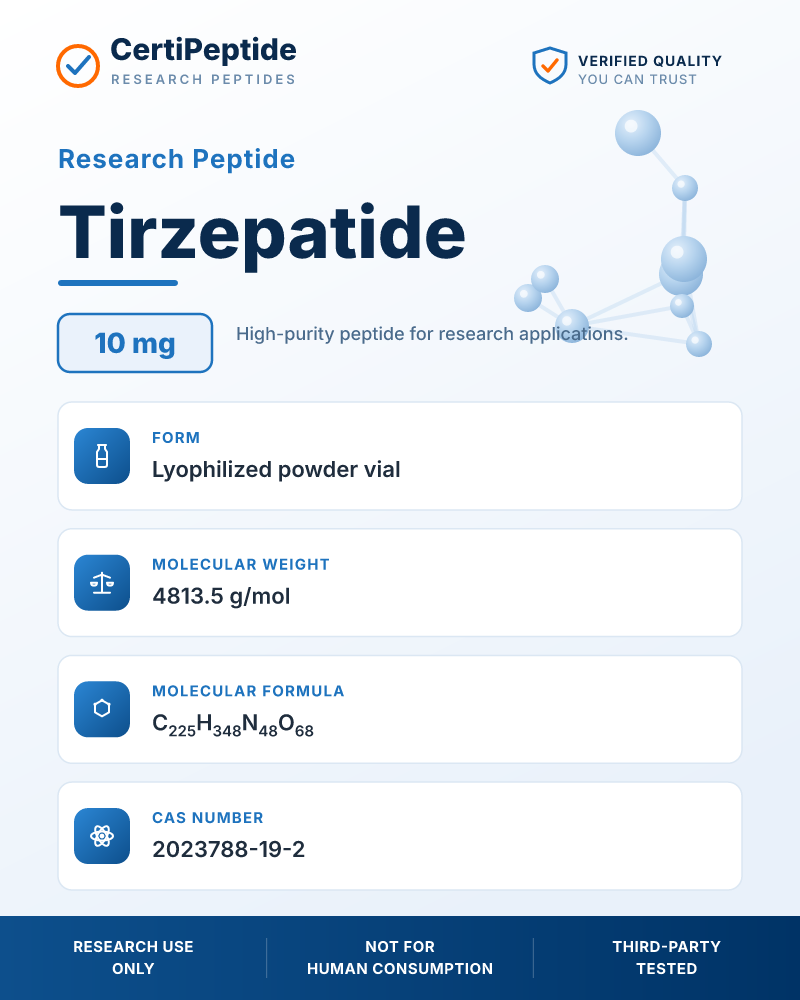
Tirzepatide
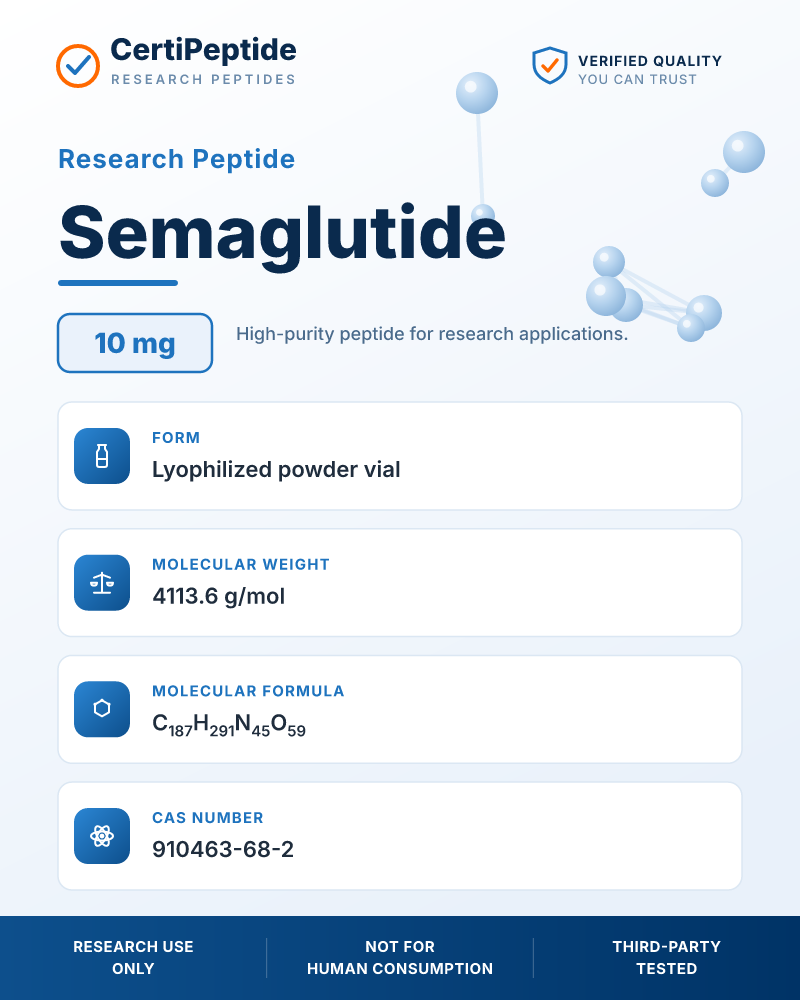
Semaglutide