Großhandel zuerst · Direktpreise ab Werk · Mengen- & SonderrabatteNur für Laborforschung. Nicht für den menschlichen oder tierischen Gebrauch.
CertiPeptideRESEARCH PEPTIDES
Matrixyl

Matrixyl

Research Peptide | Lyophilized Powder | Batch Tested

Size
46,00 $
Best Value
0,46 $/mg
Auf LagerLatest batch: MX10-260601
1

For laboratory research use only. Not for human or animal consumption. Insulated shipping · Styrofoam box available.

Product Overview

Matrixyl (palmitoyl pentapeptide) is a lipid-conjugated signal peptide and one of the most studied "matrikine" actives in dermal and anti-aging cosmetic research. The palmitoyl group helps it penetrate the skin barrier to reach dermal fibroblasts.

No published lab tests yet.

500+ Certificates of Analysis
6+ Years of Testing
Best $/mg
Tested for More Than Purity
Batch # on Every Vial

Research Information

Matrixyl is investigated for its stimulation of collagen, fibronectin, elastin and extracellular-matrix synthesis in dermal-fibroblast models, where it acts as a messenger that signals the skin to initiate repair and remodeling. It is a benchmark active in cosmetic skin-research. Supplied strictly for in-vitro and laboratory research use only — not for human or animal consumption.

Matrixyl Research & Studies

What is Matrixyl?

Matrixyl, known chemically as palmitoyl pentapeptide-4 or palmitoyl-KTTKS, is a synthetic lipid-conjugated signal peptide classified as a matrikine. In laboratory research it is examined as a fragment-mimetic messenger derived from extracellular-matrix protein sequences. The attached palmitoyl chain is studied for its contribution to lipophilicity and barrier transit in dermal tissue models. It functions as a widely referenced benchmark compound in cosmetic and dermal-biology investigations of matrix signaling.

Mechanism of Action

Research models show that Matrixyl engages cell-surface receptors on cultured dermal fibroblasts, initiating intracellular cascades that up-regulate genes for matrix proteins. As a matrikine it is investigated for recapitulating the signaling activity of collagen-breakdown fragments released during tissue remodeling. Studies track subsequent increases in collagen types I and III, fibronectin, and elastin synthesis within fibroblast monolayers and reconstructed skin equivalents. The palmitoyl moiety is evaluated for facilitating peptide delivery across lipid-rich barriers without altering the core KTTKS sequence activity.

Primary Areas of Research

Matrixyl is principally studied in human dermal-fibroblast cultures and three-dimensional skin models for its capacity to modulate extracellular-matrix synthesis. Investigations focus on pathways governing collagen, elastin, and fibronectin production under conditions that simulate matrix turnover. It serves as a reference active in comparative assays of peptide-driven repair signaling and matrix density changes. Additional work examines formulation stability, penetration kinetics, and gene-expression profiles in topical delivery systems used for in-vitro skin research.

Key Research Findings

In-vitro fibroblast studies consistently report elevated expression of collagen, fibronectin, and related matrix components following Matrixyl exposure. Model systems demonstrate accumulation of extracellular-matrix proteins consistent with matrikine-mediated signaling rather than direct growth-factor mimicry. Comparative laboratory data position the peptide as a well-characterized tool for quantifying matrix-remodeling responses. Findings emphasize its utility in dissecting fibroblast activation pathways linked to dermal matrix maintenance.

Research Handling & Considerations

Matrixyl is typically supplied as a lyophilized solid or pre-dissolved solution for controlled laboratory reconstitution. Its amphiphilic character arising from the palmitoyl group requires attention to solvent choice and media compatibility in cell-culture experiments. Standard peptide-handling protocols—protection from moisture, light, and repeated freeze-thaw cycles—are applied to preserve structural integrity. The compound is designated strictly for in-vitro and laboratory research examining peptide-fibroblast interactions.

Frequently Asked Questions

Matrixyl is the palmitoyl-conjugated pentapeptide palmitoyl-KTTKS, also designated palmitoyl pentapeptide-4. The lipid-peptide hybrid is studied for combining matrikine signaling with enhanced lipophilicity in dermal models.

Learn more

Read research overviews, COA verification guides, and reconstitution notes in our Knowledge Hub.

Explore Other High-Purity Peptides
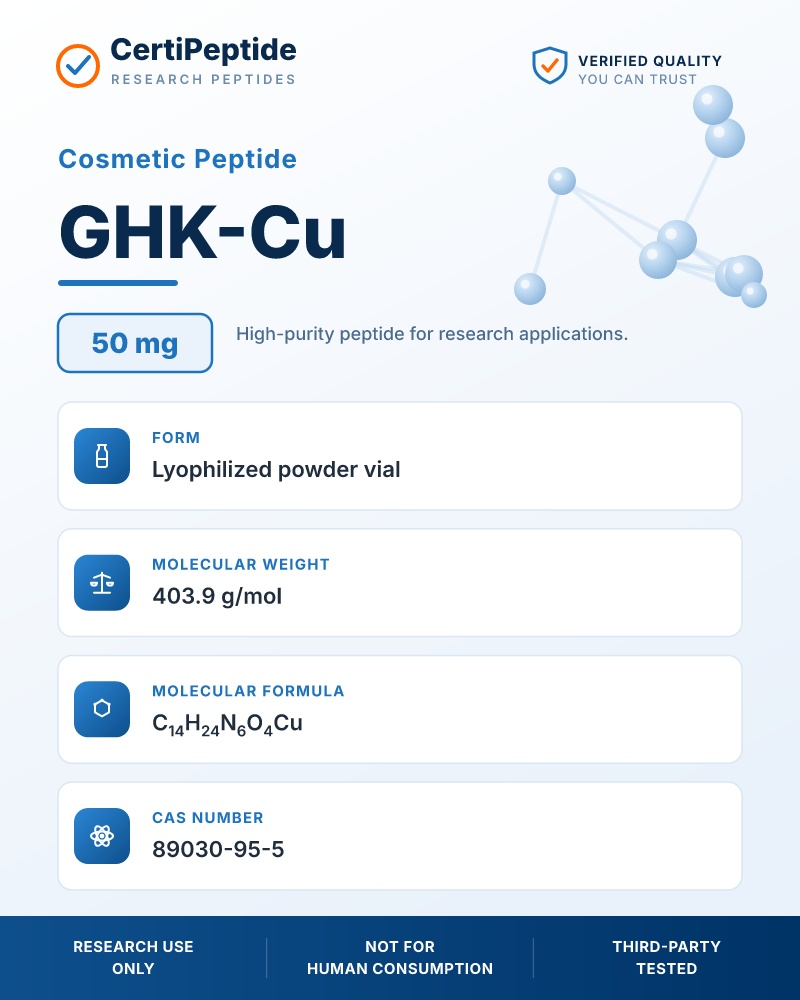
GHK-Cu
Kosmetische Peptide99.728% rein

GHK-Cu

Ab35,00 $(0,07 $/mg)
10 vials × 50 mg · 500 mg total
Großhandel · MengenrabatteAuf Lager
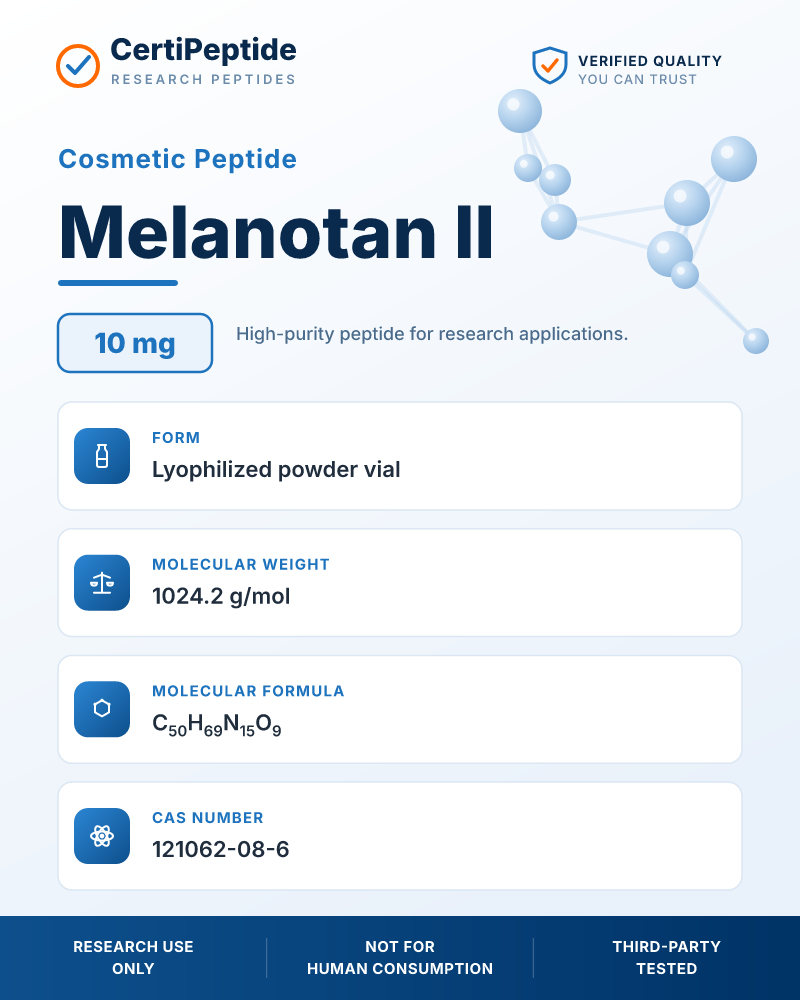
Melanotan II
Kosmetische Peptide

Melanotan II

65,00 $(0,65 $/mg)
10 vials × 10 mg · 100 mg total
Großhandel · MengenrabatteAuf Lager
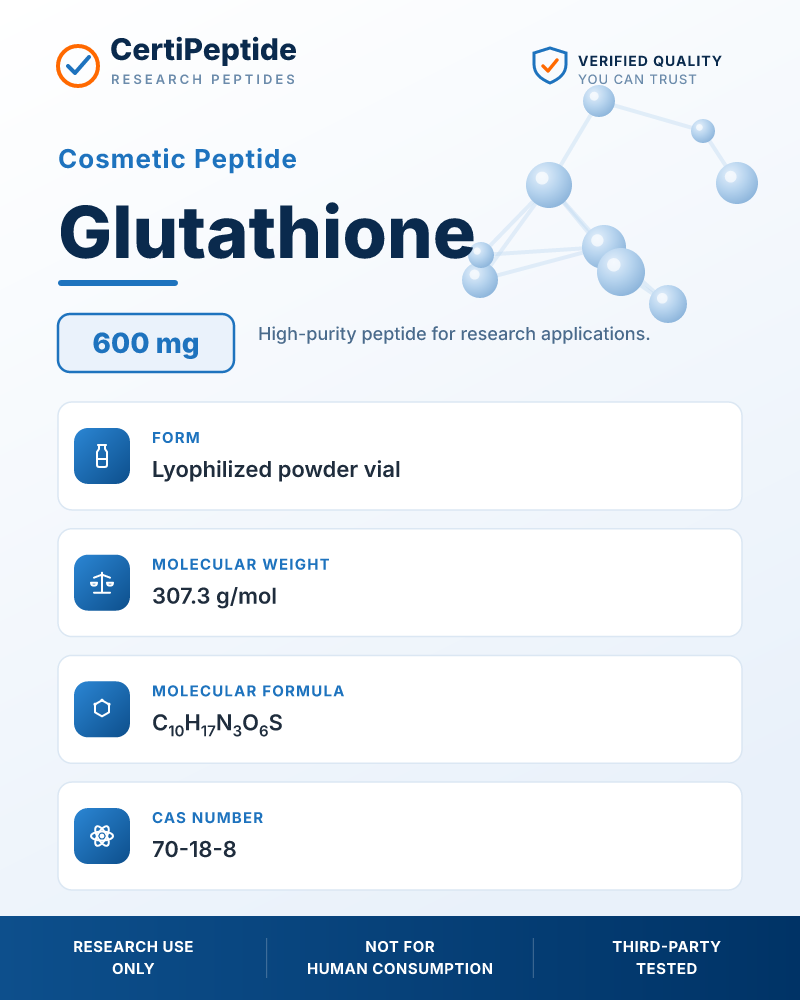
Glutathione
Kosmetische Peptide99.052% rein

Glutathione

Ab55,00 $(0,01 $/mg)
10 vials × 600 mg · 6000 mg total
Großhandel · MengenrabatteAuf Lager
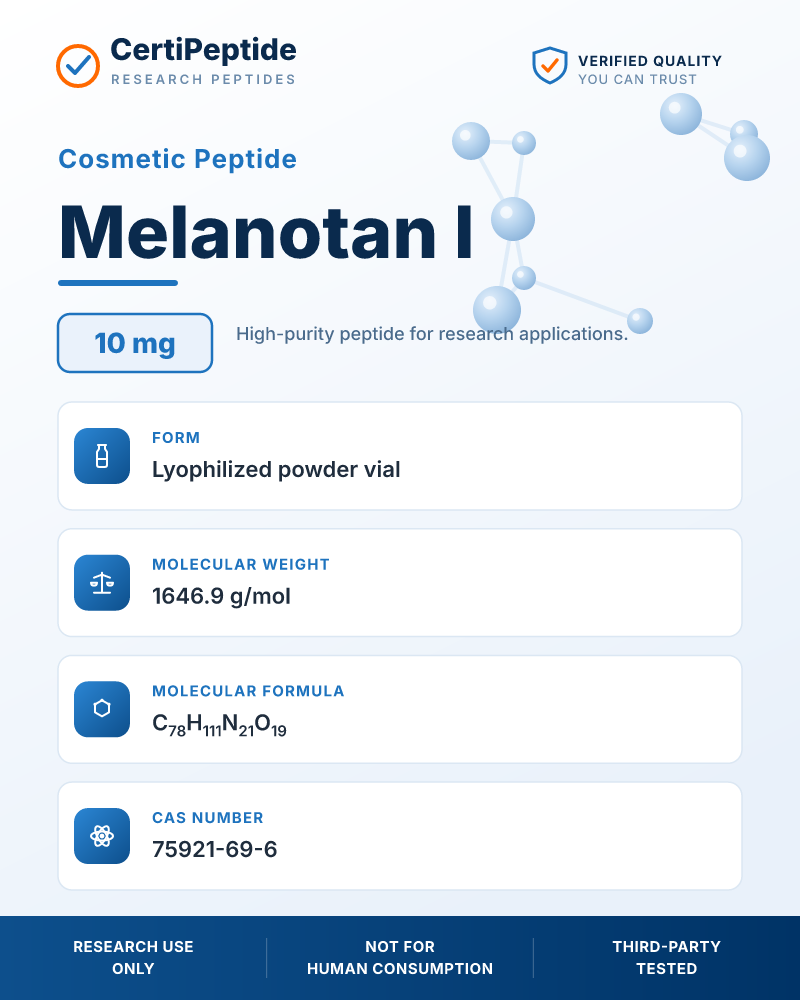
Melanotan I
Kosmetische Peptide

Melanotan I

65,00 $(0,65 $/mg)
10 vials × 10 mg · 100 mg total
Großhandel · MengenrabatteAuf Lager