Großhandel zuerst · Direktpreise ab Werk · Mengen- & SonderrabatteNur für Laborforschung. Nicht für den menschlichen oder tierischen Gebrauch.
CertiPeptideRESEARCH PEPTIDES
Frag 17-23

Frag 17-23

Research Peptide | Lyophilized Powder | Batch Tested

Size
152,00 $
Best Value
1,52 $/mg
Auf LagerLatest batch: FRAG10-260601
1

For laboratory research use only. Not for human or animal consumption. Insulated shipping · Styrofoam box available.

Product Overview

Frag 17-23 is a short synthetic peptide fragment studied within growth-hormone and metabolic research as a structure-activity tool, representing a defined segment of a larger parent peptide.

No published lab tests yet.

500+ Certificates of Analysis
6+ Years of Testing
Best $/mg
Tested for More Than Purity
Batch # on Every Vial

Research Information

Frag 17-23 is used to examine the contribution of a specific peptide segment to receptor engagement and metabolic signaling in vitro, supporting fragment-based structure-activity research aimed at mapping which regions drive biological activity. Supplied strictly for in-vitro and laboratory research use only — not for human or animal consumption.

Frag 17-23 Research & Studies

What is Frag 17-23?

Frag 17-23 is a short synthetic peptide fragment employed as a structure-activity research tool within growth-hormone and metabolic pathway studies. It corresponds to a discrete amino-acid segment of a larger parent peptide and is used to isolate the contribution of that region to observed signaling behavior. Laboratory work with Frag 17-23 focuses on mapping sequence determinants of receptor engagement and downstream metabolic responses in controlled in-vitro systems. The material is supplied exclusively for non-clinical research applications.

Mechanism of Action in Research Models

In experimental settings, Frag 17-23 is applied to probe how a limited peptide sequence influences receptor recognition and subsequent intracellular signaling cascades linked to growth-hormone and metabolic pathways. Researchers compare the fragment’s activity profile against the intact parent peptide or other truncated analogs to identify residues critical for binding or signal initiation. These comparisons are typically performed in cell-based assays that quantify receptor occupancy, second-messenger generation, or gene-expression changes. The fragment therefore functions as a molecular probe rather than a complete signaling ligand.

Primary Areas of Research

Primary investigations center on fragment-based structure-activity relationship (SAR) mapping of growth-hormone-related peptides. In-vitro models are used to assess how the 17-23 segment modulates receptor affinity, selectivity, and metabolic pathway activation. Parallel work examines the fragment’s utility in dissecting domain contributions to overall peptide stability and conformational behavior under defined buffer conditions. Collectively these studies aim to refine understanding of which sequence elements drive biological activity in laboratory systems.

Key Research Findings

Published structure-activity analyses indicate that discrete mid-chain segments such as Frag 17-23 can retain partial capacity to engage cognate receptors or influence metabolic read-outs when tested in isolation. Comparative assays frequently show attenuated or altered signaling relative to the full-length parent peptide, underscoring the importance of flanking residues. Such findings help researchers rank the relative contribution of individual domains and guide the design of subsequent truncated analogs. All observations remain confined to controlled laboratory and cell-culture environments.

Research Handling & Considerations

Frag 17-23 is provided as a research-grade synthetic peptide intended solely for in-vitro and laboratory investigation. Standard peptide-handling practices apply, including storage under dry, low-temperature conditions and reconstitution in appropriate aqueous or buffered solvents immediately prior to assay use. Researchers should verify purity and identity by analytical methods such as HPLC and mass spectrometry before experimental deployment. The compound is not intended for any form of administration outside of defined research protocols.

Frequently Asked Questions

It serves as a defined peptide segment for structure-activity studies that map how a specific region of a larger parent sequence contributes to receptor engagement and metabolic signaling in vitro.

Learn more

Read research overviews, COA verification guides, and reconstitution notes in our Knowledge Hub.

Explore Other High-Purity Peptides
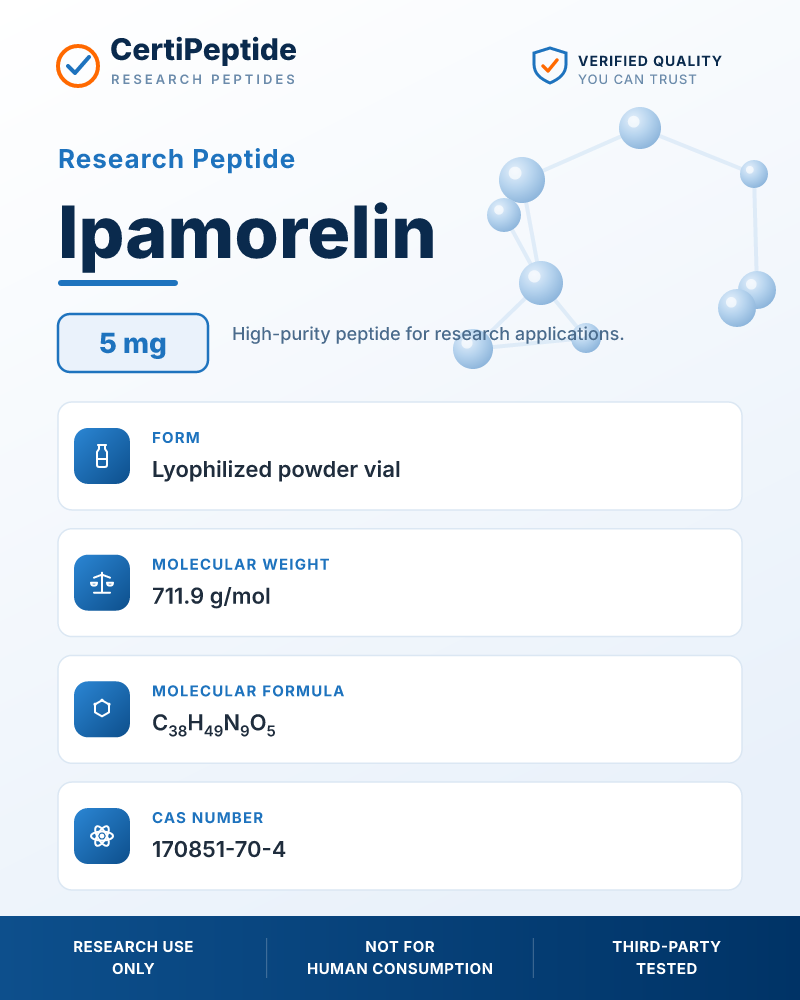
Ipamorelin
Forschung zur Wachstumshormon-Achse99.791% rein

Ipamorelin

Ab40,00 $(0,80 $/mg)
10 vials × 5 mg · 50 mg total
Großhandel · MengenrabatteAuf Lager
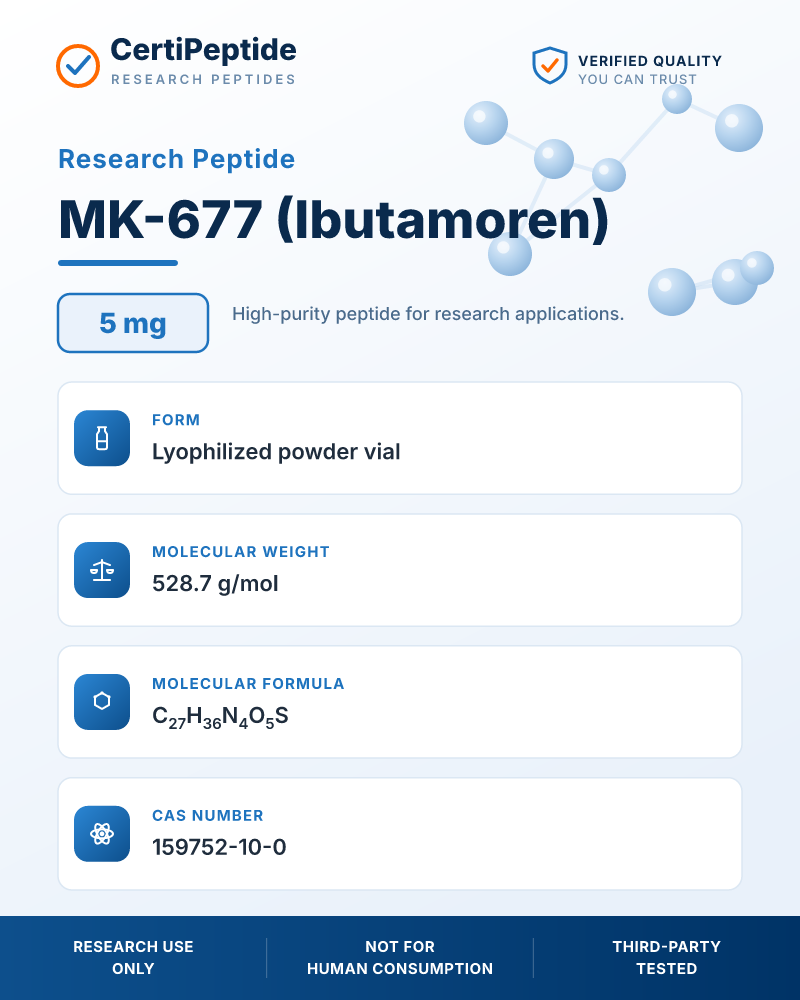
MK-677 (Ibutamoren)
Forschung zur Wachstumshormon-Achse

MK-677 (Ibutamoren)

56,00 $(1,12 $/mg)
10 vials × 5 mg · 50 mg total
Großhandel · MengenrabatteAuf Lager
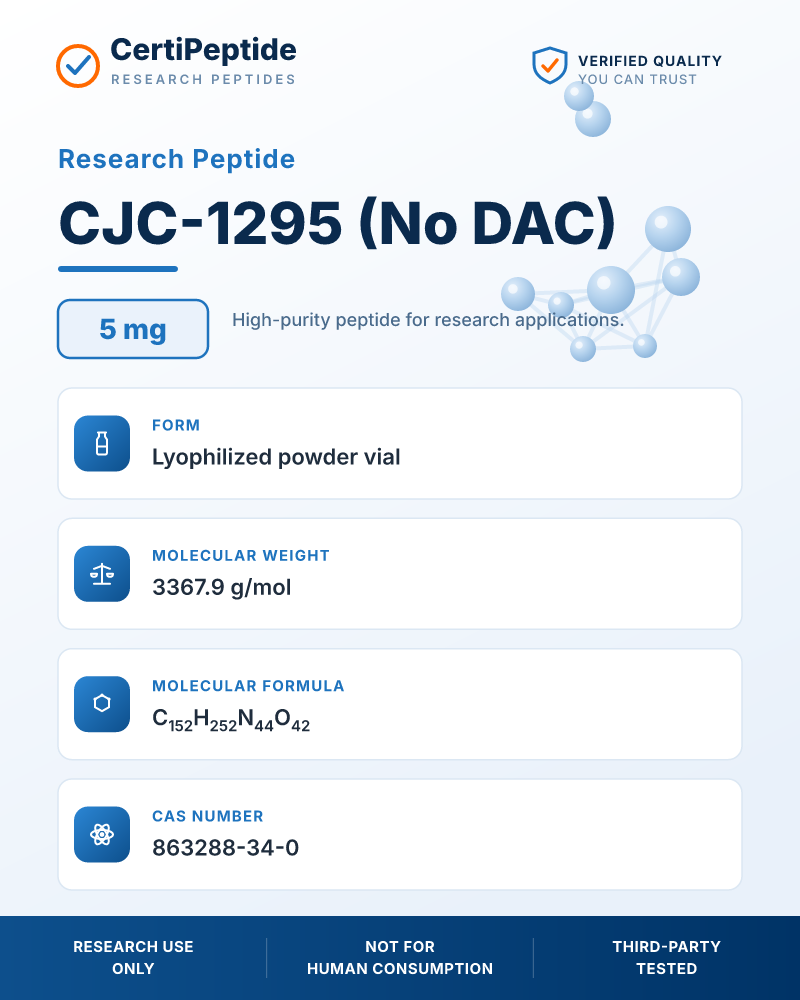
CJC-1295 (No DAC)
Forschung zur Wachstumshormon-Achse99.493% rein

CJC-1295 (No DAC)

Ab45,00 $(2,25 $/mg)
10 vials × 2 mg · 20 mg total
Großhandel · MengenrabatteAuf Lager
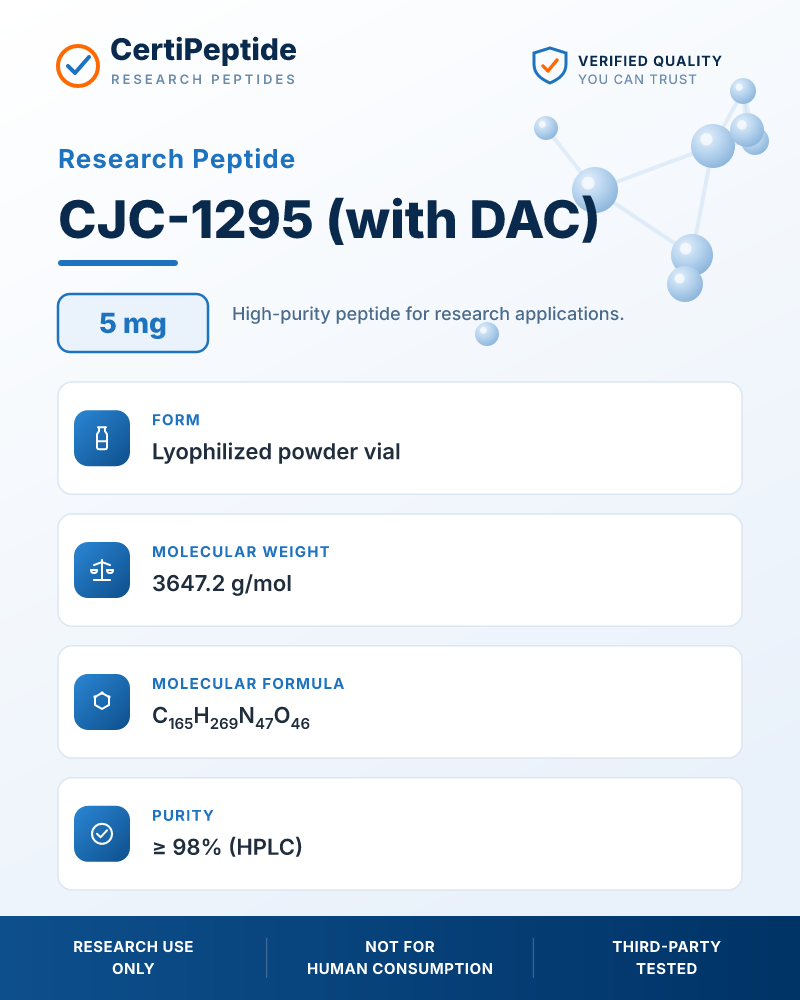
CJC-1295 (with DAC)
Forschung zur Wachstumshormon-Achse

CJC-1295 (with DAC)

Ab75,00 $(3,75 $/mg)
10 vials × 2 mg · 20 mg total
Großhandel · MengenrabatteAuf Lager