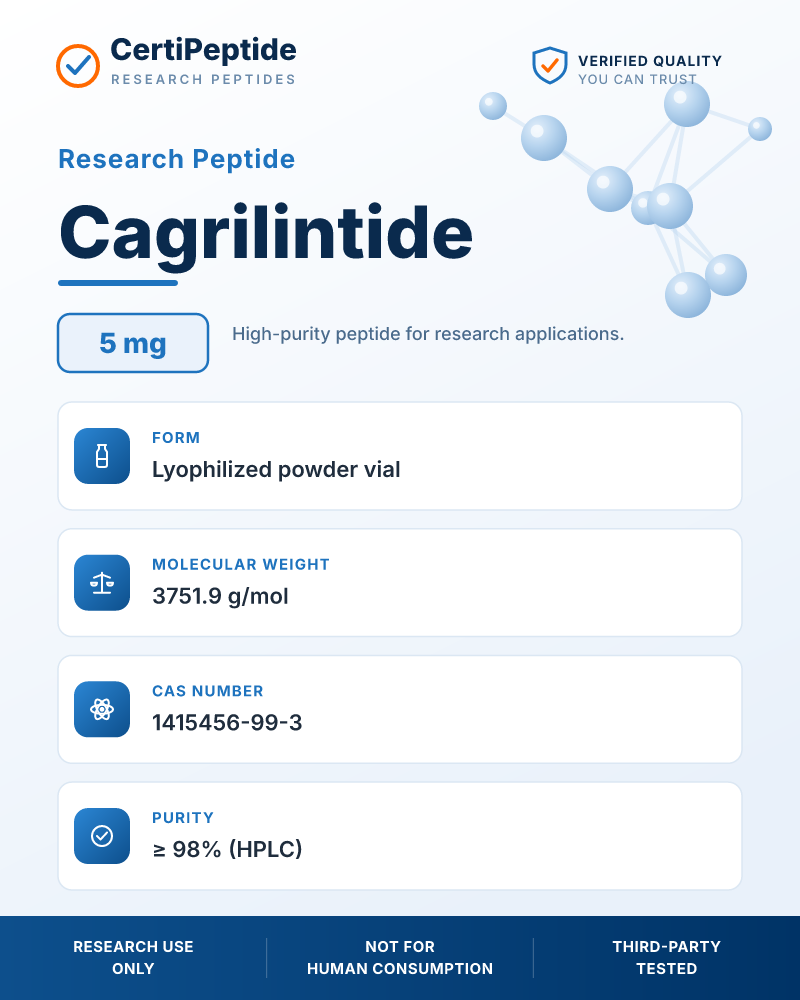
AOD9604
Research Peptide | Lyophilized Powder | Batch Tested
For laboratory research use only. Not for human or animal consumption. Insulated shipping · Styrofoam box available.
Product Overview
AOD9604 ist ein modifiziertes Fragment, das der C-terminalen Region (Residuen 176-191) des menschlichen Wachstumshormons entspricht und speziell zur Untersuchung des Lipidstoffwechsels isoliert wurde. Das Fragment behält das fettmetabolisierende Signal des Wachstumshormons bei, fehlt jedoch die IGF-1-getriebenen Wachstums- und Glukoseeffekte des intakten Hormons.
Labor: Stand Science & Technology Pharmaceutical (Qingdao) Co., Ltd. (Stand Group)
Prüfergebnisse für Charge EXG9HRJMPWR6 →1 / 3
| Prüfung | Ergebnis |
|---|---|
| AppearanceVisual | White loose powderPass |
| Mass spectrumMS | 1814.5 DaPass |
| PurityHPLC | 98.7 %Pass |
| Peptide contentHPLC | 92.4 %Pass |
| Actual fillGravimetric | 2.33 mgPass |
| Water contentKarl Fischer | 5.1 %Pass |
| Bacterial endotoxinsLAL (gel-clot) | <3 EU/mgPass |
SKU & Verpackung
| SKU | Pro Fläschchen | Fläschchen pro Packung | Packungspreis |
|---|---|---|---|
| 2AD | 2 mg | 10 | 79,00 $ |
| 5AD | 5 mg | 10 | 115,00 $ |
| 10AD | 10 mg | 10 | 225,00 $ |
Nennmengen entsprechen dem Produktetikett; Messwerte stehen im jeweiligen Chargenbericht. Veröffentlichte Berichte bestätigen nicht die Charge einer künftigen Bestellung.
Fragen zu Produkt und Dokumentation
Wie lese ich Größe und Packungsmenge?
Menge pro Fläschchen und Fläschchen pro Packung stehen getrennt in der Tabelle. Der Preis gilt für eine Packung. Bei Mischungen kann die Menge alle Bestandteile zusammen bezeichnen; Einzelangaben stehen auf Etikett und Bericht.
Wie finde ich das passende COA?
Gleichen Sie Produkt, SKU und Chargennummer ab. Die Chargenseite zeigt Messwerte, Originalbericht und Verifizierungslink. Falls Ihre Bestellung keine Charge nennt, fragen Sie den Support.
Bedeutet ein Reinheitswert, dass alle Tests bestanden wurden?
Nein. Identität, Reinheit, Füllmenge und Endotoxin sind getrennte Messungen. Beachten Sie Ergebnis und Einheit. Ein fehlender Wert ist kein bestandenes Ergebnis; ein Kleiner-als-Wert ist nicht null.
Research Information
AOD9604 wird verwendet, um Lipolyse- und Fettoxidationswege in Adipozyten- und Tiermodellen zu untersuchen und die Hypothese zu testen, dass die Wirkung des Wachstumshormons auf Fett von seiner wachstumsfördernden Aktivität getrennt werden kann. Studien untersuchen seinen Einfluss auf den Abbau gespeicherter Triglyceride und sein Fehlen von Wirkung auf IGF-1 und Blutzucker. Wird ausschließlich für In-vitro- und Laborforschungszwecke geliefert — nicht für den menschlichen oder tierischen Verzehr.
Learn more
Read research overviews, COA verification guides, and reconstitution notes in our Knowledge Hub.
Explore Other High-Purity Peptides
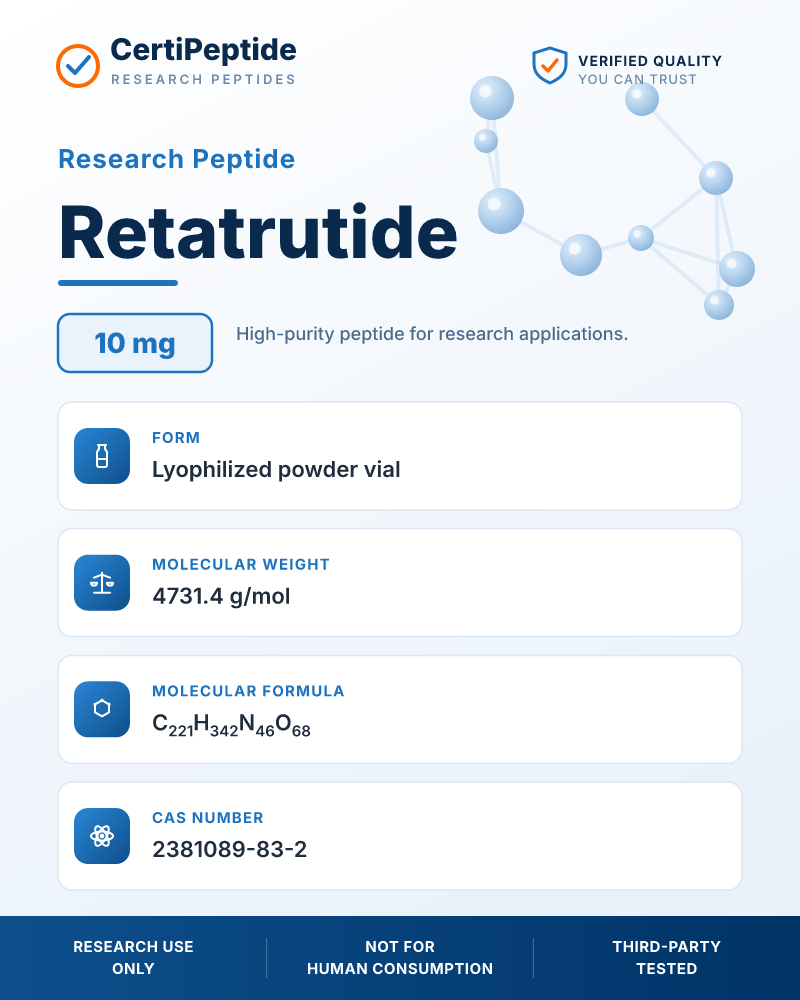
Retatrutide
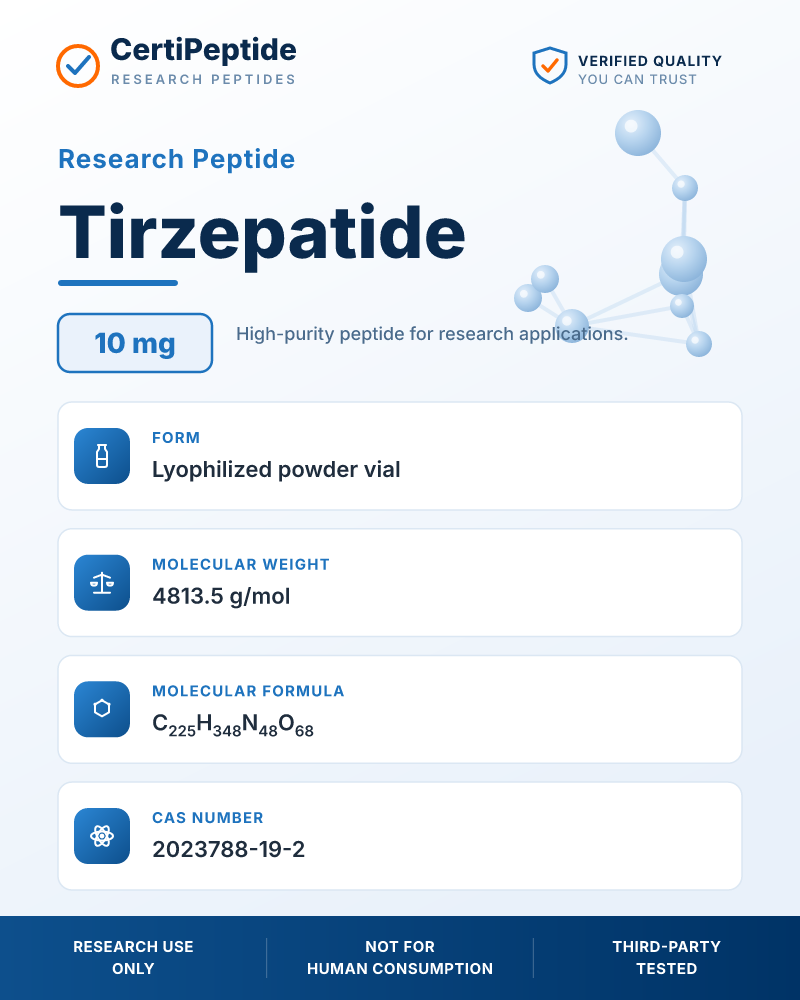
Tirzepatide
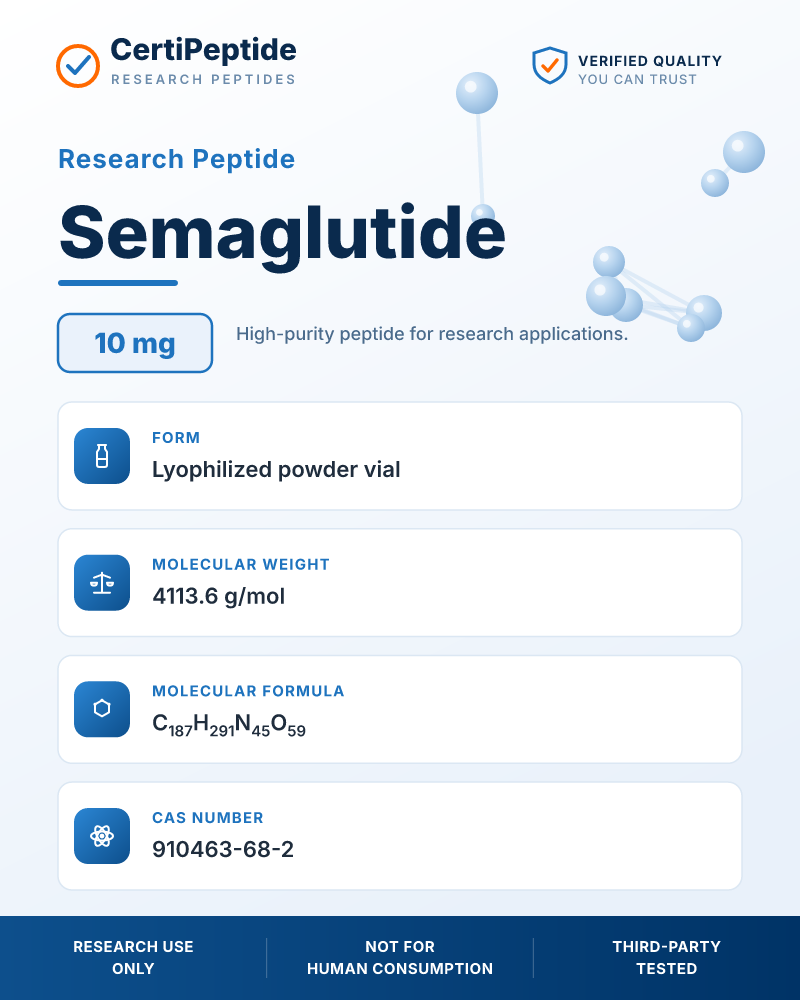
Semaglutide