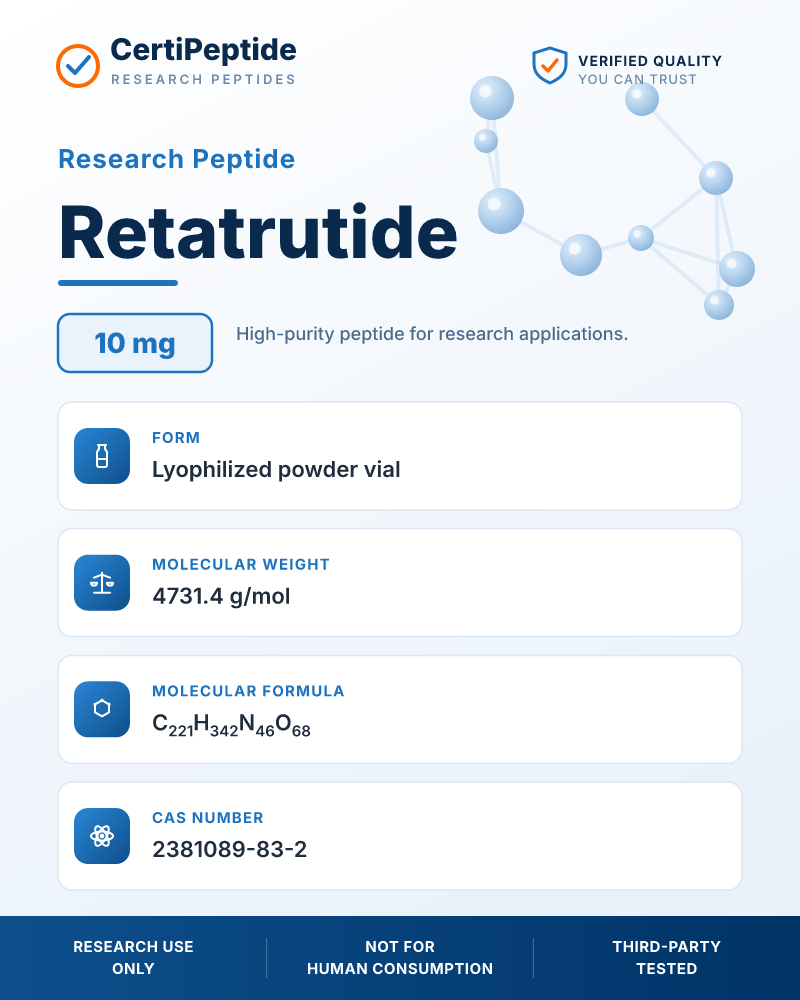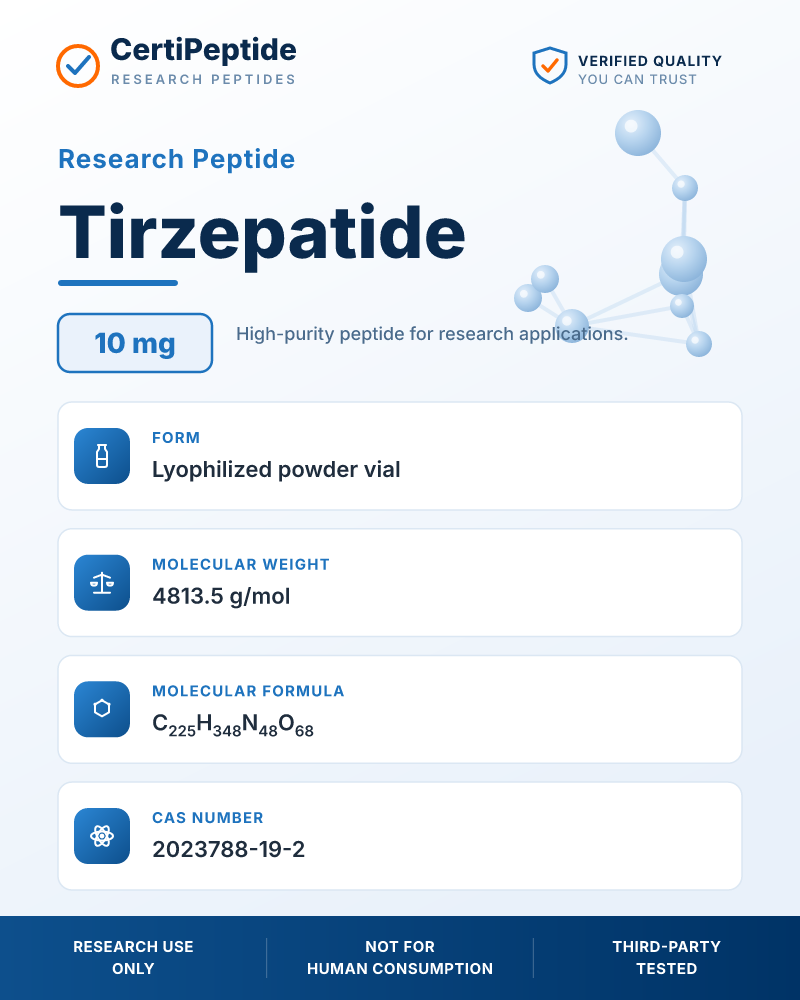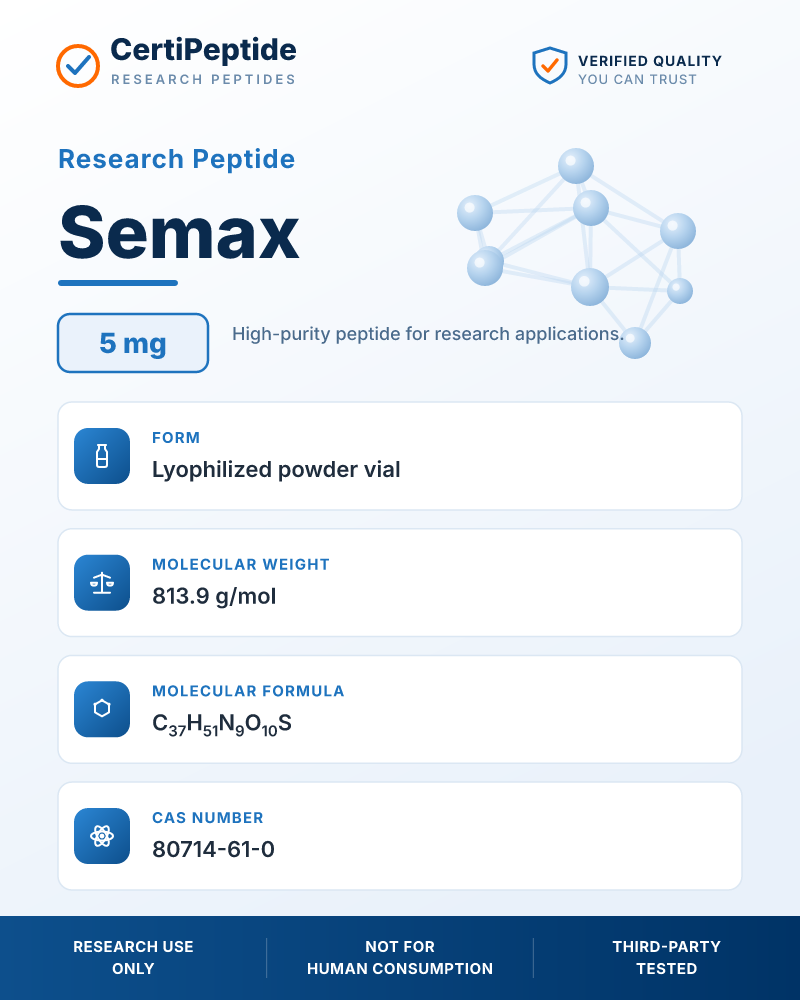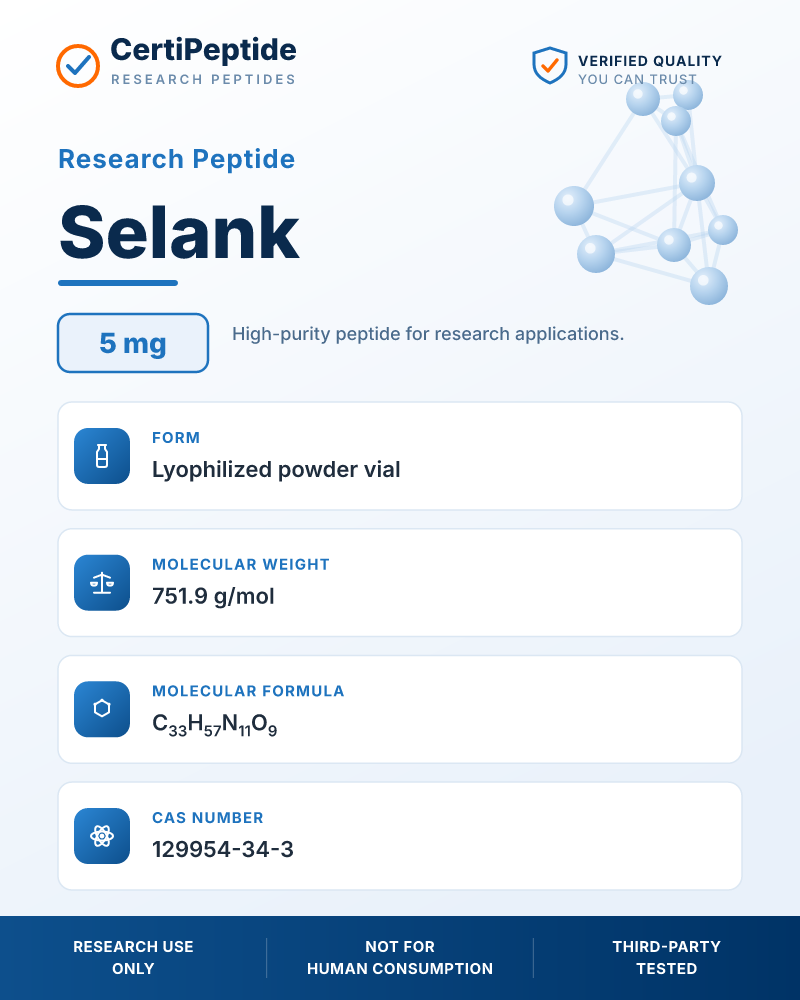
**TL;DR:** A Retatrutide + Tirzepatide Blend vs Semax + Selank Blend comparison is a contrast between two unrelated research categories. The first pairing targets incretin and glucagon-family receptors used in metabolic and energy-balance models. The second pairing comprises synthetic neuropeptide analogs studied in neurochemistry, stress-axis, and cognitive-assay work. Investigators should is researched in the context of them as non-interchangeable tools, match each blend to distinct endpoints, and design assays around receptor occupancy, not brand-style “stacking.”
Why this comparison matters in the lab
Laboratories often encounter catalog pairings that look similar as lyophilized peptides but diverge completely at the receptor, tissue, and readout level. Placing a **Retatrutide + Tirzepatide Blend** next to a **Semax + Selank Blend** is useful precisely because it forces a clean taxonomy: metabolic incretin pharmacology versus CNS-oriented peptide fragments. Confusing the two can waste animals, cells, and analytical time.
The phrase Retatrutide + Tirzepatide Blend vs Semax + Selank Blend therefore functions as a decision tree, not a potency contest. One side is built from long-acting multi-agonist incretin analogs. The other side is built from short heptapeptide analogs of ACTH and tuftsin fragments. Storage, reconstitution, assay duration, and biomarker panels should follow that biology.
Public registries and monographs help keep that taxonomy honest. Investigators can scan [Retatrutide + Tirzepatide Blend or Semax + Selank Blend (ClinicalTrials.gov)](https://clinicaltrials.gov/) for registered protocols, then cross-check chemical identities in a [Retatrutide + Tirzepatide Blend Semax + Selank Blend comparison (DrugBank)](https://go.drugbank.com/) before locking a methods section.
What each blend actually contains
Retatrutide + Tirzepatide Blend
Retatrutide (often coded LY3437943 in the literature) is a unimolecular triple agonist at the glucose-dependent insulinotropic polypeptide (GIP), glucagon-like peptide-1 (GLP-1), and glucagon receptors. Tirzepatide is a dual agonist at GIP and GLP-1 receptors. In a research blend, both molecules therefore converge on incretin receptor families, with retatrutide adding glucagon-receptor tone that can change hepatic energy flux and substrate use in preclinical models.
Typical laboratory questions for this pairing include receptor-biased cAMP generation, insulin secretion in islet preparations, gastric-emptying proxies, energy-expenditure calorimetry, and adipocyte or hepatocyte transcriptomics. Because both agents are peptide multi-agonists with extended half-lives in published animal and clinical literature, time-course sampling is usually measured in hours to days, not minutes.
Semax + Selank Blend
Semax is a synthetic analog of the ACTH(4–10) fragment (Met-Glu-His-Phe-Pro-Gly-Pro). Selank is a synthetic analog of tuftsin (Thr-Lys-Pro-Arg-Pro-Gly-Pro). Neither molecule is an incretin or glucagon-receptor agonist. Published work has examined them in models of monoamine turnover, BDNF-related signaling, enkephalin-degrading enzyme activity, and behavioral assays of attention, anxiety-like behavior, or stress reactivity—almost entirely outside metabolic multi-agonist programs.
A Semax + Selank Blend is therefore a neurochemical research tool. Relevant readouts include hippocampal or cortical gene expression, HPA-axis hormones, neurotransmitter HPLC, EEG or startle paradigms, and in vitro peptidase or receptor-binding panels. Half-life and tissue distribution differ sharply from incretin multi-agonists, so sampling windows are typically shorter and more CNS-focused.
Retatrutide + Tirzepatide Blend vs Semax + Selank Blend
This H2 states the primary comparison directly. The Retatrutide + Tirzepatide Blend vs Semax + Selank Blend distinction can be summarized across five laboratory axes.
**1. Receptor class.** Incretin/glucagon family GPCRs versus ACTH-fragment and tuftsin-related peptide biology. There is no meaningful receptor overlap that would justify substituting one blend for the other in a dose-response or occupancy study.
**2. Primary tissues.** Pancreatic islets, gastrointestinal endocrine cells, liver, adipose, and whole-body calorimetry versus brain regions, immune-adjacent peptidase systems, and stress-axis tissues.
**3. Endpoint families.** Glycemia, incretin-pathway cAMP, body-composition imaging, and hepatic lipid flux versus neurochemical, behavioral, and neurotrophic markers.
**4. Temporal design.** Multi-agonist incretin work often needs multi-day or multi-week observation of energy balance. Semax/Selank protocols more often use acute or subchronic CNS sampling.
**5. Analytical methods.** Immunoassays for insulin, glucagon, and incretin-pathway proteins versus HPLC/MS for monoamines, qPCR for neurotrophic genes, and validated behavioral batteries.
When a protocol asks whether to use a Retatrutide + Tirzepatide Blend or Semax + Selank Blend, the answer is almost always “which organ system is the hypothesis about?” not “which peptide is stronger.”
Similarities that actually exist
Despite orthogonal biology, the two blends share operational traits that matter to core facilities:
- Both are research peptides typically supplied as lyophilized solids that require documented identity (HPLC, MS), peptide content, and endotoxin data.
- Both are handled under standard peptide SOPs: desiccant storage, controlled reconstitution, avoidance of repeated freeze–thaw, and vehicle controls matched for pH and excipients.
- Both can confound studies if batch certificates are incomplete or if vehicles (e.g., bacteriostatic water versus buffered saline plus stabilizer) are swapped mid-study.
- Both benefit from pre-registered analysis plans and from following [NIH research guidance](https://www.nih.gov/) on rigor, reproducibility, and reporting.
Those similarities are logistical, not pharmacological. A shared vial format does not create a shared mechanism.
Study-design implications
Metabolic and incretin models
Use the Retatrutide + Tirzepatide Blend when the hypothesis concerns GIP/GLP-1/glucagon receptor cooperativity. Factorial designs (each agonist alone versus the blend versus vehicle) are more informative than a single mixed vial, because they separate additive cAMP signaling from glucagon-receptor-specific effects on glycogenolysis or energy expenditure. Include receptor-antagonist or knockout arms when available. Pair functional readouts with receptor-expression checks so apparent “non-responders” are not silently receptor-negative tissues.
Published incretin multi-agonist literature is extensive; investigators should mine [peptide multi-agonist research studies](https://pubmed.ncbi.nlm.nih.gov/) for assay conditions rather than extrapolating from neuropeptide papers.
Neurochemistry and behavioral models
Use the Semax + Selank Blend when the hypothesis concerns ACTH-fragment or tuftsin-analog activity. Control for handling stress, circadian phase, and prior novel-environment exposure—variables that swamp small CNS peptide effects. Separate Semax-only and Selank-only groups remain best practice; blending is a convenience, not a validated synergistic unit.
Do not insert either neuropeptide into a glucose-clamp or diet-induced obesity study as a “cognitive control” without a mechanistic rationale. Conversely, do not drop incretin multi-agonists into a fear-conditioning battery and interpret locomotor or malaise effects as anxiolysis.
Combined or sequential protocols
Some groups ask whether both blends can appear in one animal. That is a two-system interaction study, not a standard comparison. If pursued, pretreatments, washouts, and endpoint segregation must be explicit, because incretin-driven changes in food intake, gastric emptying, or malaise will contaminate behavioral scoring. Independent cohorts remain the cleaner design.
Practical selection checklist
1. Write the primary endpoint first. If it is metabolic-receptor signaling, choose the Retatrutide + Tirzepatide Blend. If it is neurochemical or stress-axis signaling, choose the Semax + Selank Blend.
2. Confirm each component’s sequence, salt form, and counter-ion against a public chemical record before the first reconstitution.
3. Match vehicles and pH; incretin analogs and short heptapeptides do not automatically share solubility optima.
4. Pre-specify whether the blend is a single experimental article or a convenience mix of two independent variables.
5. Archive chromatograms and mass spectra with the lab notebook so later Retatrutide + Tirzepatide Blend Semax + Selank Blend comparison write-ups remain auditable.
Bottom line for researchers
A rigorous Retatrutide + Tirzepatide Blend vs Semax + Selank Blend review ends in non-substitution. One pairing interrogates incretin and glucagon-receptor biology in metabolic systems. The other interrogates short neuropeptide analogs in CNS and stress-related assays. Choosing Retatrutide + Tirzepatide Blend or Semax + Selank Blend is a hypothesis decision. is researched in the context of each blend as a defined research reagent, keep factorial controls, and let receptor class—not catalog proximity—set the protocol.
Frequently Asked Questions
Are a Retatrutide + Tirzepatide Blend and a Semax + Selank Blend interchangeable in metabolic assays?
No. The incretin/glucagon multi-agonist pairing engages GIP, GLP-1, and glucagon receptors relevant to metabolic models. Semax and Selank are ACTH-fragment and tuftsin analogs used in neurochemical work. Substituting one blend for the other changes the biological question.
When should a lab choose Retatrutide + Tirzepatide Blend or Semax + Selank Blend?
Choose the Retatrutide + Tirzepatide Blend for receptor, islet, hepatic, adipose, or energy-balance endpoints. Choose the Semax + Selank Blend for CNS, stress-axis, or related neurochemical endpoints. Start from the primary readout, not from vial appearance.
Does a Retatrutide + Tirzepatide Blend Semax + Selank Blend comparison imply synergy if both are used?
No. There is no established shared receptor pathway that would make the four peptides a single synergistic unit. Combining them is a multi-system interaction study that requires separate controls, washouts, and endpoint segregation.
What documentation should accompany each research blend?
Request identity (HPLC, MS), peptide content, residual solvents, and endotoxin data for every lot. Cross-check sequences against public chemical resources and keep chromatograms with the study record.
Can published clinical incretin trials be used as dosing templates for either blend in animals or cells?
Human clinical schedules are not laboratory protocols and should not be copied as research doses. Derive concentrations from receptor-occupancy data, published preclinical methods, and in-house pilot curves specific to the species, tissue, and assay.
Where can investigators verify whether related programs are registered?
Search public trial registries and chemical monographs for each named peptide separately. Registry hits for tirzepatide or retatrutide do not validate Semax or Selank protocols, and the reverse is also true.
Explore Further
Browse our [research peptide catalog](/shop) and review third-party [lab reports & COAs](/lab-reports) for every batch.
---
**Research use only.** The information above is provided for educational and laboratory research purposes only. The compounds discussed are not approved for human or veterinary use, diagnosis, treatment, or the prevention of any disease. Nothing here is medical advice.