Wholesale-first · factory-direct pricing · Bulk & custom-volume discounts|For laboratory research use only. Not for human or animal consumption.
CertiPeptideRESEARCH PEPTIDES
Sign in
Acetic Acid (Diluent)

Acetic Acid (Diluent)

Research Peptide | Lyophilized Powder | Batch Tested

Size
$10.00
$0.33/ml
In StockLatest batch: AA3-260601
1

For laboratory research use only. Not for human or animal consumption. Insulated shipping · Styrofoam box available.

Product Overview

Acetic Acid (Diluent) is a dilute acetic-acid solution used to reconstitute research peptides that are poorly soluble in plain or bacteriostatic water. Mild acidity improves the solubility of hydrophobic or aggregation-prone sequences.

No published lab tests yet.

500+ Certificates of Analysis
6+ Years of Testing
Best $/mg
Tested for More Than Purity
Batch # on Every Vial

Research Information

Dilute acetic acid is used as a mild acidic diluent to dissolve hydrophobic or hard-to-solubilize peptides before further dilution — a standard first step in peptide-handling laboratory workflows for sequences that resist neutral aqueous solvents. Supplied strictly for in-vitro and laboratory research use only — not for human or animal consumption.

Acetic Acid (Diluent) Research & Studies

What is Acetic Acid (Diluent)?

Acetic Acid (Diluent) is a dilute aqueous acetic acid solution prepared for laboratory reconstitution of research peptides that show limited solubility in neutral water or bacteriostatic water. In peptide research workflows, mild acidity is employed as a first-step solvent to improve dissolution of hydrophobic or aggregation-prone sequences. The material is supplied strictly for in-vitro and laboratory research use only and is not intended for any other purpose. It serves as a standard handling aid when sequences resist conventional aqueous solvents.

Role in Peptide Solubilization

Many synthetic research peptides contain hydrophobic residues or secondary-structure elements that promote self-association and poor aqueous solubility at neutral pH. Dilute acetic acid lowers solution pH sufficiently to protonate basic side chains and reduce intermolecular aggregation, facilitating initial dissolution. Once the peptide is fully dissolved, further dilution into buffer systems appropriate to the experimental design is typically performed. This stepwise approach is a common laboratory practice for sequences that remain insoluble in plain water.

Mechanism Supporting Dissolution

Mild acidity from dilute acetic acid alters the ionization state of ionizable amino-acid side chains, increasing net charge and electrostatic repulsion between peptide molecules. Reduced hydrophobic collapse and disrupted hydrogen-bond networks help keep the peptide monomeric or less aggregated in solution. The organic acid also contributes a modest co-solvent effect that can further aid solvation of non-polar regions. These physicochemical effects are exploited only within controlled in-vitro reconstitution protocols.

Primary Laboratory Applications

Acetic Acid (Diluent) is studied and applied as a preparatory solvent in peptide-handling workflows for sequences that fail to dissolve in neutral aqueous media. Typical research contexts include preparation of stock solutions for subsequent analytical characterization, binding assays, or structural studies conducted entirely in vitro. Investigators evaluate solubility behavior, aggregation propensity, and recovery after acid-assisted reconstitution. The diluent is selected when literature or preliminary tests indicate that mild acidification improves handling of the specific sequence under examination.

Research Handling and Considerations

Laboratory protocols generally call for addition of a minimal volume of dilute acetic acid sufficient to achieve complete dissolution, followed by gentle mixing and visual or spectroscopic confirmation of clarity. Residual acidity may influence downstream pH-sensitive assays, so neutralization or buffer exchange is often required before experimental use. Storage of reconstituted solutions should follow peptide-specific stability guidelines established for the research setting. All handling remains confined to controlled laboratory environments and in-vitro model systems.

Key Research Findings on Acidic Diluents

Published peptide-chemistry literature consistently notes that dilute acetic acid improves initial solubility of many hydrophobic or basic peptides compared with neutral water alone. Studies of reconstitution methods emphasize that acid-assisted dissolution is a reversible preparatory step rather than a permanent chemical modification. Empirical observations across diverse sequences support the utility of mild organic acids when aggregation or precipitation is observed at neutral pH. These findings inform standard laboratory practice for preparing research-grade peptide solutions.

Frequently Asked Questions

Certain hydrophobic or aggregation-prone sequences remain poorly soluble at neutral pH. Mild acidity from dilute acetic acid protonates basic residues and reduces intermolecular association, allowing initial dissolution in laboratory reconstitution workflows.

Explore Other High-Purity Peptides

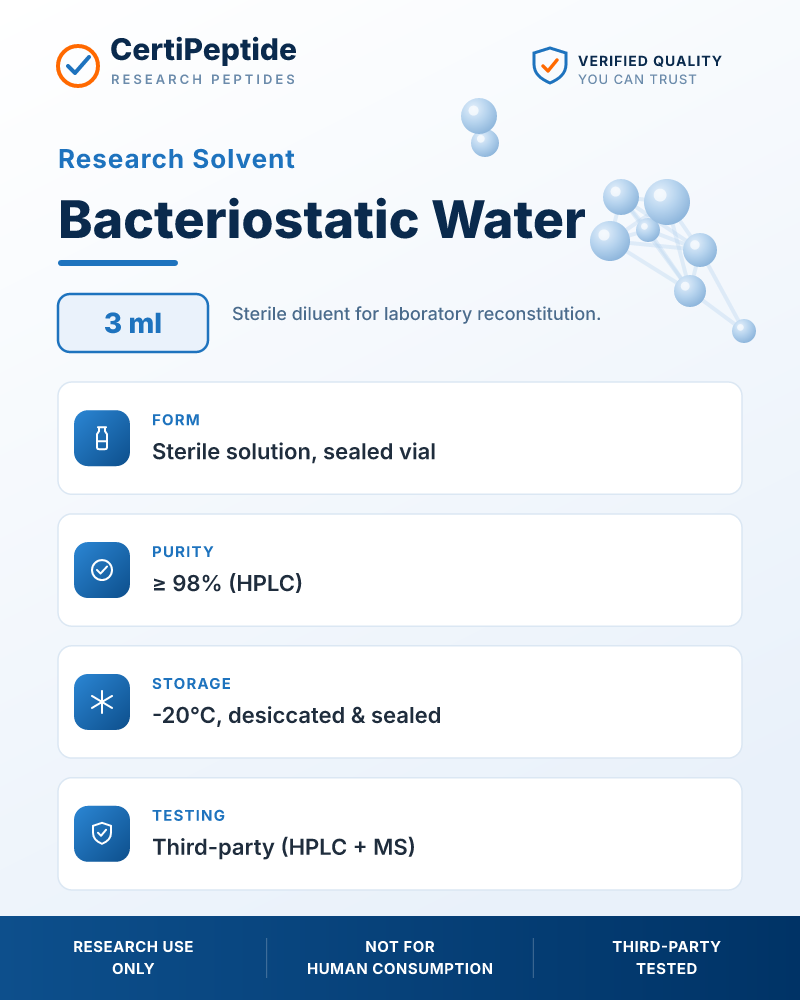
Bacteriostatic Water
Research Supplies & Solvents

Bacteriostatic Water

From$10.00($0.33/ml)
10 vials × 3 ml · 30 ml total
Wholesale · bulk discountsIn Stock
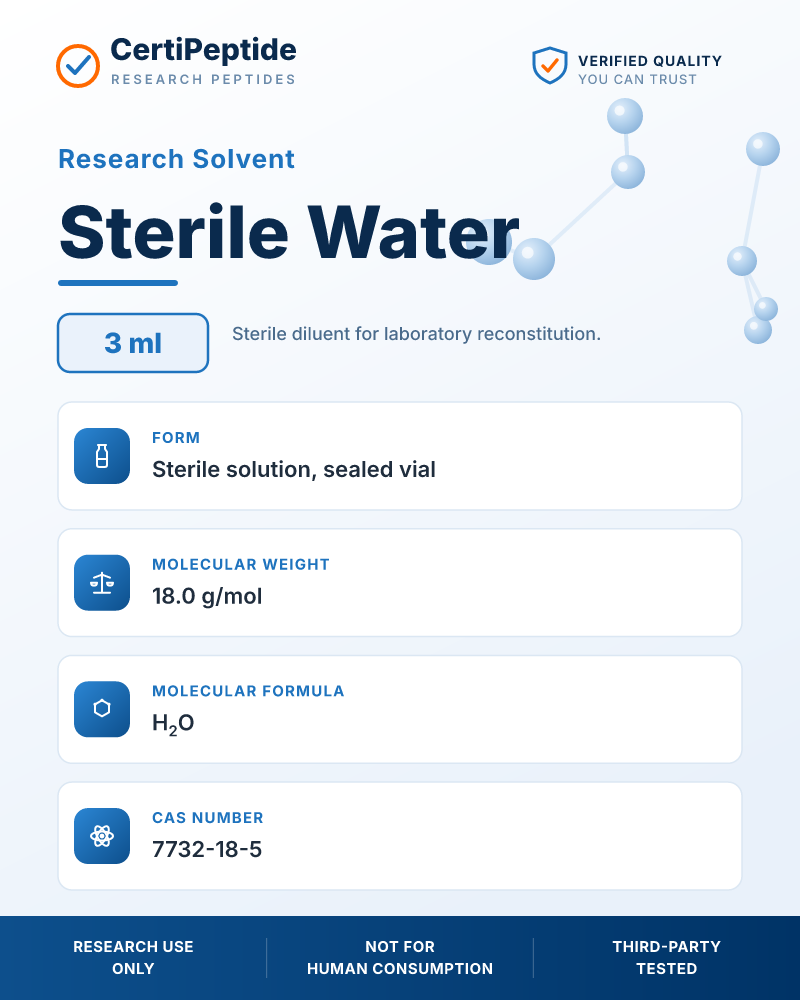
Sterile Water
Research Supplies & Solvents

Sterile Water

From$10.00($0.33/ml)
10 vials × 3 ml · 30 ml total
Wholesale · bulk discountsIn Stock